
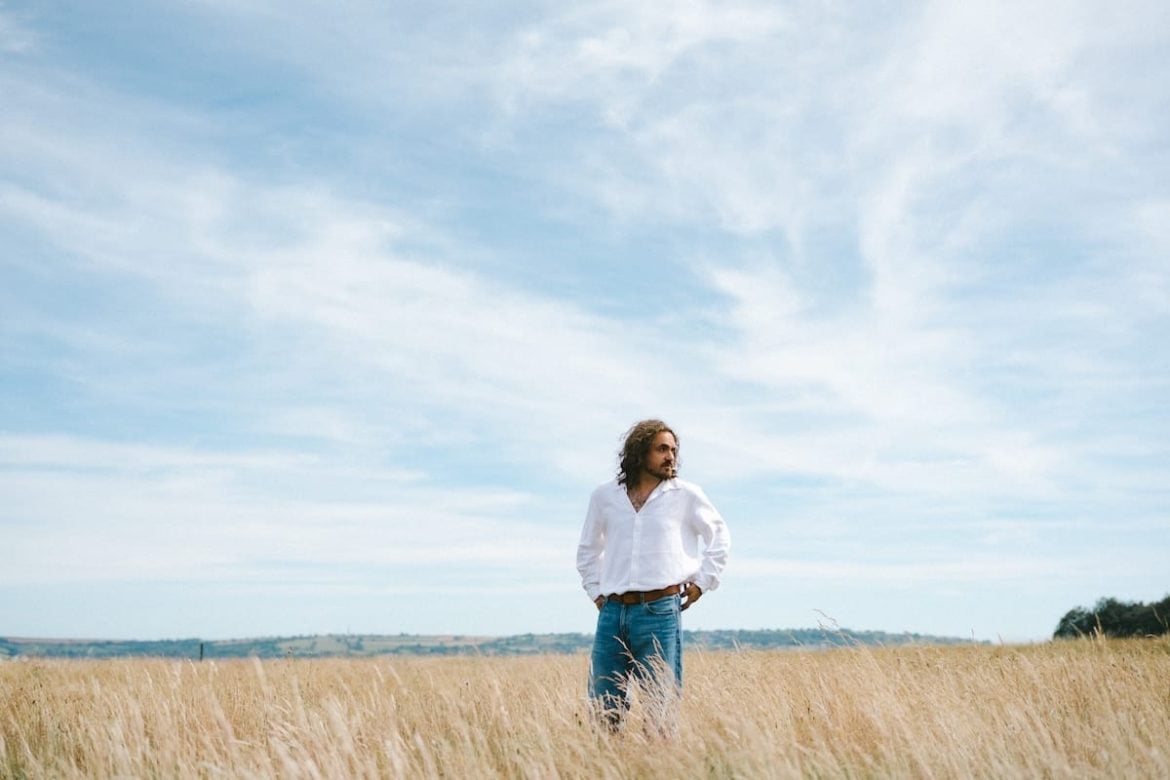
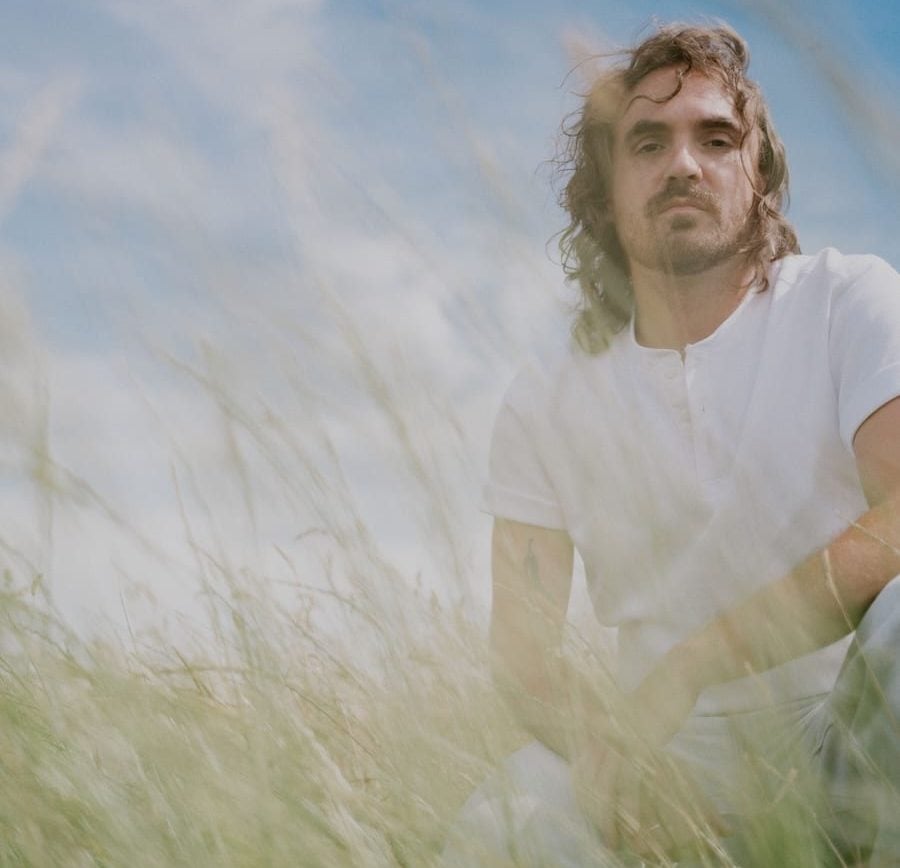
Blair Dunlop is a singer songwriter who, with the release of his latest album ‘What Still Survives,’ sounds like an artist finding a distinct voice and refining his craft quite masterfully. When he sat down to chat with KLOF about this release, the conversation snaked into a variety of related topics from his storied, unique musical life. The former child actor is the son of folk legends Ashley Hutchings and Judy Dunlop, and he was happy to reflect upon that musical upbringing and so much more. This interview covers that new album in depth, in addition to topics ranging from Blair’s formative years, his all-time folk guitar heroes, playing styles, top parental song writing tips, not so useful career advice, unintentional inspiration drawn from a Richard Thompson classic, recording techniques, wish list collaborators and the pain of always encountering fans of your football team’s local rivals. Mostly, though, Blair is glowing with the satisfaction of a job well done on his latest record, as he explains to me. “When I delivered this album, aside from the tracklisting, which was an absolute nightmare, in terms of the actual songs delivered, I can’t remember being as happy with an album.”
How did you feel when you signed off on this album?
I felt really good; actually, it’s a strange one in the sense that it’s been a long time in the making. There are some songs that I have written over quite a few years that have been repurposed. They didn’t make previous projects, and they’ve found their home on this album, but also, I came up with three or four new songs the week of pre-production that I had written that week, super late in the day, but they ended up making the album as well. Given all that, you might be forgiven for thinking the album would be incongruous or bity and didn’t sit together as a piece of work, but weirdly I think it’s my most cohesive unit of work as a whole. I’ve got a bit of a complex about cohesion and albums; I don’t really think I’ve ever made a cohesive body of work. I think that’s dysmorphia as much as anything; when you’re so close to a project, you kind of lose objectivity.
In terms of cohesion, would you say the album has an overriding theme? Or is there a link between the songs that brings this particular group together?
For sure, I think it’s probably best to distinguish between the sonic and the lyrical. Lyrically, there are a lot of themes of steadfastness, resilience and the passage of time- I guess, just kind of still being here. Whether it’s things in the songs that relate to me or things in the songs that don’t relate to me, there’s definitely a theme of resilience, and I guess that ties into the title. Sonically, I think the main bit of glue- it sounds simplistic, but the thing that really ties it together for me is the pedal steel. I’ve always wanted to have pedal steel on a record, but I was scared to put it on because it kind of puts you in a country space, and I grew up very much in the English folk world; honestly, I think it’s kind of nonsense compartmentalising all these subgenres; it’s not something that I have much time for, but I think that it is fair to say I have always borne that in mind when putting together instrumentation, thinking where it might sit with audience members and things. As I have got older, I’ve grown to care less about that, for the better. On top of that, I think the boundaries between genres are eroding given the way that we all listen to music in the digital world; it’s probably prevalent in other walks of life as well. Very much in music, I think it says less about you if you have a pedal steel on an album now.
I think I did note in my review of the album that the country influence was very noticeable on the track ‘Pasadena.’
Oh yes, CJ Hillman, who played the pedal steel, I’ve loved his playing for many years, and it was the first time I got to work with him. He came in with the producer and me; within a few seconds, we were like, “Oh, this is going to be a really fun day.” He was bashing out these beautiful takes, literally a couple of takes a song; it was epic, and he really enjoyed it as well. I think a lot of his playing was more on the soundscapey end of things, but then ‘Pasadena’ just wanted that Sneaky Pete lick.
In that review, I pulled out the old Dylan phrase ‘wild mercury,’ which was probably just an easy shortcut to try and describe the kind of folk-rock tools you were using as a platform to launch from. Is that the canvas you were hoping to paint on?
There’s so many ways to skin the cat isn’t there? For this project, we just stood around in a room; there was me, the rhythm section and the producer, and we locked in the rhythm tracks broadly live. I was in the control room for bleed aspect, but we ended up using a load of the guitar and vocal takes from the guide tracks/rhythm tracks. They were in the live room; we hit record, and they were locked in together. We’d already worked these arrangements out in pre-production, playing them live, which is where I’m most comfortable because I’ve been fortunate enough to do a lot of gigging. If it works in that scenario, then it works for me. The guide vocals had a really good vibe, and the arrangements worked live; we did some overdubs, but really, we got the bedrock of the album down in about a week. The next week was just overdubs; Holly Brandon came in and played the fiddle, CJ on the pedal steel, and I’d go and do mine if there were any vocals we didn’t catch, putting my harmonies in, and that worked really well as a two-stage thing. Make sure the fundamentals of the sonic palette are established and, I guess, as you say, the traditional folk-rock kind of thing, playing in a room with either an acoustic or an electric guitar and a rhythm section and then put the sparkle on in the next week; that’s when it gets exciting.
The track ‘The Alchemist’ stood out to me in particular as possessing that analogue warmth, and I guess having what you just described, the essence of musicians vibing off each other, is essential in realising that feel?
Totally, yeah, I love so much music, I grew up very much in that world, and that is the world that I inhabit the most. But I love all kinds, electronic music, samples as well, and it’s just about what serves your song and your performance, and this was old school in the sense that there’s not a single note of Auto-Tune on the record. Even on a lot of organic-sounding records, where people play live in the room, and some of my old records, you might tweak the odd note. But I was driven completely by the producer, Ian [Grimble], on this; I loved working with him, and I’d happily do it again despite the fact that he’s an Arsenal fan.
I interject here and tell Blair that I, too, am an Arsenal fan. Fortunately, at this revelation, he bursts out laughing, showing his own football allegiance by recalling the night that Arsenal “hijacked” the deal to sign Eze (in the summer of 2025, the Crystal Palace player Eze was set to join Arsenal’s North London rivals Spurs but my team swooped in last minute, taking him to a better place…ahem), but rather than terminating the interview, he reassures me that most of his best mates are Arsenal fans and he’s used to it.
We were in the studio when Eze signed for Arsenal, so Ian very much enjoyed that one, but, with the record, he was keen to make it work live in pre-production, and if we can get that sorted, the tracking will look after itself. Because I’m so comfortable in that scenario, it made sense that that was how we were going to put it down, by virtue of the fact that you’re vibing off each other in the room and, fortunate enough to use some very nice analogue gear as well, you do get that organic sound and feel, so that was an absolute pleasure.
I will try not to fire too many questions at you about the meaning behind specific lyrics, but if you’ll allow me a couple, what were you thinking about when you sang of wanting to change the frame you’re looking through?
That song, ‘Looking Through,’ a friend of mine said to me the other day it’s like a coming-of-age song; I don’t know if he meant that in terms of its relevance or that I hit a certain level in it artistically that it would be coming of age in that regards; I don’t think it’s necessarily that. It’s just more commentary on coming to terms with my own mortality and my own anxieties, in a healthy way, almost a meditation on reaching a stage in your life that you’re comfortable with. As a lot of people do, I had some really tough times mentally in my twenties, and I think a constant thread throughout that was I have so much to live for and so many amazing people in my life, but sometimes I can’t see that; I just need to change my frame of reference. I need to rip up the rule book; everything’s about perspective, isn’t it? Positive and negative, and this song is very much about that; it’s really about depression that I’ve experienced in my life, but how, with a bit of tweaking, it’s always within grasp to pull it back. For that reason, it’s quite an important song for me, and I think it sits quite well as track one on the album.
You might have answered my next question with that answer, but with a track like ‘This Isn’t Love ’, is that a jump into more personal lyric writing, or am I just making an assumption?
Oh, for sure, yeah, but I would say with that particular song it was very much accepted by both parties that this wasn’t love, but it was working at the time; it’s not a diss track on anyone.
Well, no, because the track does have a very nice, positive lift in it, doesn’t it?
Totally, it’s about sometimes accepting things are just right in that time, and they can still have value and meaning. Definitely on the more personal end of my songwriting, but you know, in a comfortable place to put that forward. Like you said with ‘Pasadena’ earlier, that’s a very honest song, but that’s kind of irreverent; there’s a lot of humour in there, but whether people find it funny… I was touring in Canada when I’d just written it, and no one was laughing; I was wondering, “Is this a bad song or are they just not getting the cultural references?” Then I toured it in the UK, and I ended up getting loads of good feedback, so I think it’s just one of those things. But that’s another ‘everything on the table’; this is who I am; that’s a cool place to be and a new place for me.
Do you generally think singer songwriters punch a bit harder and truer when they’re spilling some blood on the tracks? (Luckily, Blair is tickled by my ham-fisted crowbarring of a Bob Dylan album title into the conversation.)
Oh, I love that album; that was my driving album when I had my second car; that’s all I had in it. Oh god I love that record so much. I think yes, punch harder for sure, but sometimes I don’t want that. As I’ve got older (I was saying this to someone the other day when they made a Loudon Wainwright reference to me in terms of my writing and I’d never thought that), growing up I’d loved Rufus Wainwright, his voice and his artistic cabaret thing, which was rare for me; it’s not normally what I’d go for, but there was something about Rufus that I always loved. Then my teacher at school gave me a Loudon Wainwright record, which I thought was decent, but I wasn’t really ready for it; as I’ve got older, I’ve learned to love that wry irreverence, and for me, that can be as impactful as something earnest and heartbreaking. I think I’ve explored an element of that in this album; it’s the first time I’ve really done that, and I am enjoying it because ultimately, on my good days, I’m quite an upbeat person and I enjoy humour. It didn’t come across in my music before, so, for better or worse, I’ve leant into that.
Dave Burn was heavily involved as co-writer, backing guitar and vocals on the track ‘Are You Loved?’, which is a noticeably more rocking, riff-based number. Was that Dave’s influence, or simply the feel you wanted from the song?
Maybe that song in particular had been in the pot for a couple of records; we’d co-written that ten years ago, and it didn’t make my fourth album or the last album, and I thought, I’ll stick it in the pot, but I can’t see how this is going to make this album. In pre-prod, we were like, we could really do with an upbeat song to round the record off, but I was reluctant to explore it because I didn’t think it would fit; then, lyrically and melodically, we tweaked it. We changed a couple of little things, a chord here and there, changed the way I sang it, and I rewrote some of the lyrics, so it fits in with the album a lot better. It gives a bit of lift when it needs it, but it was a song I was very sceptical about. I’d kind of grown weary of it in some ways, but we breathed new life into it. Then we did it in the studio, and a lot of the other tracks were coming together so nicely, and then this one wasn’t, so I thought, oh, it’s going to happen again; it’s not going to make it. After rewriting it, I thought, “I’m going to ring Dave.” He was in a band called Ahab when I was growing up; they were great, four-part harmonies, country; they were on the traditional folk circuit, which was odd because they weren’t that at all, but they were there when I was coming through doing trad stuff; I just loved them. They were more Americana, really, so we stayed in touch and have sporadically co-written for the last fifteen years. He lives in London, so I asked him if he wanted to come in and see it go full circle with me. We got the rhythm guitar tracks down together, and we sang some harmonies. It was a really cool way to do it; it definitely felt like it had come full circle. The song had gone on a journey from writing it in his living room, trying to record it for this album and that album, but pulling it all back together, it ultimately needed him to come back in and provide the unison, the energy to finish it off.
It has the sound of something that wouldn’t be out of place on national radio; maybe that’s part of why you were sceptical. Do you ever write with that in mind? Like, do you ever intentionally try to write a hit or a banger?
Very rarely. Don’t get me wrong, I think subconsciously, yes, because I hear all kinds of stuff. I love rock, I love pop, and this very much fits into that category; it’s obviously a radio track, but I didn’t write it with that in mind. Once you’re presented with the list of songs, then you go, “Which one’s going to be the single?” That’s not to say that I don’t subconsciously get inspired when I hear big radio tracks, but I never think, “oh, this will get me a load of airplay.” With this one, I’m happy with the depth of it; I’m kind of sick of the singles. I think that’s just a product of being terminally online, having to do little videos on Instagram and stuff. The day that it came out, it was nice, because sometimes it’s been a few weeks or months since the mixing process where I’m so heavily involved; you need that time off, but then going back can be a scary thing because you’re like “oh my god did I sign off on a load of rubbish?” But I looked at the tracklist and thought, oh, I was so cut up in the singles I actually forgot that all my favourite songs on this album are the album tracks. Other than ‘Are You Loved’, there’s not really an obvious radio song; I just think in terms of the depth and consistency of it, while it’s not a big banger album, I’m happy with the depth. It’s less like we’ve got Messi and Ronaldo; we’ve got a solid squad that you can just rotate in and out and just do a job.
Very much in the Arsenal territory then, I might add! I made a comparison when listening to the album that ‘Bud On The Bough’ could be a distant cousin of Fairport Convention’s ‘Meet On The Ledge ’; was that an intentional feel you were looking for?
You’re not the first person to say that! It’s dangerously close, yes; I had no idea. I was on tour in Canada, and no one knows Fairport there so much, so no one said anything; people had been singing along to it because it’s anthemic, it had been going great. But then I put a video up on Facebook, and some dude was like, “Yeah, great tune, it’s giving me ‘Meet On The Ledge’ vibes”, and my heart sank. I was like, “Oh my god, it’s dangerously close”, but we’d already recorded it. I know Richard Thompson a little bit; next time I see him, I’ll ask for his blessing, see if he wants a cut.
It’s just in the same spirit, really isn’t it, I suppose…
It totally is, but just in the second chord of the chorus, with the repeat, it’s close, but the rest of it’s very different. I mean, I love all that stuff; Richard’s a great hero of mine.
Are you a fan of your Dad’s era of Fairport?
Yes, I am. I love ‘Liege And Lief’ and ‘Unhalfbricking’; they’re my two favourite Fairport records. I’m obviously biased because it’s my Dad’s era. As I’ve got older, I couldn’t care less about pandering or obfuscating any biases or interests that I have. When I was younger, I wasn’t bothered about folk music until I got to about seventeen; then I did get into it. After a couple of years, Richard Thompson was my absolute hero; then I sort of moved away from that because I wanted to form my own thing because I was, understandably, getting lumped in with my Dad. It’s a small scene, the folk scene, and my Dad had been successful within that circuit, so obviously people are going to want to talk about that, but I kind of got tired of it for a while. I think post-Covid was a line in the sand for me in many ways; I became a lot more confident in my own ability, and my shows got a lot better, which is the main barometer I use because it’s what I do more than anything else. I felt I improved as an artist and performer around that time. Coming out of it, a lot of us were doing a lot of esoteric thinking about what our place in the world is, what we’re in this for, and what we took for granted before that time. Undoubtedly, spending time playing and singing with my parents- my Mum’s a great singer as well, always sang in the folk clubs and was a massive influence on me- so I thought they’re just not going to be around forever, and I should do a bit more of this. Dad got a bit frailer, and I had to step in and do the Albion Christmas Band tour with him. Progressively, over the last few years, I’ve been helping him with that and stepping into his shoes when he couldn’t manage the bass parts and stuff. I really treasure those moments. I think I had to go on a journey with it; I had to become comfortable enough in my own artistry, and as a person, to be able to really fully appreciate the influence of my parents on my music. But it had to come from a place of being at peace with who I am as a person and as an artist. I needed that time away to formulate my thoughts, but now, coming back with a fresh perspective, I’m just so honest with everything now, and I have no issues with saying Richard Thompson was a massive influence on me as a writer and as a guitarist as well, one of my favourite guitarists.
I know what you mean. I remember when I first saw Richard playing solo acoustic, my mind was blown by how he seemed to be playing a bass part, a rhythm part and lead guitar all at the same time, then still soloing as well.
Oh yeah, it’s next level; it’s the technique, the hybrid picking. When I first came through, I always did like instrumentals because I thought my technical level on the guitar could set me aside from my other peers, or some singer songwriters, because if I could play folk tunes to a high level on the guitar, then it would give me more credence and legitimise my lineage. People could be like, because of my Dad or Mum, oh, he’s just another guy with a guitar, so I felt if I could do an amazing arrangement of a folk tune on the guitar, then that separates me from that. The expectations from people forced me to become a better guitarist. At first, I was very much into the fingerpicking style, no pick; I was obsessed with this guy called Nic Jones, a massive hero of mine. For those who don’t know, he had an accident in the eighties, which meant I never got to see him play guitar; he sings again now, which is great. I was fortunate enough to do a couple of shows with him when I was coming through; that was insane. But there was a gap to bridge between that, which was often very delicate. Nic’s unique in that he can get so much punch behind his fingerpicking; he has a percussive style that’s just incredible, but when I appropriated it, there was a shortfall between that and the songs I would strum, the rockier kind of songs I just didn’t have the power to get through. Richard has this specific technique called hybrid picking, where you hold the pick between your thumb and first finger. You use your other fingers as decoration, and it’s almost a halfway house between finger picking, so you can get the dexterity and complexity, but you have a pick so you can really dig in and strum on the choruses and stuff. In and around my third album, I really homed in on that technique, and ironically, I was moving away from the folk stuff; it was more a pop record, and I got a bit of Radio 2 joy on that, played Glastonbury; it was a good album in terms of peeling away from the folk stuff that I needed to at the time. Weirdly, a lot of the success I got from that record was because I’d hyper-focused on Richard’s technique, so I nicked something from the folk scene to move away from the folk scene.
Can you share any advice that Dad Ashley [Hutchings] gave you as it became clear that folk music was your destiny?
Well, the first thing he said to me that I think, actually, in hindsight, was awful advice was don’t have a kid. I was talking to my partner about this, and she was like, “That’s the most hectic bit of advice”, and I said, “Bless him, he’s never really been a family man.” I was like, an accident, so I thought, yeah, that tallies. That was one bit of advice that I adhere to and may or may not have served me well, but I think objectively, is poor advice. What he used to say to me, and I fully subscribe to this as I do some songwriting workshops and I enjoy talking about the process and has only been reinforced by talking to other people, is: never waste the time when you sit down and write. If you sit down long enough, you will write something, and as soon as you put pen to paper, you’re halfway there. I couldn’t agree more because, like with ‘Are You Loved?’, a song might have a journey. Sometimes songs come out fully formed in twenty minutes when the muse descends; you get great emotive songs, and that’s absolutely true in my experience, but by the same token, sometimes you force yourself to write, and you might not get something, but you’ll always get at least a phrase, or a word. You’ll come back to that in five years, and you’ve got a song from it, all because you made yourself sit down. I’m not always the best at this, but my advice is: don’t always wait for the muse to descend. If you put pen to paper, further down the line, your future self might thank your past self for having the discipline to sit down and do it.
So, it’s about turning the tap on, essentially, get something down no matter what it is? Moving on to my final questions, you have ‘What Still Survives’ released on vinyl; is that format still important to you? Do you still think in terms of an A and B side, the cover art and the packaged presentation as a whole?
Yeah, I love all that; I don’t want to lose that. We’ve lost so much with the way we consume music, obviously, but I also think it’s important to remember that I, as someone who listens to music digitally 90% of the time, have also gained a lot and found a lot of people through those mediums. The convenience is incredible, and I do think it’s important to remember both sides, but it’s impossible to ignore how much it’s diluted our attention spans and how we see records as art. As long as I can make a living making albums, I’ll be making albums. I’ve got nothing against the single cycle; I understand and respect people who can pump out content. It takes a lot of effort, and I find it really hard. Some people are really good at connecting with people in short-form content, and that’s a skill. It’s changing, and I can’t just sit here and say that’s not how it should be. Some people are great at it; fair play to you. But the way I write and make music is definitely suited to longer form; some of my songs are probably less immediate and marketable in that short-form way, and I’m at peace with that. If I can avoid losing the art of the album altogether, I will fight for it because I think it’s a beautiful thing. Ultimately, it is a hill that I’ve never conquered; I don’t think I’ve ever made a great or perfect record. I think I’ve written some good songs, played some good shows, but I’ve just got this thing; I mentioned cohesion at the start of the interview, and this album is as close as I’ve ever got, but I don’t think the perfect album’s ever been made, so I’d like to keep cracking on trying to do that.
You may have answered my final question there, but what is your ultimate unfulfilled musical ambition? Could it be that making the best possible album you could make is the answer?
Yeah, that’s a great one; I would say yes. Make an album that I think is brilliant and comes back to that key word: cohesion. Maybe make a great concept album; maybe I just need to turn the tap on, as you say, and think, I’m not going to write about my heart; I’m going to write about this specific thing and, through that lens, make a specific body of work. The other thing is the live aspect; there are definitely people I would love to play with live. Too many to list; a massive hero of mine is a woman called Anais Mitchell. I first met her at a Nic Jones tribute gig, funnily enough, because she’s very influenced by trad English folk, but I’ve since become her biggest fan, so to play with her, for example, among many, many other people. And something I would like to explore is close harmony singing; it always gets me there, and I’d maybe like to start a close harmony group, still playing instruments, but I would like to do that at some point.
What Still Survives (October 30th, 2026) Navigator Records
Order What Still Survives (CD/LP)
Tour Dates
Tickets: https://blairdunlop.com/live/
18 Nov – Gullivers, Manchester
19 Nov – NCEM, York
20 Nov – Temperance, Leamington Spa
21 Nov – Louisiana, Bristol
22 Nov – Phoenix, Exeter
24 Nov – Hug and Pint, Glasgow
25 Nov – Head of Steam, Newcastle
26 Nov – Live Room, Saltaire
27 Nov – Greystones, Sheffield
28 Nov – The Grace, London