
For the significant milestone of a half-century of musical releases, English folk legend Martin Simpson decided to drop an album that is, dare we say, perhaps a career best. We had a great time discussing Some Kind of Jubilee, plus hope through nature and the power of instrumental music
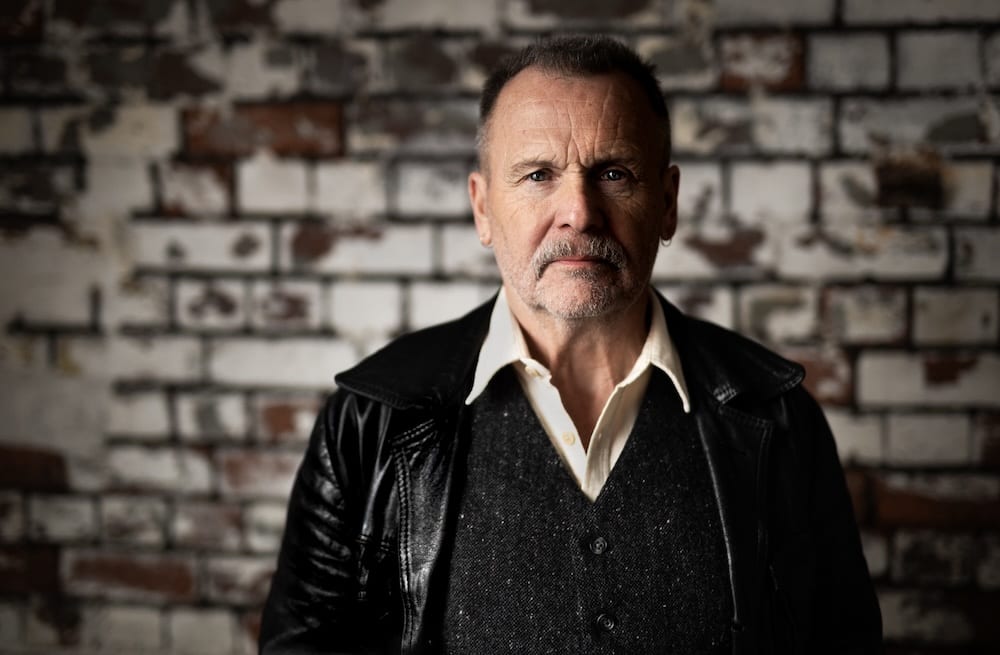
Martin Simpson is clearly pleased that his current album tour is selling fast and looks to be one to get excited about. “Yeah, it’s a great feeling, it’s very good,” he says with a smile. You get the impression that Martin takes none of this for granted and is grateful for the support over the years. And of course, Some Kind of Jubilee is a major release, marking fifty years since his debut album Golden Vanity landed in 1976. “The most major thing about it I think is that I had really high hopes for it and it appears to have paid off,” Martin says. “The marking of the fifty years just seemed like a very logical thing to do, but I didn’t set out to make it a double album. The same thing happened with Skydancers; that wasn’t going to be a double either.”
Too much good stuff for just two sides? “Well, I tend to get very excited…” he grins. “For this I was pursuing something very specific. Partly it was the idea of properly working with [US pedal steel player] Greg Leisz. I absolutely love my English trio, which is Liz Hanks and Louis Campbell, so with Ben Nicholls and Zak Hobbs on there too, the English side was all tied up, but I just had this sound in my head that included Greg.”
To achieve the sound he was after, Martin began by recording songs in the UK, before jumping over to the States. “We recorded tracks like The Grey Funnel Line and The Recruited Collier specifically with the idea that they would have pedal steel on them,” he explains. “But then we recorded a bunch more over there, just me and Greg, which was fantastic and we added to that back over here. It was all really exciting and working with Andy Bell again was a real treat too, because we haven’t for a while and we just get on well.”
This transatlantic connection has been an intrinsic part of Martin’s art for a long time, with him having lived in several parts of the States for around fourteen years before moving back to his native north of England. “When I was little, the first music that moved me was American,” he says. “It was my eldest brother’s funeral yesterday and he’s very much in my mind. He bought me my first guitar when I was twelve and it was his records that really got me feeling. I’ve told the story many times of hearing Paul Robeson singing Sometimes I Feel Like a Motherless Child, but it was only when Jeff was in hospital that I realised it wasn’t my mother’s record, it was actually his.”
Martin’s versions of Sometimes I Feel Like a Motherless Child on Some Kind of Jubilee are stunning, both the solo take and the Santa Monica version, with the added reverb and Greg’s pedal steel, and the lack of vocals giving the sound a haunting character. “It’s arguably a very small song,” Martin says, after a pause. “It doesn’t have a lot of lyrics and sometimes I feel like while a lyric can do it very rapidly, there is a depth of transmission in an instrumental version of a piece like that… The bottom line is I feel I can play that song better than sing it. I was talking to Paul Smith of Paul Reed Smith guitars earlier,” he continues. “He recorded the [solo] version of that song and Jeff (Martin’s brother) had picked it to be played at his funeral underneath a compilation of his wildlife photographs. So it’s all very much front and centre emotionally for me at the moment.”
This wildlife and nature connection feels pertinent, with several of Martin’s songs over the years focusing on it, including Survivor and Toy Soldiers on this album. “My father and my eldest brother were one hundred percent into nature,” Martin smiles. “Watching birds and being in touch… My father and I would walk along and it would be a constant procession of names; he’d show you flowers and tell you what they were, because it mattered to him and therefore to me. All my life it’s been there and I write songs about the things I care about and the reason I don’t write many songs about human relationships is not because I don’t care about them, I obviously do, but because there are a lot of songs about them! There are not a lot of songs about trees and survival of nature in general. Yesterday at the funeral I sang Dark Swift and Bright Swallow because it’s a song about nature, our relationship to it and hope for the future. And boy, we need that…”
On songs like Toy Soldiers, the hope must give way to anger and protest, with Martin aiming his ire at the ‘sport’ of pheasant shooting. “It is a protest song,” he nods. “I wrote that one around 2013 and at that point the statistics for captive bred birds to shoot were horrifying; there were probably 35 million pheasants raised and released into the countryside and that was bad; it’s fifty million now. When you think about how many people are involved in that and what it’s really about… People say ‘oh it’s food, there’s no waste!’ and that’s just bollocks. It’s a horrific practice; I used to just accept it, but I can’t accept it now, it’s just disgusting.”
We mentioned personnel on the album before, with Greg Leisz present along with Liz Hanks, Ben Nicholls, Louis Campbell and Zak Hobbs. It’s a setup Martin has crafted over time, with stalwarts and young blood present. “Ben is just a monster, he’s wonderful,” Martin grins. “I was fortunate enough to work with Danny Thompson a lot and he was the first person to demonstrate that stand up bass was actually a musical instrument with pitch; on all of the early recordings I listened to it was just a muffled thud in the background, then all of a sudden, there’s this roaring instrument revealed.”
When we highlight the generational lineup, with twenty-somethings mixing with seventy-somethings, Martin laughs. “Well, I’m not giving a kid a chance because it’s the noble thing to do,” he says. “With Louis, Sam Sweeney got in touch six years ago and told me about this guy in the National Folk Youth Orchestra who was doing guitar at Royal Northern College of Music, and he asked me to teach him some stuff. And he was shockingly good! He clearly knew an enormous amount, and his ability to learn was gigantic. He could do things in the studio that I would never have thought of doing.
“As far as Zak was concerned,” Martin continues, “I met him at the Richard Thompson Guitar Camp in Big Indian, New York, because I was teaching there and he’s Richard’s grandson. I’ve always got on really well with Zak and I just watched him grow and he’s such a good guitar player. On this record he plays on three tracks and he was clearly the man for the job. If you listen to the interplay between my guitar, Greg Leisz’s steel and lap slide and Zak’s electric guitar on [Love Never Dies], it’s really beautiful – I’m allowed to say – it’s incredible interplay. It was fabulous and it’s nice to have that.”
As for Martin’s own playing, which has been at the very top level for decades, the light shines ever brighter, as you can hear across Some Kind of Jubilee. “I feel like I’m a better musician now than I’ve ever been,” he says. “My chops are as good as they’ve ever been, although I’m not as flash as I used to be. But that’s alright, I don’t need to be, there’s plenty of flash guitar players out there and it’s great.” He stops and laughs. “I’ve been accused by the very best of playing too many notes,” he grins. “But, like I’ve always said, fuck off!” Damn right.
Some Kind of Jubilee (September 25th, 2026) Topic Records
Order here: https://martinsimpson.lnk.to/somekindofjubilee
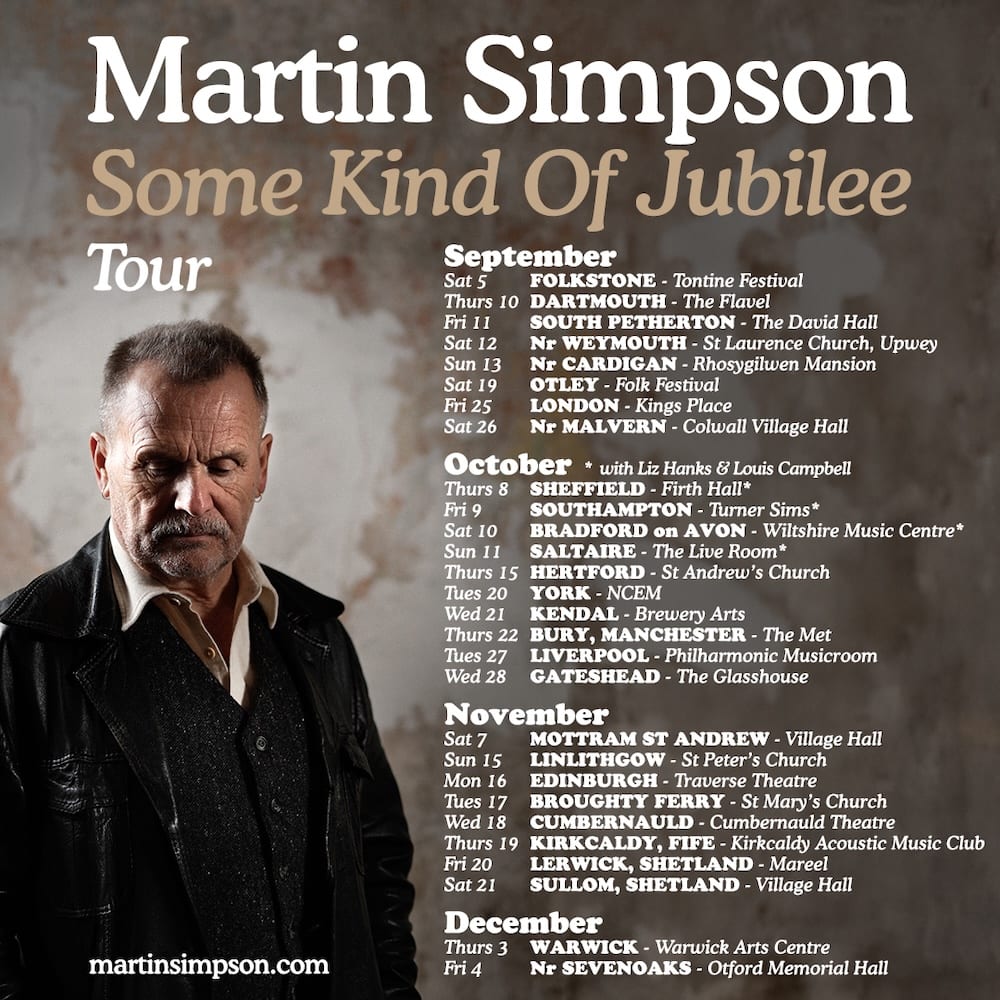
Tour Dates: https://martinsimpsonmusic.com/gigs/