
Below, you can read Blake Wagner‘s insightful and informative interview with Derek Piotr, a far deeper dive than anything we’ve featured on KLOF before. Derek is a renowned folklorist, performer and composer based in New England. Regulars may recall that we spoke to him in 2022, around the time that he established the Derek Piotr Fieldwork Archive, for which he is the lead archivist and creative director. The Archive contains over 2,000 audio recordings collected from March 2020 onward and preserves diverse representations of folklife, including ballads, hymns, tales, poems, children’s songs, and interviews.
We’ve also reviewed Derek’s own work; Thomas Blake described the music of his 2024 album, Divine Supplication, as existing in a hazy zone, a grey area between archival field recording, abstract pop, old-timey folk and modern composition. He concludes: “There is something in his practice that aligns with plunderphonics, but it goes deeper than that, both in an emotional sense and also in terms of the level of creativity on show at any given moment. It’s hard to think of a recent album with more going on than this one. It’s also hard to think of an album that deals with personal difficulty in a more engaging, passionate and transformative way.”
Enjoy
Alex Gallacher (KLOF founder/editor)
“I Want The World To Be Recording Itself”
Tell me a little bit about the Fieldwork Archive.
The last time we had a published conversation was in 2022, and I was pretty wrapped up in curating and disseminating those Death is Not the End albums1. Very shortly after I had curated those albums, I put 209 recordings I’d made up on fieldwork-archive.com. I had a couple of trips to North Carolina. I had also lived in Britain for a while, and I’d been making short interviews centered around songs with a handheld Zoom recorder in these various places, and I have an assistant that I’ve worked with my whole career as a musician. I basically said to him, “How easy would it be for you to make a library of these songs?” We came to that conclusion because there were a few university spaces and libraries and even the Library of Congress that I’d offered these songs to and been like, “Do you have an interest in having these?” And the Library of Congress, because the songs weren’t a part of a proposed grant, like the Archie Green grant that they give out, they couldn’t take it. There were a few universities that were interested, but it was kind of like the student intern would have to get the hours; we would have to log those, and then the container could get built. So I just founded my own country with this website. Now I’m at 1,824 songs – that’s 1,615 songs up from when I started the archive three and a half years ago.
I’m in Utah right now. I just made probably 70 recordings while I’ve been out here – Basque songs, Mexican songs, LDS songs, Catholic songs, silly songs, cowboy songs. So what’s really happening is I’m becoming known as an extractor of these smaller songs, and I’m being asked to come to various locations to do that extraction. I feel like as soon as this archive went visible and people could see what I was doing, I very quickly wanted to decentralize and like not be the sole shepherd. So, donated recordings are a thing now. I have some field agents that I commission, and there’s just been an explosion of material generated to rival some of the 20th century field recording projects.
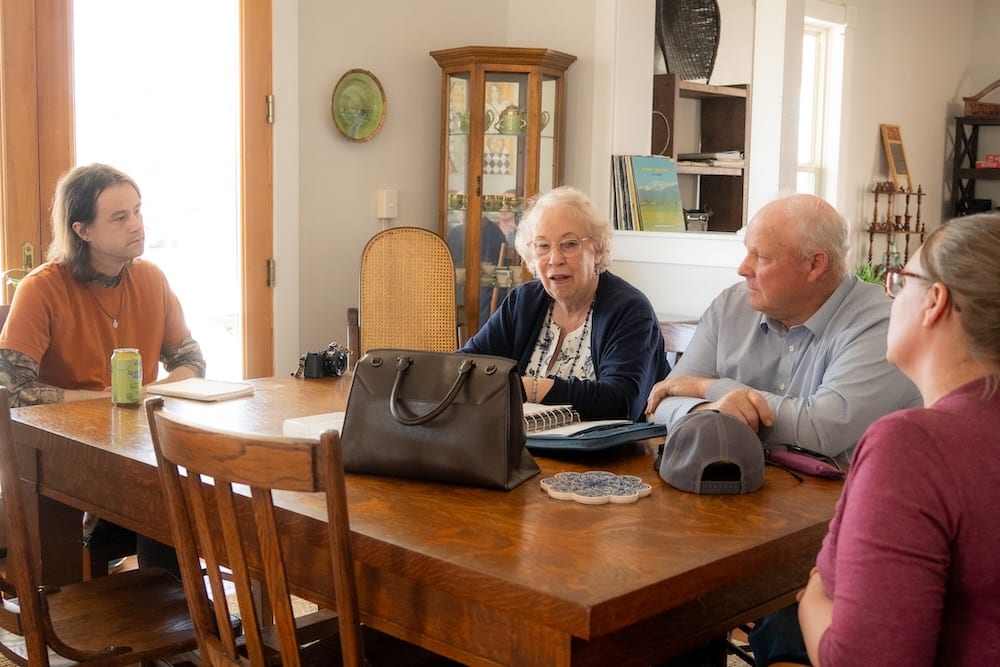
‘Come, Come Ye Saints’, performed by the Durfee family
I’m pretty unhappily alone having made field recordings in the numbers of the hundreds in North America in the 21st century, because I don’t think (unless I’m like sorely mistaken and all the folklorists I’ve asked have lied to me) people have made over a thousand recordings in the 21st century of traditional music that I have seen. So that’s a lot of data at once, but that is to say, like, I’m drowning happily.
Do you think it’s the complexity of garnering institutional support, or do you think it’s a cultural tide that has limited people’s ability to go out and make these fieldwork recordings? I’m curious about what you think the root cause is of the fact that people have not been making folk recordings in the 21st century.
I think that this practice does exist widespread, but it’s nebulous, right? People are recording their nephew playing a Romanian flute at the church hall, or they’re recording their grandma on her 100th birthday singing that one song from her childhood. People are doing this, but it’s not widely done or organized. So it is happening – YouTube and TikTok are littered with it – but from an institutional standpoint, I really don’t have an answer. People make recordings all the time for student projects, but then the project ends and their engagement with making oral history recordings ends, as well. I’m out here [in Utah] because Joe Kinzer at Utah State – he’s the archivist in the folklore department – really believes that there should be recordings made today and not just recordings studied from the 20th century. I don’t know that he has a very popular worldview. I think a lot of the academics in folklore are very happy to just comb through the amount of material generated in the 20th century, and there is a lot, and it’s gorgeous.
I don’t know if people also presume it doesn’t exist as vibrantly as it does today, but I’m honestly finding fragments of the same songs, the same length. There’s sort of an obscure Anglican hymn I found called “Precious Jewels,” and this woman sang a fragment of it, and the only other field recording I could find was made in Ohio in the 50s. I was like, “Oh, cool. I’m gonna get the whole hymn.” But this woman was stumbling through it and trying to figure out the chorus, so nothing’s changed. I got the same amount of musical material as a collector working 100 years ago. It’s not like I’m getting anything less than people were getting in the 20th century. People are still half remembering stuff, there’s still fragmentary memories occurring.
There are a lot of barriers to entry, I think, for people to do this in an institutional setting right now. There is a certain kind of hostility towards this kind of work on an administrative level, and I think, just kind of the way that universities have been trending for the past 20 years or so.
Yeah, I should say this right up front that all of the content on Fieldwork Archive is Creative Commons. So I actually put a CD together, a la the Death is Not the End compilations, called Absolutely Not For Sale. I think I put 10 copies on Bandcamp because I wanted to give netizens a chance to have this compilation, but I’m not generating any money off of the recordings because ethically, how can I visit with someone’s grandmother and have her reminisce and then go put it on Spotify or something for money? So the content is not monetizable, but my time certainly is, you know, and I can charge for lectures and workshops and stuff.
The other thing is, I’m not coming at this from an academic background. I came at this through natural curiosity about history. So, because I was a traveling musician touring before all of this started, the model for me is rather like a tour, you know, there’s an appearance fee and then I come and do what I’m going to do. And that justifies my time. I asked for what I would probably make in a day at a normal job. I’d be an idiot not to do that, because I would just be bankrupt, but the content is not monetizable as far as I have breath in my body. So I want to do another free compilation this year that’s called, like, Still Not For Sale. Those are also gifts to the libraries that I go lecture at and the universities that I collaborate with. I sent one to the Library of Congress, the Vaughan Williams Memorial Library, the Smithsonian, and one to Marina Abramovic. It’s more like a glorified business card, really. I’ve tried to deal with this as ethically as possible while still kind of garnering some sort of support for myself.
I am under a fiscal sponsorship. And I was last year. So that’s another model in which I have an acting umbrella of a 501c3. From there, I can just be myself.
The first time you and I chatted, you were still in the world of glitch and experimental and noise music. I’m curious if you see some sort of continuum between the music that you started making and the kind of music that you’re encountering in the field now.
Two years ago, I put a record2 out with Fennesz and Maja S. K. Ratkje, who’s a Norwegian noise musician. Maja has a daughter, Frida, and Frida blew my mind. She sang these two Norwegian folk songs, one of which ended up on the compilation I made, so Frida is going to sing guest vocals on one of the songs that I’m writing now.
I was also deeply affirmed by [Robert Eggers’ 2024 film] Nosferatu. There’s a Romanian community in Connecticut, so I sought to connect to them and hear some of their songs and stories. Then somehow I got in touch with Trei Parale, because there was a connection between my community and Trei Parale, who are actually the musicians in the Nosferatu soundtrack. They have a guest vocalist named Mariana who studied ethnic Romanian music, and she’s singing a song on my new record.
I mean, these are not traditional songs, but I am hearing musicians that are blowing my mind doing this work, and then I’m inviting them to participate in my solo work. The peas are getting into the mashed potatoes for sure.
What about any stylistic kinship that you see between these genres?
I mean, I grew up on Björk’s Medulla and AGF, and some of the early St. Vincent records, and all of those are a little bit dusty. There’s like a lot of choral multi-voice moments happening in all of the dust and noise. To a greater or lesser degree, St. Vincent’s Actor has some really interesting grain in some of the tracks, and she’s multi-tracked her voice. That’s happening in these field recordings, especially when there are multiple voices in a space and dogs barking or birds in the background. I’ve never gotten away from this equation of voice and noise.
Noise, experimental music, glitch, all these things feel kind of cyclical to me because a lot of that stuff feels like you’re taking the conventions of popular music and pushing them to their logical extreme and deconstructing them, but these folk recordings are also where that same kind of lineage begins.
When I got my first microphone in 2007, it was like a Radio Shack mic, and I plugged it into my tower computer with no sound card or whatever. And it was pretty noisy. I would loop my voice sometimes in a very ham-fisted way, like MIA’s Kala, where the sound is really chunky, and I remember that sort of thing. I’m almost tempted to make a little 10-second MP3 of things I’ve never released from 2007, a moment of me skipping my voice, and then 10 seconds of an Alan Lomax platter where that happens, because that’s just what happens when you digitize old discs. The more things change, the more things stay the same.
When you and I spoke on the phone, you mentioned that part of what you’re interested in is contextualizing these folk songs in the 21st century. Not just showing that these folk songs continue to exist, but that the media and the nature of the recording itself has changed. Obviously we don’t have wax cylinders anymore, but there are very contemporary artifacts that end up becoming a part of the recording, too. What was important to you about that? Can you think of any specific examples that illustrate the very 21st century aspects of the folk recordings that you’re doing?
Part of what the compilation sought to do is give you the creamiest-sounding thing, the most enjoyable version on a sonic level. I think academia is wary of doing modern folk recording because it’s so easy to do now, and I think the concern is that you’re doing smash-and-grab ethnography – but as far as I’m concerned, the relationship I have with my singers is limited to the extent to which they want to share. They don’t necessarily want to go into all of their personal lives, or if they do they’re like, “Oh, can you edit that out later? You’re just using the song, right?” They’re happy to share privately, but they don’t want that stuff out there necessarily.
That’s something I’m trying to address with Utah State, because they do want to take longer oral histories from some of the people that I’ve met on this trip, which hopefully they can do, but I’ve hit on this sweet spot of mostly non-singing people singing for me and being like, “Oh, you want to hear my grandpa’s song? He was really important to me. I guess I could do that,” and they’ve never been in front of a microphone before. I am trying to get that virgin soil kind of dug up and put people in front of a recording device that otherwise never would.
The folk singers are always going to sing. The non-singers are not necessarily, but even when I’ve interviewed Will Oldham, Gordon Bok, Peggy Seeger, the glitz and glam of the archive, they’re yelping down the phone, or they’re singing over Zoom and forgetting half the words. Peggy Seeger was kind of humming her way through what she could remember of this childhood song that she had before she became a performer. I try to keep this democratizing. Will Oldham’s recordings are less sonically remarkable than some of my everyday people.
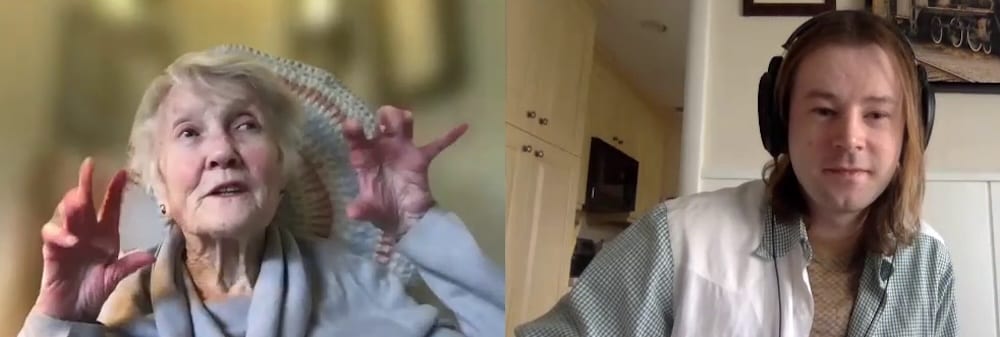
‘I’ve Been a Bad, Bad Girl’, performed by Peggy Seeger
One of the features of the archive that you repeatedly mention is that these are non-singers. It’s funny to think about people singing at least for a recording device for the first time, because in this day and age, we’re so used to being recorded constantly and have developed such a comfortable relationship with cameras and hearing our own voices. But singing is still an incredibly private act. You’re tapping into one of the last aspects of our daily lives that isn’t just recorded all the time. You’re approaching it with a level of intention that most of us don’t approach the act of recording with anymore.
I think that’s part of why I don’t take videos. I think these people are being so vulnerable already with a little device on the table that they’re not noticing that video would just kill any frequency we could share.
However, I’ve done so many photo shoots of myself at work because I want people to get it. We think with our eyes. We don’t really think with our ears, as much as this is an audio collection. Having photos of me at a kitchen table with just anyone’s dad, it shows the other people that they can be comfortable, too. When I came to Utah, this family from a 75-population town in Idaho drove down and took photos like that with me because they’d seen what I was doing and they went, “OK, this isn’t a threat. Mr. And Mrs. Smith did it with you, I can do it.” That’s another thing academics don’t like – you’re not supposed to be part of the observed. You’re the observer. To hell with that. Janis – this woman from Idaho – said, “I was really nervous on the drive down, but you made this so comfortable and so enjoyable.” That’s my goal. Even if we don’t get a usable recording, even if it was interrupted and noisy, they spent a whole afternoon remembering songs with me. We drove to their family’s house after, and all these sisters were there as a surprise. They didn’t know they were in for a family reunion, but all these members of the family showed up. There were, like, nine of them. The document is the point of the archive, but in a way it’s secondary, because I’m giving these people space to remember the old songs that they haven’t thought about in decades. And I think that generally feels really good for people.
I always tell this story in my lectures. 100 years ago, you’ve got grandpa in a little town, and he’s never seen a streetcar before, and down the unpaved road trundles this skinny-wheel Model T with this big recording box in the back, and there’s no electricity at grandpa’s house. So they hook the thing into the car battery and make him climb into the cab of this automobile and crane his head into the thing and sing. I always think that that’s a terribly awkward ask of people. I mean, obviously they also met in hotels where there was power and stuff like that. But a lot of the time, like in Helen Hartness Flanders’ case, they had to climb in the automobile because they just didn’t have power. So what I’m doing today is pretty casual, you know – the recording device is about as big as a pack of cards, and it can just be on the coffee table, and then you don’t notice it after a while. I think that’s part of why I’ve had success with these non-singing strangers.
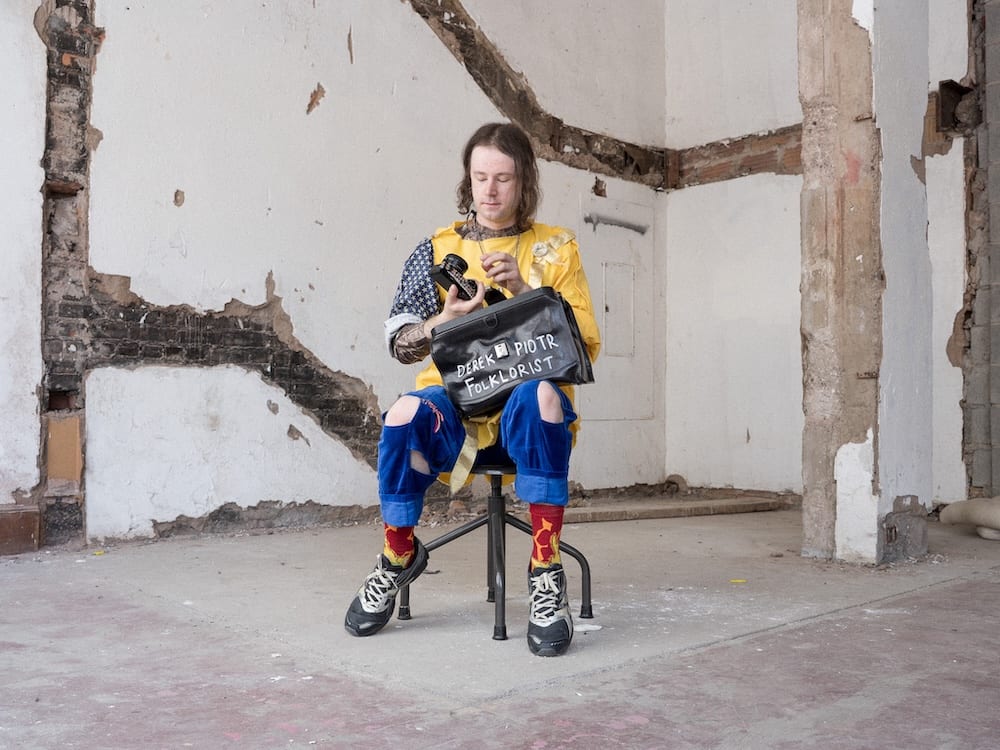
I’ve gotten into this groove of a working model where I can go to a region that is not my own – Iceland, Germany, whatever – and get into these living rooms, and just kind of show up with my doctor’s bag, which gives people a sense of humor, like, “You make house calls. He’s not taking it that seriously, even though he’s very sincere.” It’s not this academic remove. It’s a bit theatrical. I think people enjoy that. I almost feel halfway between a music therapist and a diet clown of some sort.
The next step for me is to develop some workshops because the top comment I get when people visit this project is, “I wish I could do this,” and they can. It’s about finding that inner conviction and then connecting it with some technical know-how. I think that those are both invitations. It wouldn’t take a lot for people to get to where I’m at. I want the world to be recording itself.
You said that people have been contributing to the archive as well, that it’s expanded beyond just you going out there solo. How have these people gotten involved? Has it literally been a process of people coming up and saying, “I want to contribute,” or are these mainly people that you’ve met over the years through your work and connected with and reached out to yourself? I’m imagining the future of the archive and when you’re talking about having workshops and teaching people how to volunteer their own time to contribute, what does the vision for that look like?
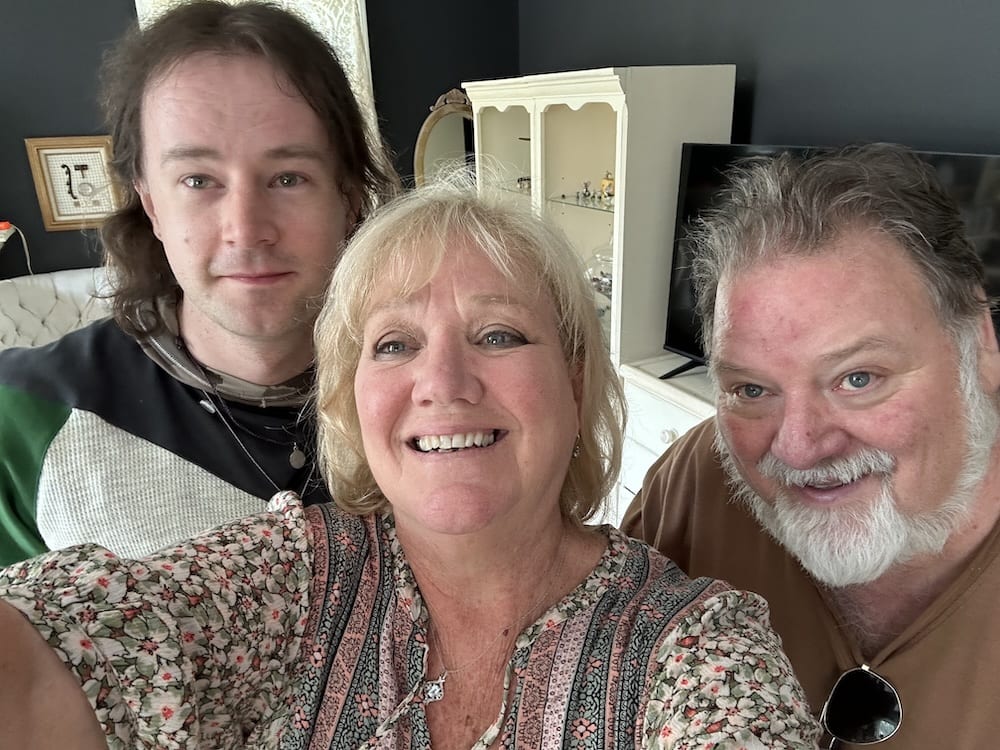
Oh, it’s a combination at this point. I’ve done some interviews with longtime friends, which have surprised me totally that they knew these songs. It’s amazing to know that they had things that would help – the hymn I found, “Precious Jewels”, was my longtime neighbor in Connecticut, my next-door neighbor when I grew up. To have her contribute was really cool.
‘Precious Jewels (When He Cometh)’, performed by Esther Loizeaux den Breems (Archive Link)
But the emails come in, and the Instagram messages come in, and people call me. Also just doing library lectures, like almost invariably at this point at the end of a lecture, someone will stay in the space and do a song. So that’s been a great way, because people are listening to homespun recordings for an hour and they completely get it. And then they just go, I mean, I can do it.
That’s the point – you’ve invited them in at that point. People feel comfortable enough to approach you without having to jump off a ledge.
I would love to hear what your experience in the American West has been in relation to your work documenting non-singers in North Carolina and the East Coast, because it’s a different tradition, and different flows of culture have made their way out there. I’m curious if you’ve seen those things permeate through the work that you’ve collected. What are the differences? What are the similarities?
I tried to perceive this my whole trip, and it’s odd that it’s almost imperceptible, which isn’t to say that there’s nothing to perceive. It’s just that what is being perceived is hard to describe. The vibe of Utah was very tangible, but it’s not easily describable. It does weirdly feel brand new. I’m from New England, and we have these old apple orchards, these stone walls from the Revolutionary era, and everything feels so permanently Yankee.
Then, out West, you get all these little Cindy-Lou Who houses – some are pink, and some are green, and some have half-Tudor, and some have half-brick, and they’re tiny houses with these weird buttresses and attachments. That just made it feel like a movie set or something. I was like, “This isn’t real.” But the people all seemed very content with where they live and love where they live. They loved Logan, Utah.
Even the family from Almo, Idaho drove down and were like, “We come to Logan all the time. We love Logan.” But it’s a very dry year for them. I did perceive the dryness. My first thought when the plane was landing, and I looked out the window, was, “Why would anyone choose to settle here?” It reminded me of Iceland.
I’ve gone to a lot of places to do this work, and I think in Utah, particularly with the Durfee family that I met, knowing they were from a 75-population town, I felt very prepared to be scrutinized. I said this in an interview once, but when you meet the “rural isolate” – and this is maybe a poetic butchering of a personage, because I don’t know if these people really exist anymore with the Internet – but like, the old woman with a slicked-back gray bun and a huge flannel shirt on, standing in her door frame, and you have a successful conversation with someone like that, that’s the ultimate. I feel like that makes you more well-rounded as a person, dealing with people generally. That was an archetype in my brain. That was the frontier I thought I was conquering.
Kent Durfee was sort of that way. He grew up on a farm; his whole family, since they settled there, were farmers, and the town is small. I brought a photographer into the room, and they weren’t necessarily prepared for that element of this girl with a huge Canon camera showing up. Yet we had a very successful connection, and a very organic experience. I think that showed me that I have a working model that I can bring anywhere. That felt successful, where maybe I had some trepidation or some, like I said, poetic butchering of what a person is really like out there.
I was just talking to Barre Toelken’s daughter, Kaz Toelken. Her father was a folklorist and did a lot of work with the Navajo community, even though he was from Massachusetts and his wife was Japanese. Kaz is always talking about how song memory is an amazing way to not be an outsider anymore. I’m this six-foot-tall Kurt Cobain Muppet. It’s amazing to me how well these interactions go based on my bizarre, eccentric personage.
That will never change. I’m not gonna cut my hair and put on a suit just for the auspices of field recording, but I’m always a little nervous. I went to a Mexican Catholic church in Hyde Park, Utah, because the priest wanted to talk to me. Then, he invited me to meet members of the community that were part of their band. I stayed for the service, and this woman behind me tapped me on the shoulder, and she was like, “Are you a student? What are you doing here?” Once I explained I was here for songs, her husband took my number – he was this reserved, quiet man – and he texted me these photos of ceremonies, and she was naming individuals in the community that would know songs for me. The minute she found out what I was doing, it was like all the walls fell away. Once people understand that you’re, you’re, you’re interested in the shared story of a region, it does, it does kind of stop mattering what you are made of.
It’s funny to me when people say that they don’t actively listen to music, because most of my encounters with people from wildly different backgrounds have started with a shared interest in music; it’s such an essential point of connection. Nowadays, your average American engaging with the culture industry at large can just treat music like a hobby – some people are into music and other people are not. But up until the advent of recording technology, music was not a thing that you could choose to be into; it was a part of life. It was like doing the dishes.
That was kind of everybody. Everybody was singing because there weren’t musicians. The microphone did a ton of damage to the field holler. The birth of the crooners was sort of the death of the field holler in a way, right? And not just the style of vocal performance, but also that we’re subconsciously making those links in our brain – “This is what music sounds like.” The gulf between those two things is massive, and that’s its own anthropological quandary. A microphone is a very controlled situation where there’s a lot of focus. I always think about microphones as a solo artist because the minute one shows up, you’re directing all your energy into it. I think that’s just the thing humans do with devices, but it did change the way we sing, and people then started to elevate music to this thing that’s no longer of play. If they did sing of play, it was when they were younger, and that’s considered kid stuff or whatever. It’s definitely a brick that I have to kind of push out of the sidewalk, so there’s always a lot of labor involved sometimes in getting someone over that distinction. I mean, that’s just here to stay, right?
For me, this project is mostly now the fact that music is the most superlative thing in existence. Music, to me, is the lifesaver. To be able to find music within the perceived non-musical, like the lady you wouldn’t look twice at at the grocery store, the guy that you can’t stand because he’s taking forever at CVS, like maybe they know some outrageous cowboy poetry or some old railroad songs or some camp songs. That elevates us all to these musical participants, and it kind of creates music out of the dust in the carpet. The least spectacular-looking human on the planet is still capable of the most superlative thing we can all share in, which is music. That’s really the drive for me.
I think the canon of old-time music is probably never gonna die, but I’m gonna nebulously get different songs as I continue – people are just going to remember different repertoire as the years go on. But I think that to just elevate someone for a minute to the status of musician and record a clip of them, even though they’re not a singer, and have them celebrated in discussion and reflection on this project as a singer, that’s a huge triumph to me.
Post-Script: In recent months, Derek and I have bonded over our mutual love for the Jackass franchise, especially Bam Margera’s spinoff series, Viva La Bam. Discussing the tradition of folk singing in Appalachia naturally led me to ask if Derek had any hopes of recording Pennsylvania natives Phil and April Margera (Bam’s parents, and perennial Jackass fan favorites). Not one to shy away from a challenge, Derek did in fact reach out to Phil and April, whose recordings can now be found on Fieldwork Archive.
Fieldwork Archive: https://fieldwork-archive.com/
Derek’s Personal Website: https://derekpiotr.com/
On NTS Radio: https://www.nts.live/artists/32579-derek-piotr
- Last Wisps of the Old Ways and Ever Since We’ve Known It (Bandcamp) ↩︎
- Divine Supplication (Bandcamp) ↩︎