

Imagine a world where early noughties freak folk of the kind perfected by the likes of Little Wings, Charalambides or Six Organs of Admittance collided with cosmic Afrofuturism, where fiddles, pedal steel and mandolin rubbed shoulders with spaced-out flutes, wild brass and freeform percussion, and you might be getting close to what Jay Hammond achieved with his first recordings as Trippers & Askers. Acorn, Hammond’s 2021 album, was one of the most successful fusions of Old Weird America, spiritual jazz and literate songwriting you’re ever likely to hear. Its follow-up has been a long time coming, but it’s certainly worth the wait.
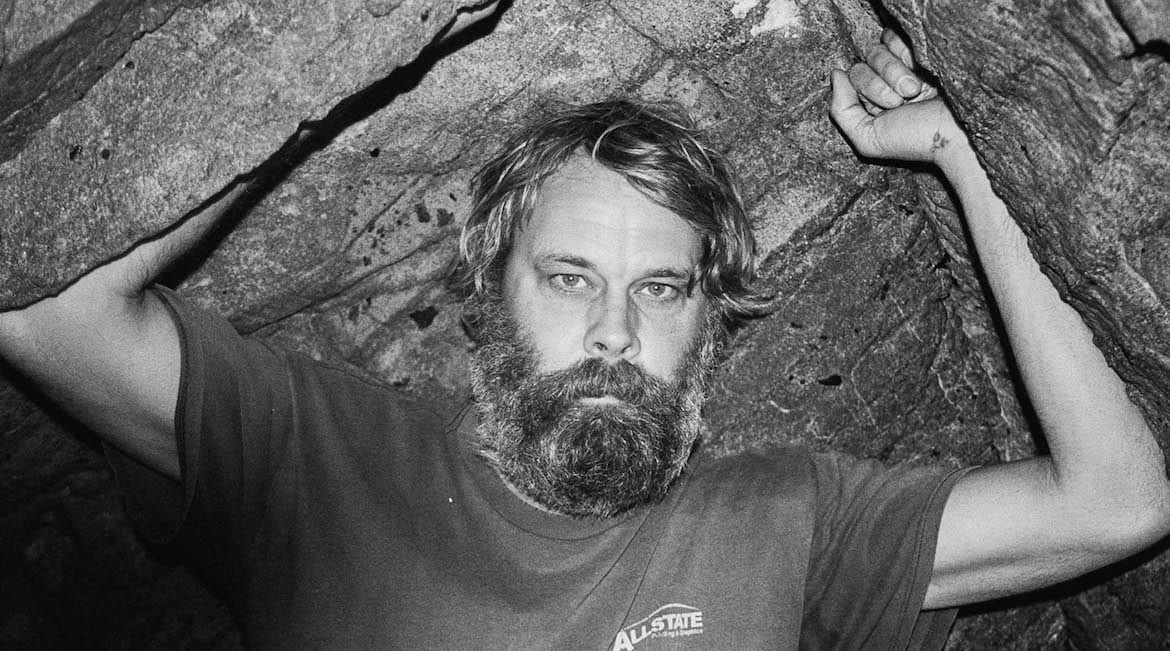
On Tried To Do’s, Hammond embraces a slightly more introverted and song-based aesthetic than before, moving away a little from the jazzier flourishes of Acorn. This is no doubt due to the circumstances surrounding the album’s gestation. In a short period of time, he was beset by a series of events that resulted in acute grief and personal trauma: the loss of his future child and of his grandmother, the near-loss of his father-in-law and the devastating effect of Hurricane Helene on Asheville, North Carolina, a city he has come to call home. These events caused Hammond to look inward, but also towards the future, so while grief is evident in these songs, so too is a sense of calm, of groundedness and a kind of acceptance.
The title track, which sits at the heart of the album, sets out Hammond’s stall. His lyrics focus on the effort that goes into making a life a life, the small and apparently mundane actions that represent goodness and work and endeavour. It’s not so much about ploughing on in the face of adversity, it’s more a case of taking stock, identifying areas of positivity and calm, and inhabiting them positively and calmly. Accordingly, the music is a kind of soft-focus world-folk, full of layered strums and hand drums.
From that central point, the album seems to stretch out in both directions, with Hammond using each song as a means of close examination, either of his own feelings or the external things that make up his lived experience. No Coming, No Going, featuring the piano and voice of Chessa Rich, is a slow-paced duet in a kind of rainy-day country mode. There are hints of Will Oldham both in the music and in the wise, deceptively simple lyrics, and Hammond’s lyrical guitar solo speaks a thousand words. Prologue sees him channel darker thoughts and inner turmoil into something intense but beautiful, the tension carried partly by a slippery fiddle melody that at times almost threatens to trip over into discordance.
Kin is a taut slice of alt-folk in which a melody of almost nursery-rhyme simplicity hides a richly observed and allusive comment on, amongst other things, the history of race relations in the US. Closeness foregrounds Hammond’s fragile singing and sheds a light on the way self-care and self-knowledge exist in a sometimes uneasy symbiosis. It shows his songwriting at its most subtle, and the piano lines that float freely into the back end of the song reinforce that subtlety and ambiguity. Seven Homecomings has a gentle, shuffling motion that always seems about to settle into stillness, which is fitting given the song’s themes of Buddhist philosophy, while Re-Membering flits between haiku-like imagery and repeated quasi-religious phraseology, with a droning background providing a bedrock that falls away to leave a refreshing openness.
Waterhole trots along on kinetic percussion, a fidgety country song that, when the lyrics are taken into account, becomes a kind of spaghetti western/American gothic combo, steeped in personal history. Trust is an aching, gentle love letter to the self, full of soft percussive splashes and twinkling electric guitar, and closer Old Churchyard has an almost Blakean quality to its quatrains, a kind of cascading lyricism that ends up somewhere between folk song and hymn, and represents a shift from eastern to western religious thought. It is, like much of Tried To Do’s, an attempt at coming to terms with – or at least acknowledging the presence of – grief.
This is an album built around a courageous and endearing kind of sincerity absent from much folk music. Hammond makes bold lyrical choices and underpins them with finespun, moving musical arrangements. With the help of a fine cast of musical accomplices (including fiddle players Libby Rodenbough and Stephanie Coleman, Joseph Decosimo on banjo, Casey Toll on bass, percussionist and improviser Joe Westerlund, and Wye Oak’s Andy Stack on Saxophone, Organelle), he has created a slow-burning but ultimately transformative record.
Tried To Do’s (May 8th, 2026) Sleepy Cat Records
Bandcamp: https://trippers-and-askers.bandcamp.com/album/tried-to-dos-2
Featuring:
Jay Hammond – Voice, Guitars, Production
Chessa Rich – Voice, Piano
Libby Rodenbough – Voice, Fiddle
Joe Westerlund – Drums, Percussion
Matt O’Connell – Drums (Waterhole)
Casey Toll – Bass
Stephanie Coleman – Fiddle
Joseph Decosimo – Banjo
Adrian Knight – Piano, Keyboards
Matt Evans – Drums, Percussion, Synth
Greg Chudzic – Bass
Andy Stack – Engineering, Production
Michael Hammond – Engineering, Production, Mixing
Saman Khoujinian – Engineering, Sound Design
Produced by Jay Hammond, Michael Hammond and Andy Stack
Mixed by Michael Hammond
Mastered by Carl Saff