
Beverley Martyn, the British folk singer-songwriter whose work ran from the Coventry jug bands of the early 1960s, through Monterey, New York and the heart of the Witchseason era, to a long-overdue late return as a solo artist, has died at the age of 79. A statement issued through the family of her former husband, the late John Martyn, confirmed the news, saying that she passed away “peacefully at home” on Monday 27th April. “Beverley was a remarkable woman of great inner strength,” the family added. “She was beautiful, intelligent, warm and kind.”
KLOF Mag had the privilege of making Beverley Martyn its Artist of the Month in April 2014, around the release of her solo album The Phoenix and the Turtle. The much-missed Helen Gregory reviewed the record and the live show that followed at London’s Bush Hall; Simon Holland conducted a long, generous interview in which Beverley spoke openly about her career, her relationships, and the long road back to recording. Returning to those pieces now, what comes through is the same impression that musicians who worked with her have long testified to: an unbreakable spirit, and a voice that lost none of its directness with the passing of time.
She was born Beverley Kutner on 24 March 1947, near Coventry. Music was woven into her childhood: she sang on her schoolroom desk at five, took floor spots in local folk and jazz clubs in her early teens, and by the time she had moved to London for drama school she had already begun to circulate in the orbit of Les Cousins, Bunjies and the Troubadour. Her first band was The Levee Breakers, the jug band she fronted with John Joyce, Mac McGann and a jug player she only ever knew as Henry. They cut “Babe I’m Leaving You” for Parlophone in 1965. Beverley was sixteen.
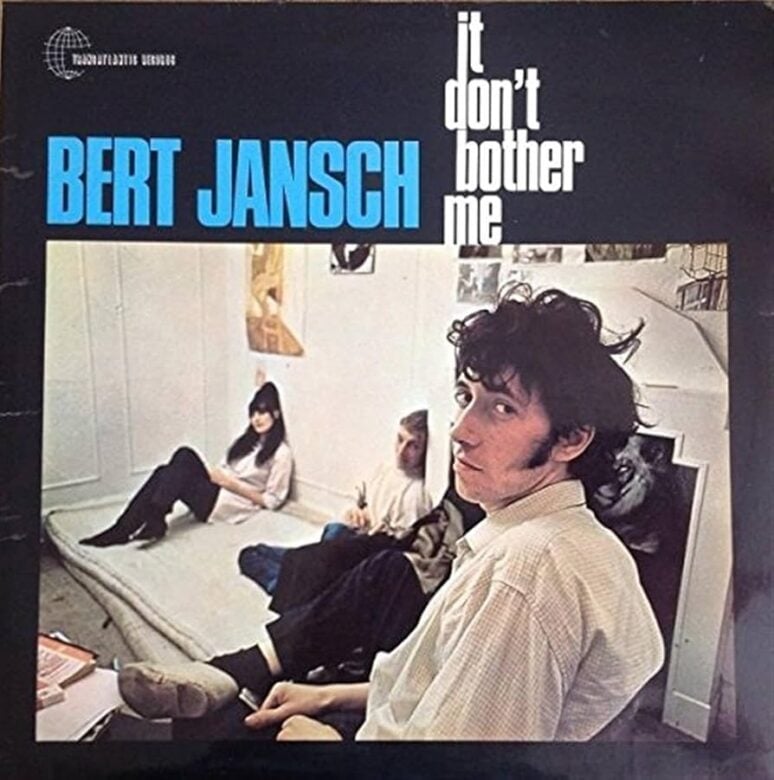
What followed should, by any measure, have made her a household name. Bert Jansch taught her the guitar and encouraged her songwriting; she lounged in the background of the cover photograph of his second album, It Don’t Bother Me.
She was the first signing to Deram, the imprint launched as the progressive arm of Decca, and her label-mate at number two was Cat Stevens. Her debut Deram single was a Randy Newman song, “Happy New Year”, recorded with Jimmy Page, John Paul Jones, Nicky Hopkins and Andy White in support.
Paul Simon invited her to New York; her voice can be heard mid-song on Simon & Garfunkel’s Fakin’ It (Bookends), asking, “Good morning, Mr Leitch, have you had a busy day?” She played the Monterey Pop Festival in 1967 in her own right.
In conversation with Simon Holland, she remembered the period without rancour. “LA was really phoney but San Francisco was beautiful, Haight Asbury and so forth,” she said. “I came home with all these beautiful clothes and everyone was really jealous.” It was a typically self-effacing summary of a moment when, by every external indicator, things should have been igniting.
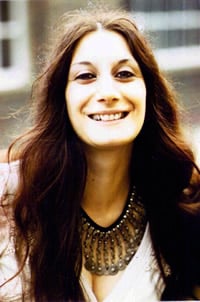
The introduction to Joe Boyd and his Witchseason production company changed the picture, and so did the introduction to John Martyn. “It was when he heard us sing together that he changed his mind,” Beverley told KLOF of Boyd’s interest, “but then Joe and John never really got on. They were just too competitive as John would just try and take over any situation he was in.” The two albums credited to John & Beverley Martyn — Stormbringer!, released in February 1970, and The Road to Ruin, released in November 1970, both on Island Records — remain the records most listeners come to her through. Songs like Sweet Honesty, Auntie Aviator and Primrose Hill (later sampled by Fatboy Slim on his 2004 track “North West Three”) have outlived the era that produced them.
What followed is harder to write about. Island wanted John as a solo artist; the marriage, with its children, its alcoholism and its abuse, broke down terribly during the making of Grace and Danger in 1980. Beverley retreated from music for years. In her interview with Simon Holland she was candid but not embittered: “I’m not angry about it. Why turn myself into a bitter old woman?” Her memoir Sweet Honesty, published in 2011, took its title from one of the songs on Stormbringer! and captured something essential about her relationship to that whole chapter — unflinching, but free of self-pity.
The 2014 album The Phoenix and the Turtle — its title borrowed from Shakespeare, an early example of metaphysical poetry, with the turtle being the turtle dove rather than a freakish match for the mythical bird — was her first proper recording in nearly two decades. Producer Mark Pavey, with whom she had bonded over their shared admiration for Davy Graham, encouraged her to bring out everything she had ever worked on, from the Levee Breakers years onward. The American players Matt Malley (Counting Crows) and Victor Bisetti (Los Lobos) contributed bass and drums; Mike Lease, with whom she had last worked in the 1960s, played organ. “It was a great relief to finally do something on my own terms,” Beverley told KLOF. “That was a dream I’d almost given up on, I mean no one had been coming knocking for years and I was kind of lost to it all; playing small gigs every now and then, but still keeping it going.”
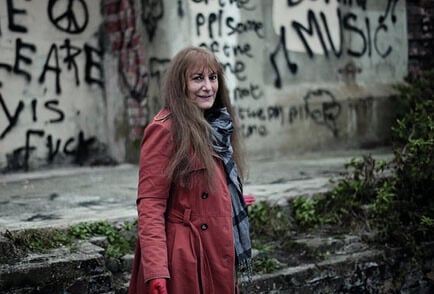
The album’s opening track was Reckless Jane, the song Beverley had begun writing with Nick Drake in 1974, in the spring before his death, during a jam session at her home in Hastings. KLOF premiered news of the unheard collaboration in April 2014. “I couldn’t even think about the song for so long because it brought up so much pain,” Beverley told The Independent at the time. “It took a while to finish after that point.” The song’s character, Jane, was partly based on Beverley herself and on other female “muses” around the scene, two of whom shared the name. In Helen Gregory’s review for KLOF, Reckless Jane stood as one of the album’s high points: “Drake’s influence is clear in both the lyrics and the melody but this is not a reverential historical footnote to another man’s musical career; rather, it’s a respectful tribute which makes a worthy addition to Beverley’s repertoire.”
Reviewing the Phoenix and the Turtle tour show at Bush Hall in west London on 29 April 2014 — itself a rare appearance from a singer whose influence on the British folk scene of the 1960s and early 1970s had so often been overlooked — Gregory caught the spirit of the comeback in a single image: “We are witnessing a rare phenomenon, the reinvention of a folk legend: truly this woman is a musical phoenix rising from the ashes.” The set drew across four decades, from a reworked Sweet Honesty (taken, the review noted, “a million miles from the original”) to Reckless Jane and a thunderous Levee Breaks. Women & Malt Whisky was dedicated that night to John Martyn.
That she made it back at all was, as the Phoenix metaphor implied, the point. From the Bert Jansch tribute concert at the Royal Festival Hall in December 2013 — where she performed Levee Breaks alongside Robert Plant, Donovan and members of Pentangle — onward, the late stage of her career felt like an overdue correction to a long-running injustice. She had always been more than a muse, more than a footnote in someone else’s story. She had been there, with a guitar and a voice, since her teens.
Beverley Martyn is survived by her children. She leaves behind a body of work — two collaborative albums, two solo records, a clutch of early singles, a memoir, and a great many guest appearances on records by other artists — that asks to be revisited and properly heard, on its own terms. As she put it of The Phoenix and the Turtle: “It’s only looking back at the whole process that I understand that and feel really good about what we have created. And that, is the most powerful statement of them all.”
Beverley Martyn: 24 March 1947 – 27 April 2026