
From Sufjan Stevens’ Illinois to the dream-folk of Cold Mountain Child, via Myriam Gendron’s reimagining of Dorothy Parker’s poetry — this week’s playlist moves between grandeur and intimacy. One of our most eclectic in a while — but it holds together. These things usually do.
Listen via: Apple Music | Spotify | Tidal | Qobuz |YouTube
This is a taster of what we send out to our paid Substack Subscribers every Monday morning. For the cost of a coffee each month, you could also enjoy a carefully curated playlist to start your week. In return, this supports the numerous hours of work we pour into creating content. Sounds good? Then sign up here.
Brewing Notes
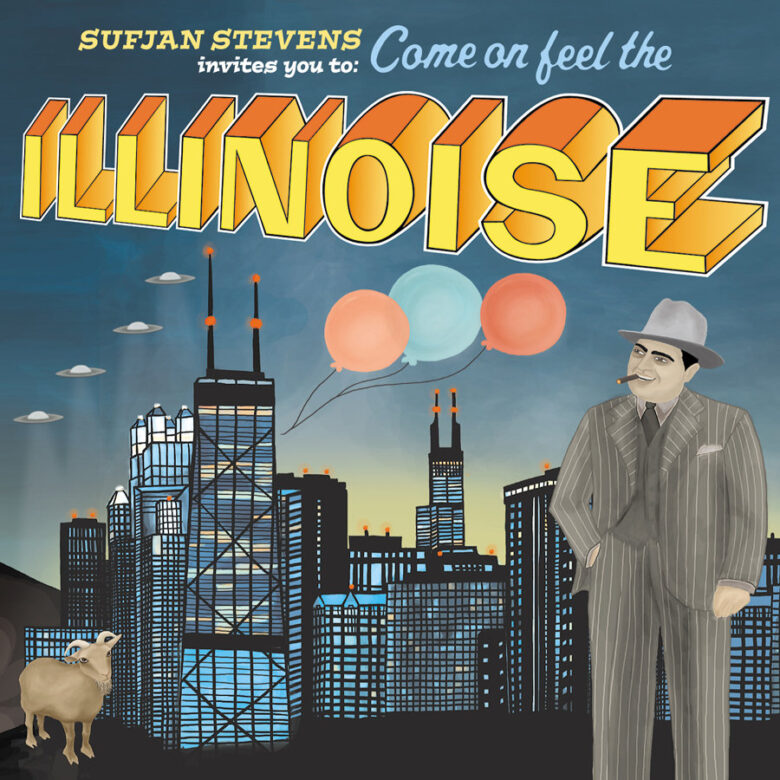
Twenty years on, Illinois still sounds like it was made in a different atmosphere to everything else around it. Sufjan Stevens threw everything at it — orchestras, banjos, mythology, grief, Civil War ghosts — and somehow it held together. It shouldn’t work, but it does, completely…a bit like this week’s playlist, which is probably one of the most eclectic offerings I’ve put together in a while.
‘Chicago’ is the obvious entry point, and it earns that status honestly. That opening builds like something genuinely momentous is about to arrive, and when it does, it delivers. But what keeps people returning isn’t the grandeur — it’s the ache underneath it. The line about making the same mistakes, the sense of setting out and already knowing you’ll fall short. It’s a road-trip song that understands road trips are really just attempts to outrun yourself.
Nobody has made a record quite like it since. That probably tells you everything. It seemed apt to open this week’s playlist.
Amongst the new offerings are several releases we’ve recently reviewed, including music from (linked to reviews): Hen Ogledd, The Early, Bill Callahan, Catrin Finch, Shane Parish, Georgia Shackleton, Michael Cormier-O’Leary and Marta Del Grandi.
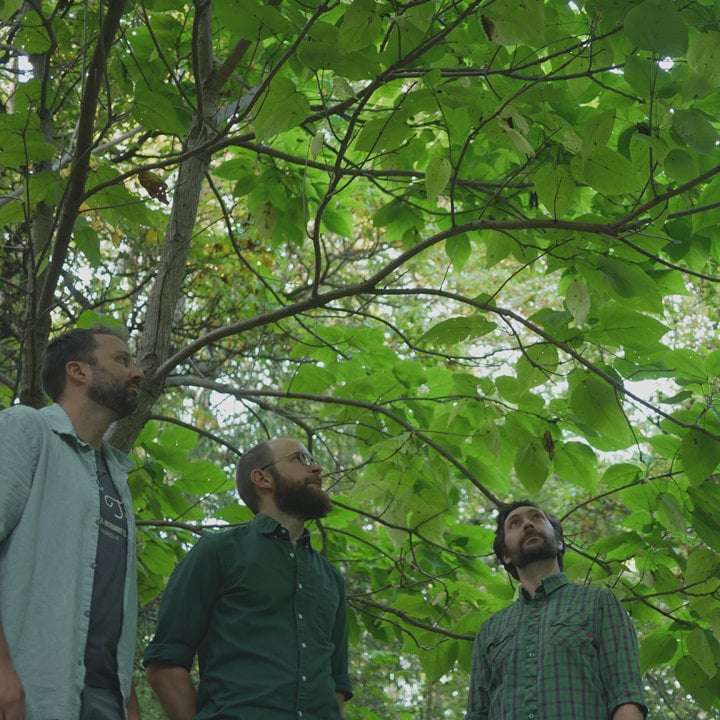
A new recommendation – Cold Mountain Child have always operated in the liminal spaces — between forest and lake, waking and dream, the personal and the mythic. Moon Pine All Night, their new album released just days ago, feels like the record that crystallises everything the Southwest Michigan trio have been quietly building towards.
Recorded entirely by vocalist and guitarist Tyler Bradley, and fleshed out with David Spalvieri-Kruse’s drifting electric piano and Gerren Young’s spare, earthy percussion, it moves through eleven tracks that trace a path from pandemic stillness into something older and stranger — what the band describe as new-old myth territories. Think Anishinaabe woodland air filtered through Galaxie 500, with whispers of nueva canción underneath.
From the opening drift of ‘Moon Pollen’ to the communal warmth of the closing track ‘May We All’, this is music that doesn’t rush, it roots.

Myriam Gendron also makes an appearance, with a track from Not So Deep As A Well, her 2014 debut that was reissued as an expanded edition in 2023 by Basin Rock. The notes for the original release described the album as “strange, mysterious, heartbreaking, and deeply clever. Myriam’s composition and performance of Dorothy Parker’s poetry is a revelation that truly brings out all of Parker’s power as a writer – the wit, the bite, and all the lonesome heartache becomes so heavy and so clear.”
The story of this album is almost too perfect. Gendron stumbled upon Dorothy Parker’s work by chance in a Montreal bookstore — a beautiful 1936 anthology, and she was attracted by the pink cloth cover and the gold lettering. She knew the name but thought of Parker as a satirist — she had no idea she had written poetry.
What she found underneath that cover was something else entirely. Parker’s collected poems — the volume itself titled Not So Deep as a Well, borrowing from Shakespeare’s Romeo and Juliet — revealed a writer of piercing emotional precision, someone whose wit was always a thin membrane stretched over genuine grief. Love, loss, disappointment, the particular loneliness of being a woman of fierce intelligence in an indifferent world.
Gendron finds the folk song hiding inside Parker’s poetry, and once you hear it, it’s hard to imagine the words any other way — no small feat. Recorded alone in her apartment, with no knowledge of sound engineering, it could almost be a lost artefact, a dust-lined document of a forgotten time and place. Her fingerpicking carries traces of Fahey and Michael Chapman — unhurried, a little spectral — and Parker’s clipped, rhyming stanzas somehow breathe more freely inside it, the sardonic edges softened without being smoothed away.
Gendron has said that Parker’s infinite sadness really resonated in her, and that channelling all that emotion made her grow as an artist and as a person. You can hear that in every track.
In case you missed it, we also dropped a new Mixtape on Friday: