
Oxfordshire-born, Leicester-based multi-instrumentalist and producer Adam Weikert releases his darkly gothic new single tomorrow (19 November), a visceral re-imagining of Ed Pickford’s ‘Ah Cud Hew’. Accompanied by a haunting video, it’s the second single from Weikert’s forthcoming album, To Who Ourselves We Owe (due 19 December), a record that taps into tradition while striking out with bold experimentation, weaving synths and field recordings with ancient, broken instrumentation.
Ed Pickford wrote the song in 1969 following his father’s death from pneumoconiosis (‘the dust’) that caused his father to become ill and be laid off from the pits in County Durham, one of many miners to suffer such a fate. Weikert opens his re-imagined version on a double bass that once belonged to Gavin Bryars (used throughout the album) and a broken Sheng (an ancient Chinese instrument) that rips through the drops. “I wanted something to contextualise such a traditional and inherently English song alongside Britain’s rapidly expanding demographics, drawing parallels between the experiences of labour forces then and now to create something urgent and mournful”, he explains.
The accompanying video was shot at Bardon Hill in Leicestershire, chosen for its proximity to the old mining town of Coalville. Directed by The Gleeman Guild, with Fraser West as videographer, it follows a pit brow woman, played by Rachel Acham Seagroatt (costumes by Mary Holder & Adam), as she stumbles blindfolded through the woods and discovers a tile with the visage of T’owd Man, an 800-year-old lead mining figure found embedded at St. Mary’s Church, Wirksworth. This leads to the video (and the song’s) musical crescendo where the tile is destroyed in an almost ritualistic trance. The video features an original miner’s Davy Lamp from Mansfield, miner’s boots, and a deer’s antler (used by prehistoric miners as picks for mining softer minerals like flint).
Pre-save single: https://adamweikert.ffm.to/ahcudhew
The single’s B-side, ‘Black Pillow’, explores the dark folk tradition of a black lace pillow, made by a nun in Ely, being placed under the head of a person who dies by assisted suicide (as written about in Enid PM Porter’s 1959 book Some Folk Beliefs of the Fens).
Behind the Scenes
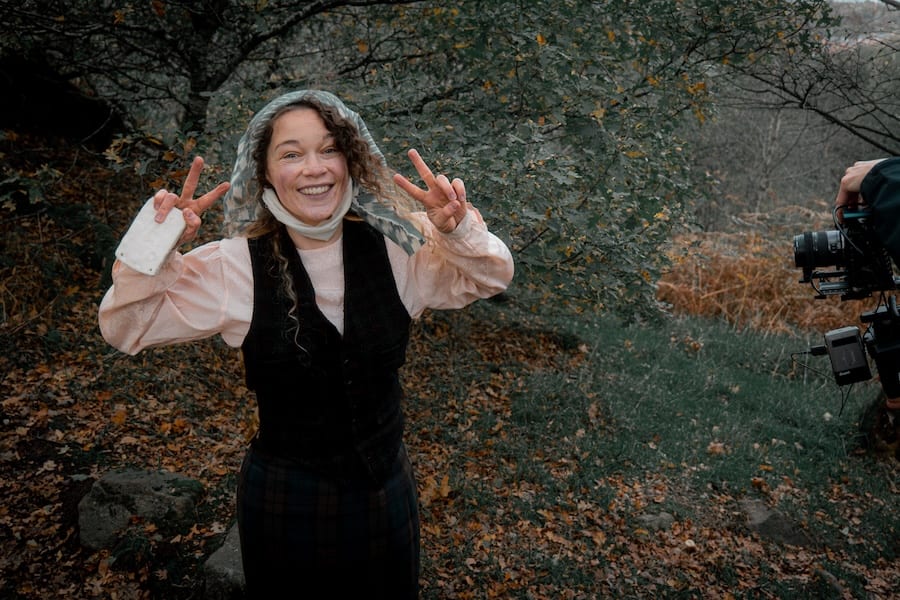

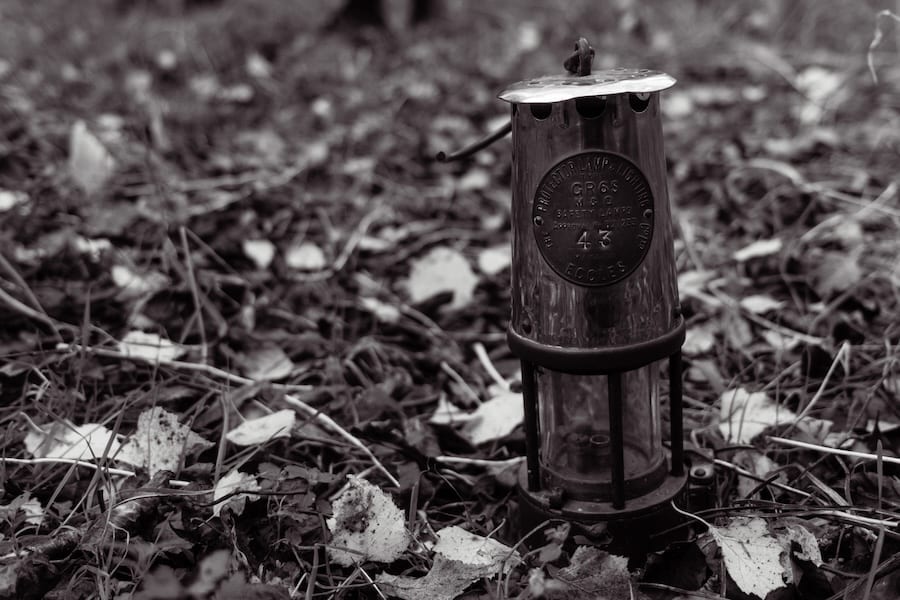
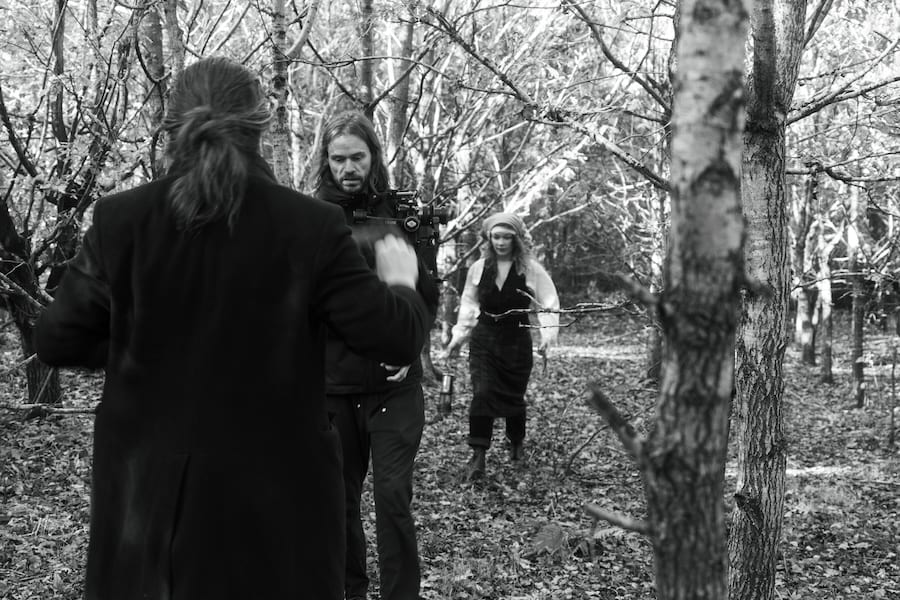
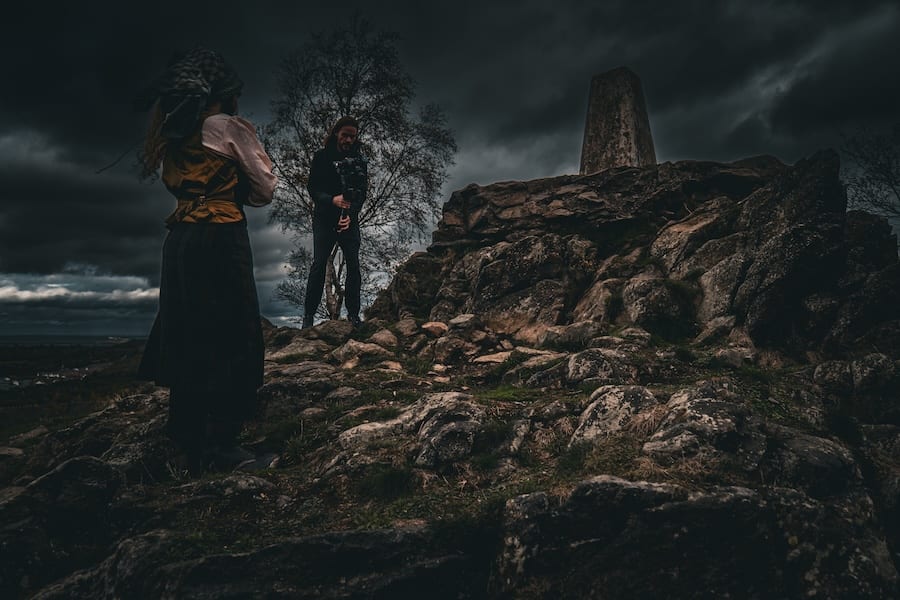
The Album
The singles’ merging of rich historical detail with folklore’s cautionary tales and mysterious, esoteric nature is found throughout the album To Whom Ourselves We Owe. The record was born out of advice from Adam Weikert’s therapist who suggested folk as social prescription, leading Weikert to explore English history, folklore, folk music and art and attend folk gigs and sessions – meeting respected folk artists including Roger Wilson and Goblin Band’s Alice Beadle who feature on the album and on ‘The Care’ (the B-side of first single ‘Farewell to the Green Man’) respectively. Weikert set out to make an album exploring English heritage, but what emerged – through the songs inspired by old folk stories and re-interpreted and re-imagined versions of folk classics – was a collection of songs that question what it truly means to be British, often through the lens of migrants, himself, the present day, and the working classes.
‘Ah Cud Hew’ and B-side ‘Black Pillow’ are out today on all digital streaming platforms, and Adam Weikert’s album To Whom Ourselves We Owe follows on 19 December 2025 on The Gleeman Guild.
Pre-Save/Order the album: https://adamweikert.ffm.to/towhomourselvesweowe