
meka is our latest ‘Off the Shelf’ guest. In this series, we ask artists to present objects from a shelf or shelves in their homes and talk about them. This is another personal favourite, for how meka’s choices so perfectly frame her music, as well as the food for thought she provides on modern existence, and thoughts on consumerism. Oh, for a simpler life…
Our life is frittered away by detail. Simplify, simplify, simplify!
Henry David Thoreau
meka is Melissa Lingo, an American multi-instrumentalist and singer-songwriter whose music is described as evoking the hazy folk sound of the 1960s and 70s, reminiscent of artists like Joan Baez and Nick Drake. Her nomadic upbringing, from an isolated Californian mountain town dedicated entirely to astronomical research to stints in Brazil, India, and Cambodia, infuses her work with an existential, otherworldly gleam. A self-taught musician from a family of storytellers, meka draws inspiration from nature, existential literature, and her global travels. Her latest album, The Rabbit (out tomorrow on Dumont Dumont – pre-order here), is deeply shaped by her experience of living with chronic illness, transforming hardship into tender yet illuminating songs that balance grief and hope.
Before we dive in, watch meka performing baby blues, a song she wrote for a friend. She shared: “I play this song, and I think of her, my dear companion in poetry and prose” explains meka. “I think of all the questions that song posed which remain unanswered: Will we grow old together, will life and death allow it? Will the next spring be gentler? Will your daughter know what she means to me? Will I make peace with my body – struck by the fickle finger of fate? Will our emotional states know groundedness or are we destined to be cyclical and moon-like? Will they cut down all the trees? Will we let them?”
Off the Shelf with meka
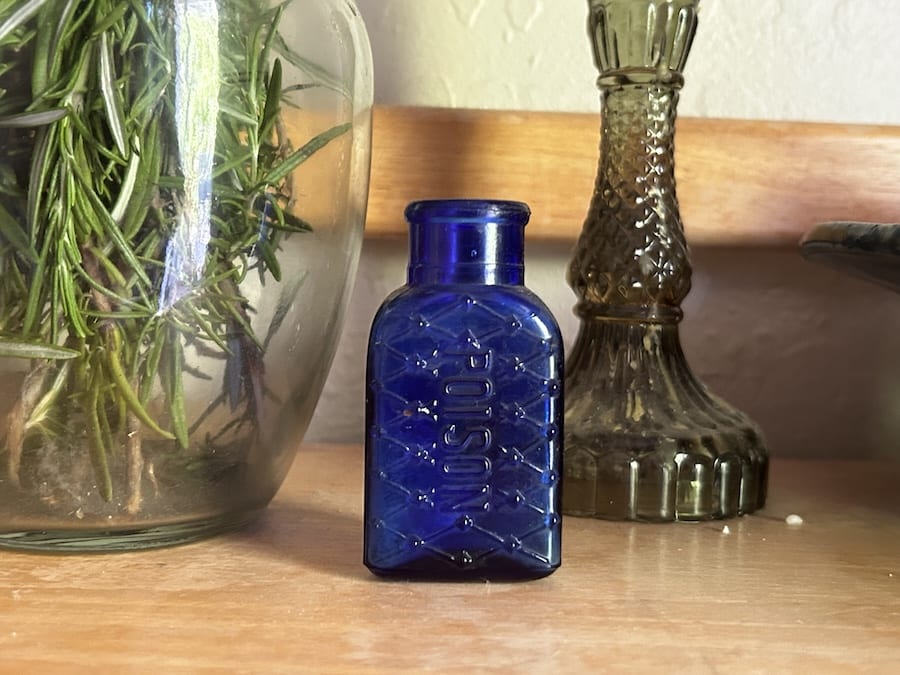
A 19th-century poison bottle, a gift from my dad (he has mastered the art of finding oddities at flea markets and garage sales). The letters are raised, supposedly to prevent a person from accidentally taking poison instead of medicine at night.
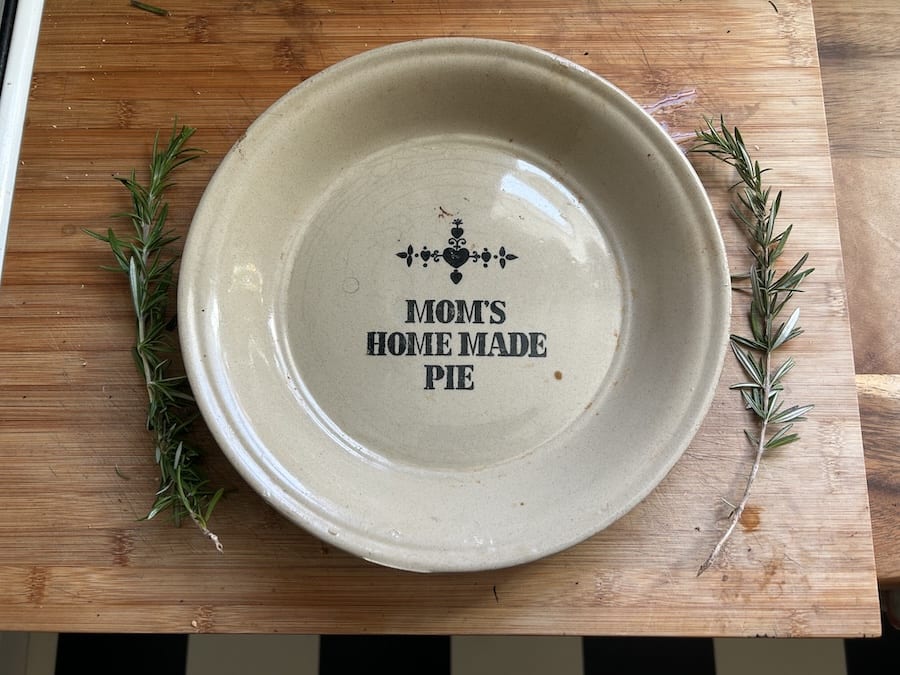
My grandmother died before I was born, but I’ve been told we have a lot in common. Her upright bass was the first instrument I learned to play. We share an affinity for cigarettes, red nail polish and tying scarves in our hair. We also share a love of baking and an unfortunate lack of attention span, which often lends to kitchen fires. I sometimes wear an apron of gingham hearts that she made while I bake pies in her old dish, but the last time I did that, I felt her presence too strongly and nearly burnt down my kitchen.
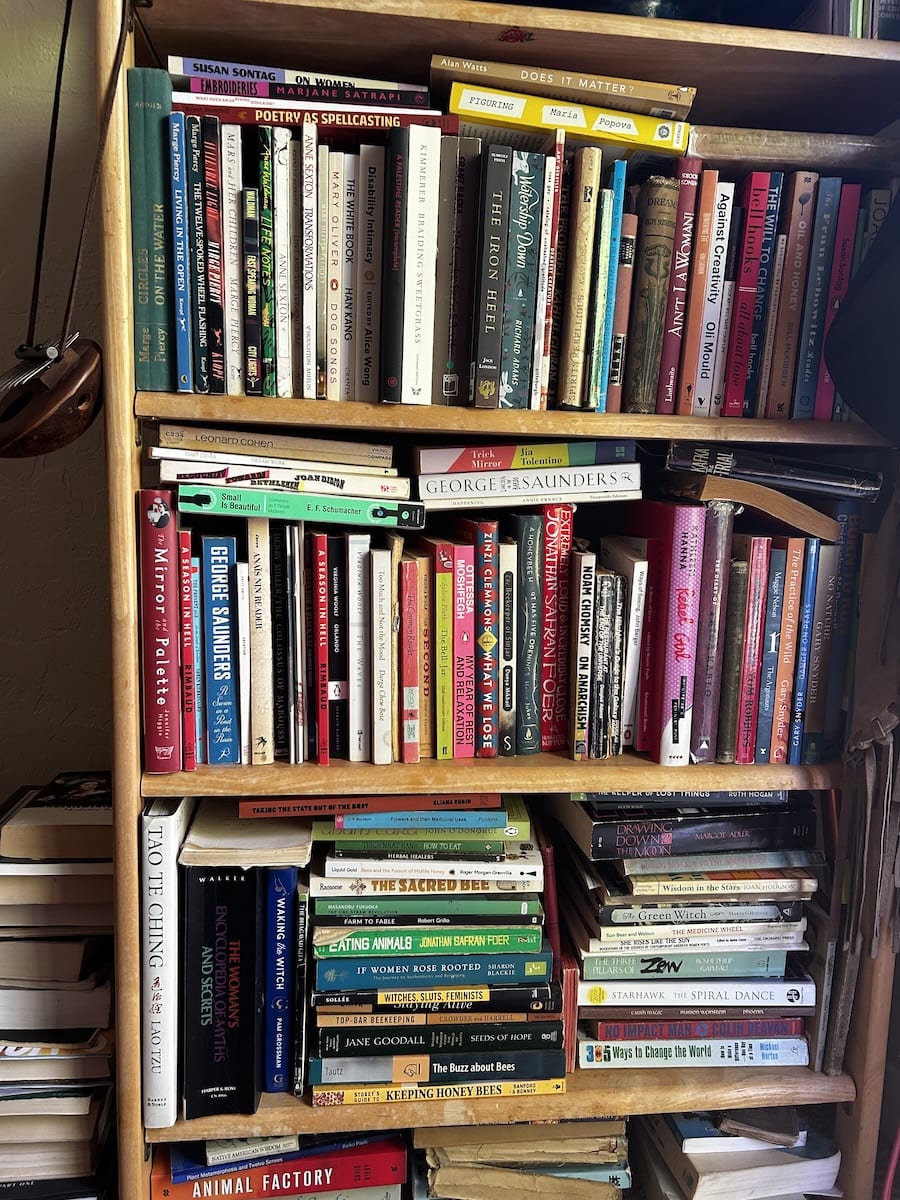
I have moved almost 30 times in the last six years, a handful of those moves were intercontinental or to new countries, and my belongings fit in a few overstuffed, chaotic suitcases. I usually just scavenge furniture and kitchen items, but my 50 kilos of books always come with me. I have a penchant for the occult, anarchism, personal essays, philosophy, bees and their systems, poetry (from the tender to the romantic to the foaming-at-the-mouth political), and I’ve gotten into Russian literature in the last few years. I have an easy time becoming fixated on stories or projects and, when a book is interesting enough, I will do nothing but read for a day or two because I can’t think of much else but the story. A good library is one of my markers for success.
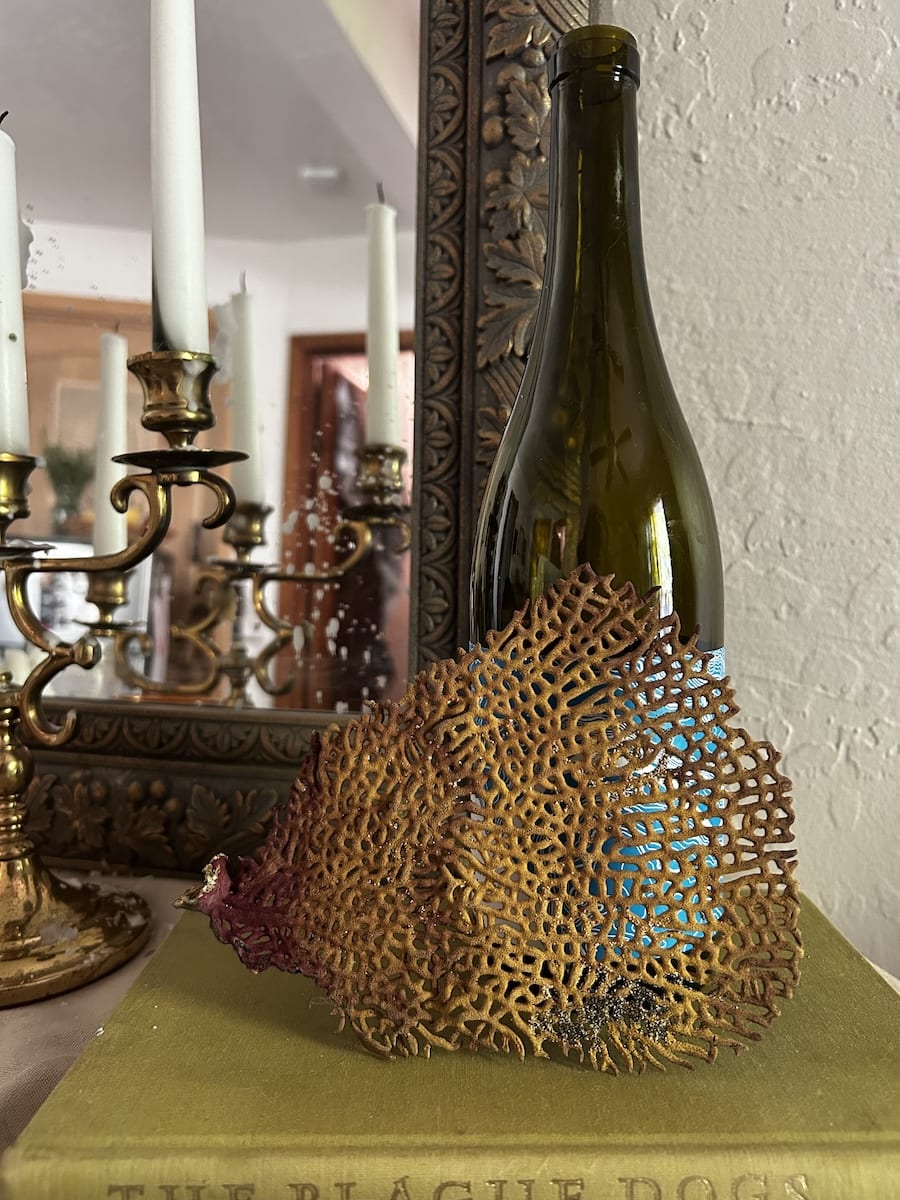
A piece of dried seaweed my partner gave me while we were in Mexico, I mostly use it as a bookmark. His hat is adorned with random, seasonal things foraged on walks: more dried seaweed, a very spiky seed which I think is called a water caltrop, blossoms, twigs. Odes to what holds his attention.
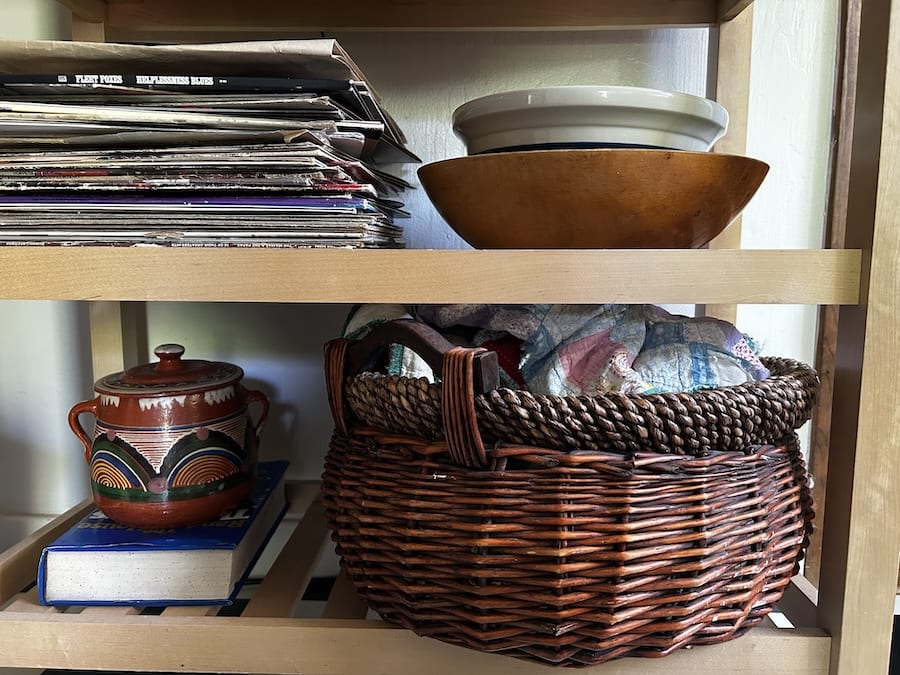
Quilts made by my grandmothers. I’m not big on new things, in part because I wholeheartedly loathe capitalism and consumerist culture and resent that they are the cornerstones of current society. Do I hate these systems because of the devastating impact of overconsumption on our miraculously life-giving planet? Or because these systems rob the working class of what is perhaps our most precious resource – our time? Or because part of the grander purpose these systems serve is to keep people lonely and desperate, perpetuating the idea that happiness and enough-ness can eventually be bought, only to find that it must routinely be replaced with another useless purchase to chase the fleeting high? I’m overwhelmed by the onslaught of ads for the next new thing that will definitely complete me this time. Dear reader, I also just like the way old things feel – durable, intentionally made, haunted with memory. One quilt made by my mom’s mom, who I imagine made it while daydreaming of a better life, a life of her own. Another quilt made by my dad’s mom, who I imagine would curse me for what a sinner I turned out to be. My guilt quilts.
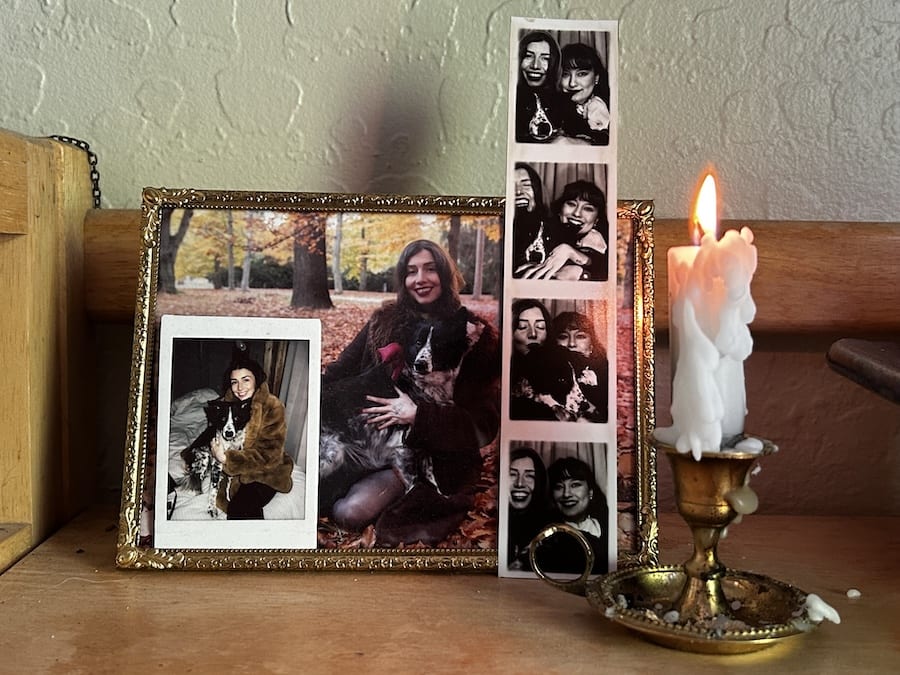
An altar dedicated to my dog, Agatha, who is very much alive. I lived in Cambodia for most of my twenties. I found her when she was just a sprout, and she’s been my companion in travel, mischief and birdwatching ever since. Every good dog deserves an altar.
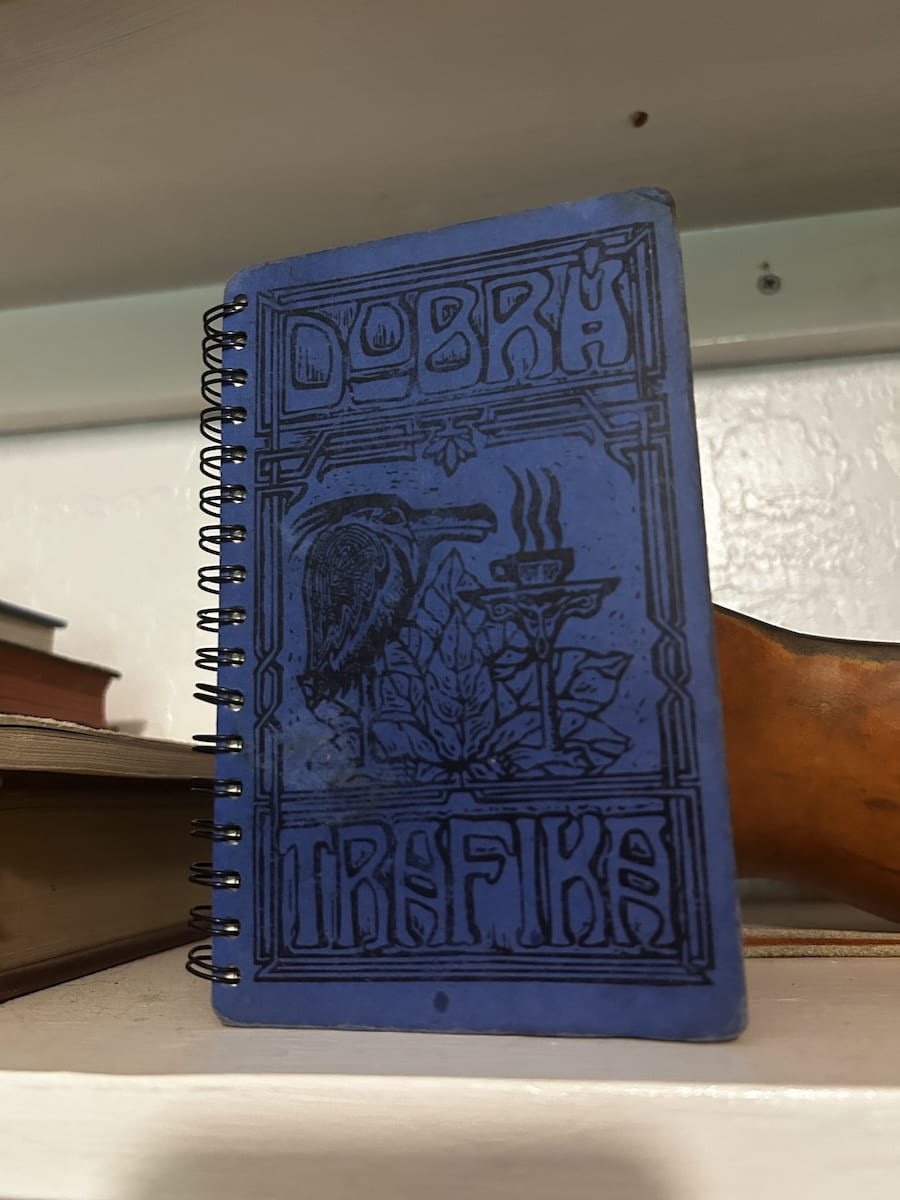
A notebook from my favourite pub in Prague, gifted to me by my dear friend, Mario – a fellow writer with whom I’d commiserate for hours while sipping beer or tea back when we were neighbours. I like this pub because it is cheap and charming, the furniture is mismatched and nothing there is polished into sterility. The front of the place sells cigarettes and postcards, the register is so old it requires cash and/or a patience uncharacteristic of our age, and maybe the whole thing reminds me of myself and this friend. Our shared desire for beauty that isn’t too beautiful, curious stories with jagged edges, and a sort of melancholic timelessness. The endearing gap-tooth of pubs.
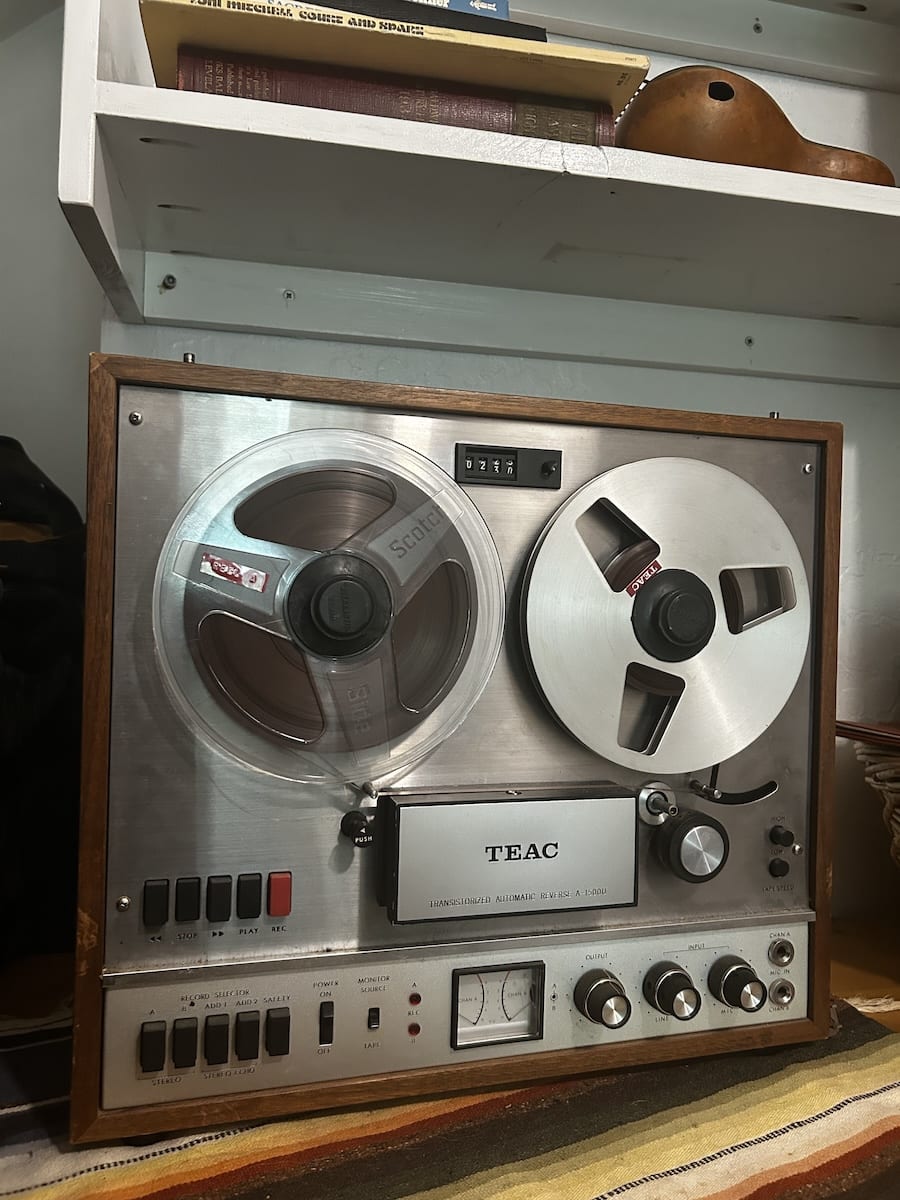
My late uncle’s reel-to-reel tape deck, which I plan to record my next album on. I know because of my collection of things being largely inherited and sentimental, it must seem as though I come from a tightly knit family. Sometimes I am asked about my childhood within such a framework (based on my lyrics and storytelling), but my roots are scattered and tattered, I didn’t know a lot of my family well or at all, and among a roster of wonderful instruments, I also inherited a lot of grief and nomadic confusion. I cling to the threads of my ancestral tapestry, which make the most sense to me, the parts that I actually want to belong to. I love the prospect of making a record with my uncle’s tape deck, his father’s guitar, his mother’s dulcimer, and the voice given to me by his big sister.
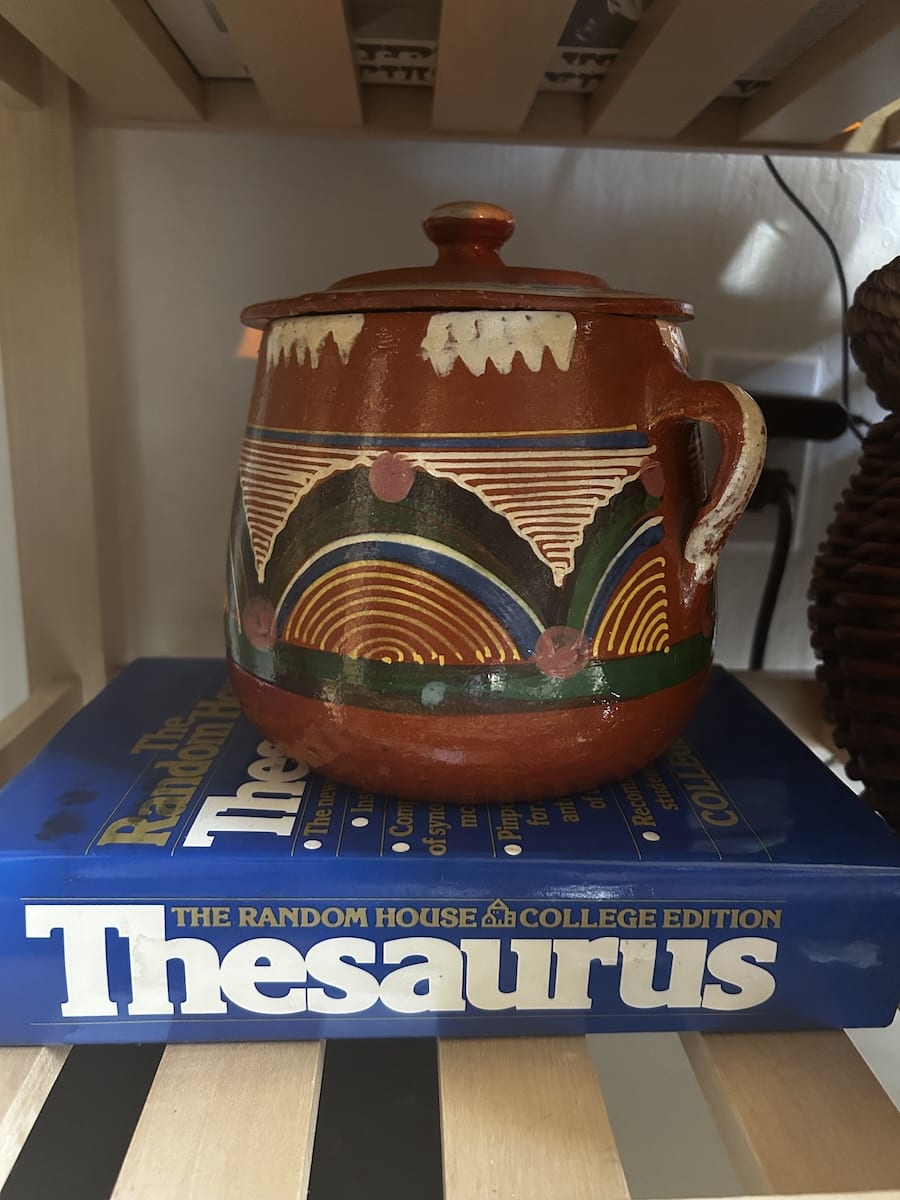
A thrifted thesaurus. Everyone should have a thesaurus, I only wish I had a pocket-sized one. I walk along the border between devotion to language and devotion to accessibility and collectivism. I love words, and I want to read and write curious sentences. I want to find new ways to react and express and experience. I also want to be understood, and to understand others, so on occasion must forfeit my love of language in favour of mutual understanding. Still, I’d like everyone to have a thesaurus.
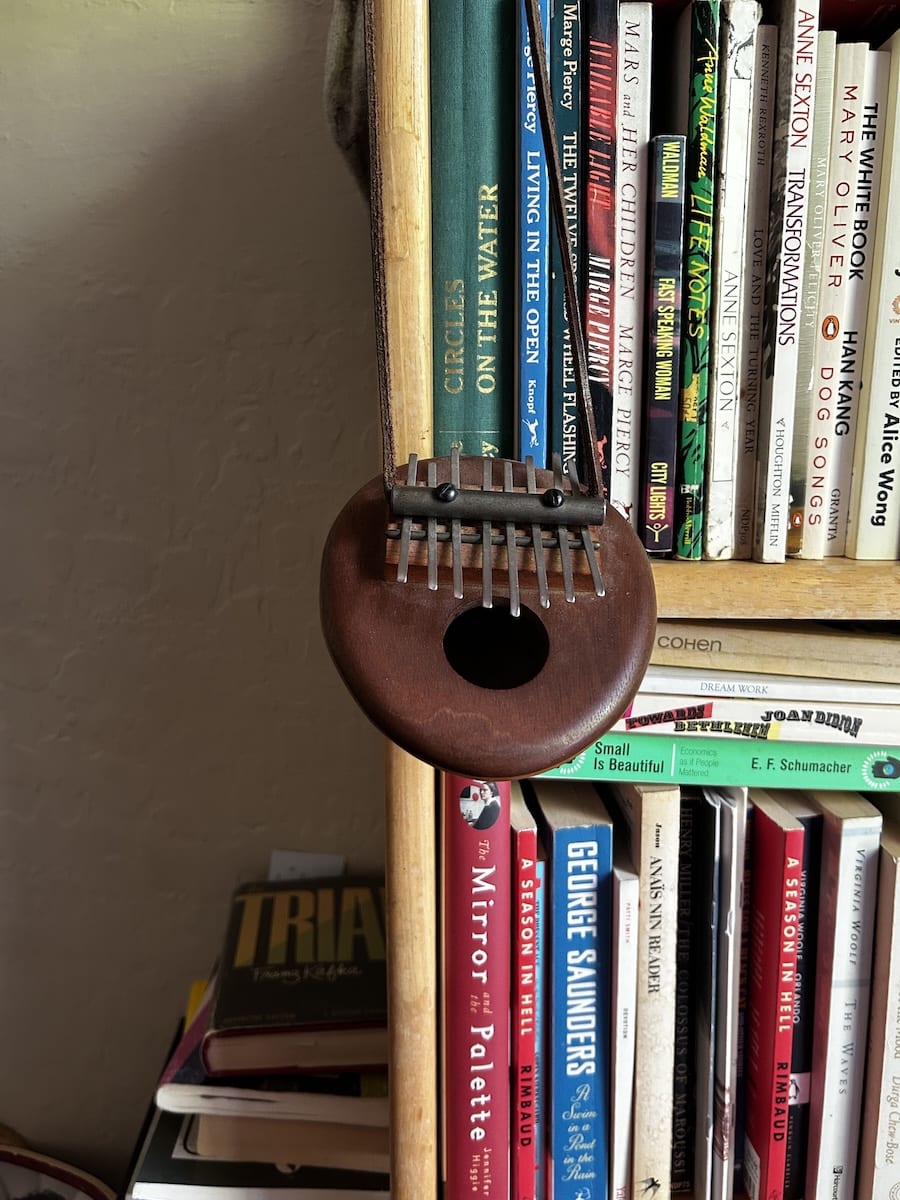
A kalimba made from a coconut, given to me by my dad. I have another given to me by my mom, carved out of a gourd. I like an instrument that intimidates no one, inviting any novice to take their turn and see how easy it is to delight in sound.
A huge thanks to meka for sharing her wonderful memories and shelves.
The Rabbit was written by meka and recorded in Stockholm, Sweden at Rymden Studios, and produced and engineered by Daniel Bengtson (First Aid Kit, M Ward, Dina Ögon, Viagra Boys, James Yorkston) who also features on piano and bass.
The Rabbit will be released via Dumont Dumont digitally on 21 May 2025.
Order/Pre-Save here: https://idol-io.ffm.to/therabbit