
Singer, songwriter, drummer and former Trembling Bells frontman Alex Neilson describes his Alex Rex solo project as ‘ghost rock’, a designation that has never been more fitting than it is now. The National Trust is slated to be the last Alex Rex album, and while much of Neilson’s work in the past has felt like a reckoning of sorts, the feeling here is intensified. The album feels haunted and heightened as if Neilson is coming to terms with the ghosts of his past moving on. And in a way, that is what’s happening. The songs on The National Trust deal directly with the sudden death of Neilson’s brother Alastair and the great pool of grief that formed in the aftermath. It’s no surprise that these songs sound as if they are inhabited by restless, shifting spirits. Neilson has always been hard on himself, to the extent that he’s turned self-deprecation into an exquisitely painful artform, so when that flagellatory urge is sharpened by a very real loss, the emotional sparks really start to fly.
This becomes excruciatingly evident on tracks like Two Kinds of Song, where Neilson laments his lack of singing ability and his countless aborted attempts to write like former collaborator Will Oldham while ironically wringing about as much emotion out of a song as is humanly possible. In the hands of a lesser writer, stuff like this might come across as needy, but with Neilson, it’s immediately evident that he’s walking a very real line between hardship and agonised humour (and comparing yourself to Elon Musk these days takes a special and courageous kind of masochism). The Tragedy of Man says genuinely big things about big subjects in entirely new ways: it’s a song beset by a swooping, all-encompassing nihilism, the sound of someone whose only escape is creativity banging his head against the wall of art.
But Neilson is working on other levels here too. As well as attempting to come to terms with Alastair’s death, he is also confronting his own musical and personal past in an equally visceral, head-on way. Alastair died in Carbeth, a community of huts and cabins in the countryside north of Glasgow, and it was Carbeth that gave the first Trembling Bells album its name and much of its lyrical inspiration. Singer Lavinia Blackwall was a huge part of that Trembling Bells sound, and this project helped restore Alex’s relationship with Lavinia which had fractured after Trembling Bells broke up. Now, Blackwall is back onside and lends her extensive and sometimes unearthly vocal talents to a number of these songs. And, from a listener’s point of view, it’s great to have her back. Her presence is subtle – mostly limited to backing vocals – but it instantly rekindles some of that old Bells magic. Here, it’s harnessed in the service of new songs with a different kind of emotional weight behind them. The multiple voices on the chorus of Lelo Sona’s itchy, decayed psych give the impression of a musical itch being scratched, while a similar technique on closer The Coward in the Tower yields a very different result: the camaraderie births a quiet, careful kind of hope that stands out against the brash self-examinations elsewhere.
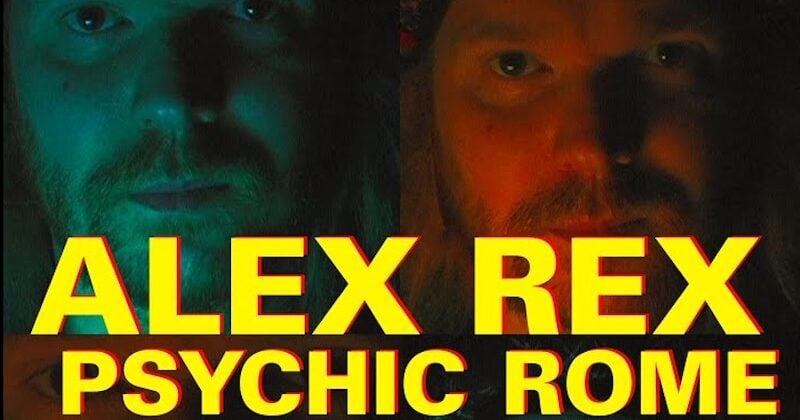
Trembling Bells guitarist Mike Hastings makes a return too, along with long-time accomplices like Marco Rea, Jill O’Sullivan and Rory Haye and together they help to lend an acid-rock crunch to Psychic Rome, a song about the end of an ancient civilisation, which feels alarmingly current. Various shades of rock are explored here, sometimes within the confines of the same song. People Are the Pollution of God has an operatic vibe that sometimes threatens to spill over into 80s metal, 70s prog and classic folk rock.
The piano-led My Old Self Again, with its frog chorus backing vocals, sounds like a novelty song from a very personal hell, or the unholy offspring of the Holy Modal Rounders, Johnny Paycheck and 10cc. The title track is both an impassioned cri de coeur and a crafty in-joke which somehow manages to satirise our relationship with some of the sacred cows of English literature while also recognising their humanity. On Boss Morris, Foucault and football, Francis Bacon and pornography manage to worm their way into a song that is ostensibly a celebration of tradition and the many glorious ways it can be moulded into new and thrilling art.
I Started Out a King is a sprawling ode to the crumbling of the self and the transient nature of the artistic persona, its bombastic but strangely gorgeous organ the only thing standing between Neilson and complete disintegration. Its sister song The King Devours His Young is deceptively simple, but gets to the root of the Neilsonian paradox: the necessary coexistence of love and pain, and the difficult relationship each of those things has with the drive to create art.
It’s that paradox that keeps Neilson going, that keeps his music vital and apparently haunts his life. It’s a concoction that shows no sign of losing its power, so if this does prove to be the final chapter in the twisted Sadean story of Alex Rex, we can only hope that he finds another outlet sooner rather than later. After all, these songs may revel in bitterness and humiliation, but they are real and unflinching and fearsomely clever and often beautiful. Neilson remains an absolute one-off, whatever he thinks of his own talents.
The National Trust (March 28th, 2025) The Barne Society (TBS15LP)
Pre-Order ‘The National Trust’: https://thebarnesociety.greedbag.com/
Alex Rex & Lavinia Blackwall Tour
April 4th – Shipley, The Triangle
April 5th – Nottingham, JT Soar (sold out)
April 6th – Hastings, The Piper
April 7th – Brighton, The Greys
April 8th – Birmingham, Kitchen Garden Cafe
April 9th – London, What’s Cookin, Keystone Social Club
April 10th – Stockport, Strines Nightingale