
After three decades as one of folk and traditional music’s leading fiddle players, John McCusker has plenty to look back on. John has been marking his 30th anniversary with a series of tour dates culminating in a Celtic Connections performance on 22nd January with an all-star list of pals. He is also releasing a 30-track, 2-CD, Best Of (out 20 January 2023 via Under One Sky) – read our review here – and publishing a book – John McCusker: The Collection – containing 100 of his tune compositions. When talking to John, it soon became apparent that looking back was not something he’s had the time or inclination to do much of previously, but now, at this milestone in his musical life, he is appreciating his achievements. In the following interview, he talked about his musical heroes, who he is happiest playing with, being ‘blessed’ with the opportunities that have come his way, learning to be comfortable in concert halls and, later, big arenas, and realising in retrospect that he has his own distinctive sound.
I began by asking John who his musical heroes were when he was young. It turns out they were musicians John has ended up playing with regularly in The Transatlantic Sessions and otherwise.
“My answer to that without hesitation is Aly Bain and Phil Cunningham because they were the ones that put folk music on TV for my generation. When I was growing up playing classical music it was a very different time. The idea of making folk music a job was non-existent for younger people; there was just Aly and Phil and a few bands. It felt like there was hardly any young people playing when I was in my early teens, but you’d turn the TV on, and Aly Bain and Phil Cunningham would be on. My musical world opened up in front of my eyes with the programmes that Aly made – The Down-Home Recordings, The Shetland Sessions, Aly and Friends, Aly Meets The Cajuns.”
“You’d hear all different genres of music for the first time. I remember watching those programmes and thinking ‘that’s what I want to do – to play that music’. I wasn’t getting taken to gigs, nobody played a note in the house, there was only mum and dad’s record collection. I can’t underestimate the influence that Aly Bain & Friends had. He’d bring on Richard Thompson, Kathryn Tickell, Boys of the Lough; all these people whose names I didn’t know. I was at the Royal Scottish Academy playing classical music at the time. My violin teacher and my mum assumed that that was the path I would follow but those programmes changed everything for me. I decided that’s the music that I loved and that’s the path I wanted to try and follow.”
“I went to high school at 12 and got a pound for my lunch money. All the other kids used to walk into town to go to Greggs. There was a record shop in Hamilton where I went to school called Impulse Records. They did ten 7” singles wrapped in a pink and white striped wrapper for a pound, and you didn’t know what was inside. So, I didn’t have lunch and got the ten singles. My musical world opened up even more when I heard the likes of Billy Bragg, Nanci Griffiths, and The Oysterband, who were releasing singles at the time, people who were signed to record labels but who didn’t touch the singles chart. I hadn’t heard of these artists. That was also the start of my love of indie rock, running parallel to my love of folk music. I remember going home from school starving, putting the headphones on and hearing Billy Bragg’s Between the Wars on a 7” single for the first time. I didn’t really know what it was, but it moved me. Nanci Griffiths’ From A Distance blew my mind. She was a massive part of my life when I was 12 – I fell in love with her and her music; it was amazing that years later I got to play with her in the Transatlantic Sessions. I didn’t just listen to the more successful folk bands like the Oysterband and Steeleye Span. I loved Throwing Muses and loads of indie rock. That was the start of my love of buying all sorts of records.”
I asked John what happened in the lead-up to him becoming a professional musician: he talked about his first band and his mum not being happy with him joining a well-known band full-time at 16.
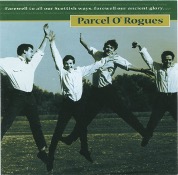
“I formed a group with four school friends called the Parcel O’ Rogues. We were really atrocious – not knowing what to do, we just copied other people’s material. Somehow we’d get money for playing in folk clubs. Then I discovered other fiddle players: Johnny Cunningham, Frankie Gavin, Maurice Lennon in Stockton’s Wing. They were all huge influences. From that age I didn’t want to do anything else but play this music. I don’t know what was in me, what that thing was, but I was completely drawn towards traditional music. I listened to my mum’s record collection all the time; it was the least trendy music and still some of my favourite records – The Fury’s, The Dubliners, The Clancy Brothers.”
“Parcel O’ Rogues was thrown together to play at the school prom. We decided after the competition that we would stay playing as a folk group. I was phoning clubs at the age of 13 trying to get gigs and floor spots. When I was 14 or 15 we made a demo, and we sent that 3-track cassette to magazines and record labels. Robin Morton who owned Temple Records and managed The Battlefield Band liked our enthusiasm and heard something in my fiddle playing [Temple Records released a Parcel of Rogues album in 1989 and John’s solo albums, John McCusker in 1995 and Yella House in 2000]. He got us to open for The Battlefield Band and to play at a festival called The Highland Circus. Then Robin started getting me to play on Gaelic records. I was recording indie rock music at the same time as playing play on proper traditional records. So, one day I’d be playing on an Eilidh Mackenzie record at Temple Records Studio outside Edinburgh and the next day with BMX Bandits or an indie rock band from Glasgow.”
“When I was 16 years old Robin Morton asked me what I wanted to do. I said I wanted to play music; that was all I wanted to do. He asked me if I wanted to join the Battlefield Band. I was still at school, and he was saying you’ll get a wage, you’ll travel the world. In my wildest dreams, I would never have guessed that would happen because no-one thought it was possible to do full-time. So, I left school at 16. It was my mum’s worst nightmare. I left the Royal Scottish Academy, and I went literally in a van with hairy people to Germany for six weeks. My mum was crying at the door asking: ‘How did this happen’. I promised her that I’d try it for a year and then maybe go back to the Academy. I ended up staying with the Battlefield Band for 11 years. Looking back over 30 years, I see that I didn’t appreciate the significance at the time because I was always in a bubble. You’re not fully aware of where you are, especially at that age, but looking back you see how your world became bigger.”
“I think about how scared I was when I joined The Battlefield Band, how out of my comfort zone I was. I went from folk clubs to theatres. You learn things that are invaluable like how to talk to an audience for the first time. It was an amazing learning curve for me having to introduce a set of tunes and make people laugh, including in different countries, some non-English speaking, and to be comfortable on those stages. We sold out the Queen Elizabeth Hall at the Edinburgh Festival for 3 nights, 850 people each night and I was 17 – it felt like huge to me. I remember the nervous energy. I learned so many things, but I wasn’t aware at the time of being blessed of having those opportunities at different stages in my life.”
The core group of musicians John has played with on his albums and most of those he has produced has been relatively consistent. They have included Ian Carr, Andy Cutting, Mike McGoldrick, Simon Thoumire, Tim O’Brien, Phil Cunningham, Neil Yates, Duncan Chisholm, Andy Seward, Ewen Vernell and James Mackintosh. I asked him how that came about.
“When Kate Rusby and Kathryn Roberts asked me to produce their duo record in 1995, I had no idea what producing a record meant, but I immediately said, ‘yes I’d love to’. Then I thought, ‘OK what does that mean?’. All I’ve ever tried to do – whoever the musician is – is go into it with enthusiasm, play my best and take something from every session. With the Kate and Kathryn, it was just ‘right let’s try and make good music’. When Equation with Kathryn and the Lakemans didn’t work out for Kate she wasn’t sure what to do next. My instinct was ‘let’s make a record’; ‘let’s get great musicians in the studio’. That was where we started with Hourglass. The choices were easy: who will we get to play flute? Mike McGoldrick; who will we get to play accordion? Andy Cutting’s my favourite; Ian Carr was doing things on guitar I’d never heard anybody do before. I loved that it felt new, it wasn’t safe, there was an energy to it. That was the start of those musical friendships.”
“I hadn’t met most of them before then. It was very different times. It felt like there was a very small pocket of us making music full-time. Eliza Carthy said that sometimes it felt many times like it was just me and her. Of course, there were lots other of people playing but we’d go to Vancouver Folk Festival, and she’d be with her mum and dad, I’d be with The Battlefield Band, and we’d be the only two young UK folkies. The Battlefield Band travelled the world and I realised that there were people in other countries doing the same thing, people like Seamus Egan and John Doyle: ‘Wow they’re just like me’. We became musical brothers.”
“The attention that Kate got was completely unexpected. I remember opening The Guardian one day, and there was a full page about Kate. It wasn’t trendy music; we thought it was old-fashioned folk music. When I was producing Hourglass, the bands I was thinking of were Ossian or Stockton’s Wing. It seemed like those records with Kate happened at just the right time. Certainly, in England, it felt like we were making music that appealed to normal people. People would say, “I don’t like folk music, but I like this’. Suddenly we were playing in big venues to people who might have recently seen a band like Manfred Mann in the same venue. That group of musicians were part of a really exciting period; it was just one thing after another with that band. The journey was incredible, and we were young at the time. We sold out Queen Elizabeth Hall in London. There were nearly a thousand people there, and it was an expensive ticket. You look around, and there’s just you and your mates; it’s just us – we’re the entertainment tonight.”
I asked John when and with whom he was happiest playing music. He initially said he thought it was a difficult question but then didn’t hesitate in his answer.
“My immediate thought is the trio with Mike McGoldrick and John Doyle. I don’t feel so comfortable with anybody else. The way the trio works just makes complete sense. We don’t rehearse, we just get on the stage. When we’re up and running if feels like we could play anywhere, any size of venue, any big festival. I remember playing in Canada once and we were headlining. Before us was a soul revue which had a big brass section and a light show. I remember thinking, ‘right it’s just us; are you ready for this?’. But it was no bother, we just went up on stage and did our thing. When we’re locked in together it really is like we’re flying. You’re almost unaware of the audience, unaware of your instrument – you’re just at one with each other and it’s an amazing thing to be part of.”
John talked in the Best Of sleeve notes about being ‘particularly proud of producing several artists who have gone on to be especially influential’. I asked him about his studio work, and whether there was an album he’d worked on that stood out.
“The rare times we tried to make music that would be successful, it very often had the opposite effect. So, putting drums and bass on a Kate Rusby song for instance might not work. You think you are going to get prime time radio and end up thinking ‘why is nobody playing this?’. But then at other times something works. The title track from Kate’s Underneath The Stars album had just Kate playing guitar and singing, me playing ukulele and a brass band. On paper it’s not screaming out to get played on Terry Wogan, on daytime radio, but that got playlisted. In the end you have to make music you want to make and hope it connects with people.”
“Putting the Best of together was the first time I’d really listened to my own music. Previously I’d only listen if I had to learn something for a gig. One of the worries about putting a compilation together is that it can sound random, sound like a completely different band on different tracks. It really struck me though that it felt like I do have a sound. There hadn’t been a masterplan to create that. Even the new tracks that I recorded for the Best Of album didn’t sound that dissimilar to say The Bold Privateer [with Kate Rusby on vocals, from Goodnight Ginger John’s 2003 third solo album] or Edi Reader’s Baron’s Heir [from Eddi’s 2006 album Peacetime, which John produced] or the John Tams track Hush A Bye [from John’s Under One Sky, 2008] or Hope To See by me, Kris Drever and Roddy Woomble [from Before The Ruin, 2008]. I don’t view myself as being one of the world’s best fiddle players. Players I see as the true geniuses of playing the fiddle are those who really get inside tunes. People like Frankie Gavin and Martin Hayes who dedicate their lives to playing traditional music. I’ve never had that drive. I love playing accompaniment on songs. I love playing with Ocean Colour Scene or on a Paul Weller record equally as much as I like playing a jig.”
“What fascinates me is why some records work so well. Kris Drever’s Black Water was a prime example of ‘let’s just get a bunch of musicians we like and a bunch of songs that you love to sing’. That record will never date for me, whereas others do – I hear things on the radio and think that now sounds a bit boring or slow. But something special happened with that record. I take myself out of equation – even though I produced it and played on it. It was one of those times when magic happened in the studio. I completely understand why that influenced people like Sam Kelly and Adam Holmes to want to sing and play, and why Kris Drever was named as one of the people to watch out for across all genres of music”. [a piece in The Guardian in September 2007 named Kris listed as one of eight of an up-and-coming ‘new breed of fierce and feisty solo artists … lighting up the British music scene’]
Given that he has composed sufficient tunes to warrant publishing a book of them…what inspires them, and do they arrive fully formed?
“I don’t sit down to write tunes for fun. Usually, I’m forced to write because there’s a record looming and I need new tunes. Leaving Friday Harbour, I wrote because we we’re making a Battlefield Band record. Wee Michael’s March was the same. I literally went upstairs at Temple Records to write it. I’ve always found it easy to write tunes when I have to, which isn’t to say that I find it easy to write a good tune.”
“I spent a six-week American tour with Mark Knopfler, and I was making the Hello, Goodbye record at the time. I would try to sing or whistle a tune a day into my phone, and I’d call them wherever I was – San Diego or wherever. Some of it was nonsense; sometimes I think I like that but then I forgot about it. Five weeks later there would be a tune called Boston and it would be nearly note for note the exact same tune I’d forgotten about from five weeks earlier. I don’t know what that is where you hold on to melodies in your head and they come out somehow, when I need them to.”
“One of the biggest accolades a musician can get is when someone else records one of your tunes. That makes me incredibly happy. Having a tune like Frank’s Reel [which John recorded his 1995 first solo eponymous album] is recorded all over world and there’s barely a week goes by that someone doesn’t ask to record it. That makes me want to write more tunes and made me want to publish the book. When out of all the tunes in the world someone chooses one of your tunes it such an amazing compliment.”
John has said previously (in the Best Of sleeve notes) that he’d ‘never had a plan. Good things have just happened’. I asked him what pieces of luck had the most significant impact on his career.
“Joining the Battlefield Band without a doubt was the best thing that could have ever happened to me because I got to travel and meet musical brothers and sisters from all over world. Meeting Kate Rusby and that whole journey was astounding. When that 12-year musical and personal relationship ended, when one door closed, luckily another one opened. The first thing that happened was Paul Weller asked me to spend a day with him in his studio and that day I’ll never forget. I was pretty skint at that time. I’d moved back to Scotland, I’d no gigs lined up. I was scared not knowing what I was going to do. Paul was on fire and I left that studio after a day with him ready to take on the world. The very next call was to play on a Mark Knopfler record. That was 15 years ago, and I’ve been in his band ever since, toured the world and played in venues I would never have dreamed of playing in. It did feel like starting again. It was a bit like joining the Battlefield Band except it was arenas like the Hollywood Bowl and private jets. Being comfortable playing in front of a couple of thousand people; no nerves at all. I learned from Mark Knopfler how to be yourself on a big stage. Being surrounded by those musicians completely turned my world upside down.”
“Everything that has happened in my musical life has happened by accident. Take meeting Kris Drever in Sandy Bell’s in Edinburgh. I just saw this tall fella playing the guitar and singing. I went over and said we have to be friends. That led to so many things: producing his first record, endless tours. Roddy Woomble I met at an Idlewind charity gig, and we stayed up all night and talked about our love of different records. Edi Reader I met at the Folk Awards in London. We recognised each other and she said ‘I’m moving to Scotland, and I’ve fallen in love with Robert Burns’. I didn’t know that chance meeting would lead to me putting a band together, making a record with an orchestra and touring with that musical relationship. So, chance meetings lead to the idea of wanting to work together, hang out and seeing what happens – it all starts with friendship.”
When I interviewed John, he was in the middle of the annual Phil Cunningham’s Christmas Songbook dates (with Phil, Eddi Reader, Karen Matheson, Kris Drever, Ian Carr and Kevin McGuire) and relishing the experience. My final question was about what the future holds.
“Fortunately, the musical calendar is busy. I’m really looking forward to my big 30th Anniversary gig at Celtic Connections with a great band and Eddi Reader, Julie Fowlis, Karine Polwart, Kris Drever, and Roddy Woomble as guests. Then we’ve got the annual Transatlantic Sessions shows, as usual starting off at Celtic Connections, followed by thirty trio gigs with Mike and John in the UK and Sweden.”
“I’m producing a vocal album by Irish flute player and singer Steph Geremia just now. Again, it’s Ian Carr, Kris Drever on guitar and vocals, Phil Cunningham. It’s here we are again and I’m loving it. I think people will really like that record. I’m not rushing to make another solo record. I don’t want to make the same record I made last time, so I’m looking for what’s round the next corner; happily waiting to be suitably inspired. One thing I would like to do more of is write for TV and films. For me the trio is really exciting because we are playing together better than ever; it might be time for us to makes another studio album.”
Pre-Order John McCusker – The Best Of
John McCusker & Friends are playing City Halls, Glasgow, on 22nd January at Celtic Connections – details here.
John’s Website: https://www.johnmccusker.co.uk/