
Amongst the album materials that accompany Little Oblivions, the acclaimed 2021 album from Julien Baker, there’s a small passage written by the poet and author Hanif Abdurraqib that beautifully describes her unique creative voice and the turbulent world that her latest record found itself tumbling into.
The grand project of Julien Baker, as I have always projected it onto myself, is the central question of what someone does with the many calamities of a life they didn’t ask for, but want to make the most out of. I have long been done with the idea of hope in such a brutal and unforgiving world, but I’d like to think that this music drags me closer to the old idea I once clung to. But these are songs of survival, and songs of reimagining a better self, and what is that if not hope?
I can be convinced of this kind of hope, even as I fight against it. To hear someone wrestling with and still thankful for the circumstances of a life that might reveal some brilliance if any of us just stick around long enough.
Julien Baker shot to worldwide attention in 2015 with her show-stopping debut, Sprained Ankle. Recorded in only a few days, it was a bleak yet hopeful meditation on identity, addiction, faith, resilience and redemption. The album was critically lauded and went on to appear on many end of year lists.
2017 saw the release of Turn Out The Lights on Matador records. The New York Times called it “The work of a songwriter who has resonated with an international audience. A rare second album that, despite new self-consciousness, stretches beyond an unspoiled debut to reach for even bigger things, with all its passion intact”.
Baker then formed Boygenius with Phoebe Bridgers and Lucy Dacus in 2018. The resulting eponymous EP and joint North American tour made for one of the most celebrated and talked about musical communions of the year, highlighting Baker among a burgeoning generation of era-defining artists.
This progression took a big step forward with the release of Little Oblivions in 2021. Featuring a full band sound for the first time, it takes Baker’s already emotive solo work to more sonically diverse places whilst still maintaining the intimacy that made her name.
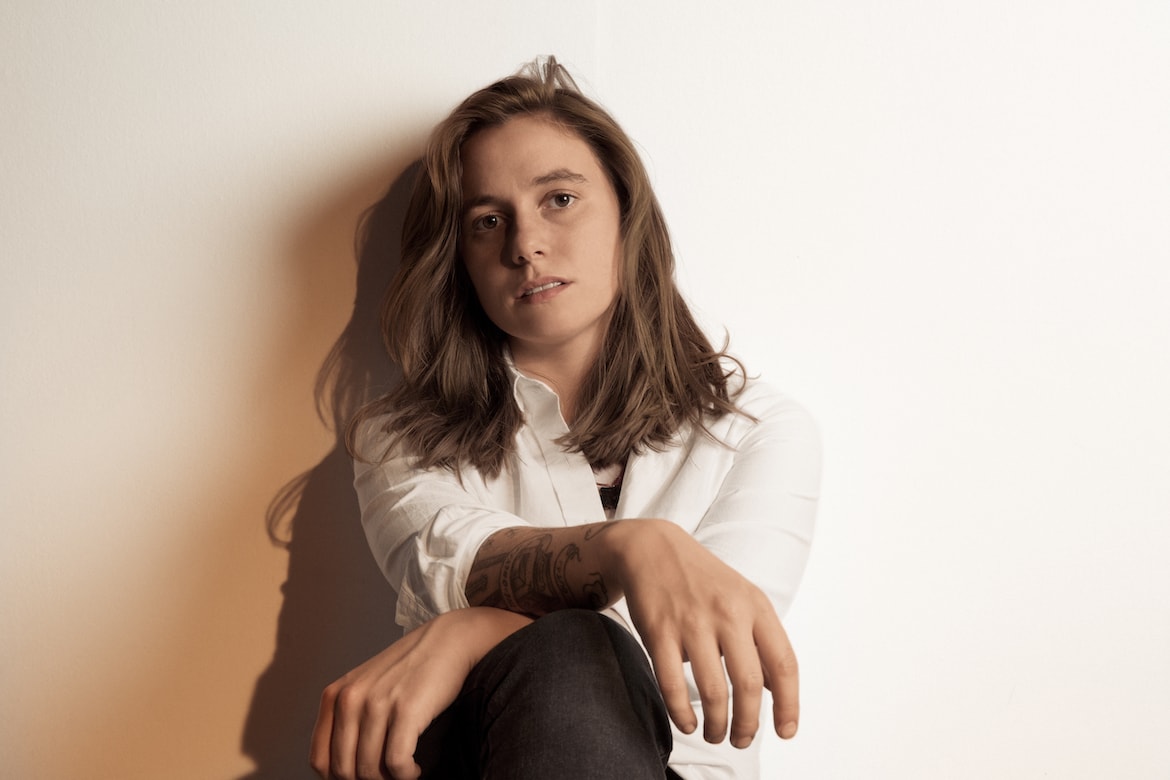
We chat to a thoughtful and reflective Julien Baker ahead of her first UK shows to discuss Little Oblivions, her songwriting journey and touring with a full band.
The first question, like all interviews at the moment…there’s been a pandemic since the last time you were on tour in Europe. What’s it been like for you?
I feel like I got the better end of it. Some of my friends were just releasing a record. I think this is true of Phoebe. She was just releasing a record and ramping up to tour it. I had more time; I hadn’t announced that there was going to be a new record. It didn’t come out until later, and of course, I thought it would be over in a couple of months. Then here we are three years later! With this record, it was weird not to release it and then immediately tour. I think so much of what I enjoy about playing music is the live presentation aspect. I think when I feel like I’m just putting music into the internet and not getting to see people react to it in real-time, it’s a little less gratifying for me. This last US tour we did in November was so fun! I mean, it was hard, touring is always hard, but I was just ecstatic to be playing again.
I read that you went back to school after the last record. Is that correct?
Yeah, I went back to school. It’s funny that I took some time away from touring and doing music in my microcosm world. I wanted to; it wasn’t healthy for me anymore. I wasn’t in a healthy enough place to tour successfully. Not monetarily, I mean, just to do it safely where it was rewarding and not just mentally crazy. So I finished my degree, and then I was ready to get back to it! Then I had an extra almost two years stuck at home. I’m really glad I went back to school though; I think I’ll go back for post-grad at some point, maybe… it’s a lot of money. So I don’t know. We’ll figure out if somebody will give me a grant or a scholarship!
Did the studying inform the new record?
It’s not that it didn’t. It’s not that the material that I was studying had nothing to do with how I was writing, but I think it’s less of a scenario where say – I read William Blake, and then a bunch of William Blake themes show up in my writing. The thing that I really enjoy about school is that (especially when you’re getting a liberal arts degree or a Literature degree like me) you just show up and talk about art and writing, and how the author is communicating, then you start to dig. You try to peel back a layer for a more nuanced understanding. Once you’re there, you try to pull it back even further, or you try to look at it with a different lens. You’ll do a historical analysis or maybe a Marxist analysis. Sharpening those skills is useful as a songwriter. As spontaneous and formless as music creation can be, I do think it’s still a creative craft, so I enjoyed having a dedicated time to just absorb and think about how other people are making art and how they’re choosing to communicate. What are the tools they’re using, whether that’s stylistically or formally? Sorry if that’s just nerd bullshit!
No, it’s great! Nerd out. Go for it! One of the songs we wanted to spotlight on the new record is Ziptie. For anyone listening who was raised religious but then perhaps had a crisis of faith, that song will hit really hard. The struggle of questions like “If I no longer believe these things, then how do I decide what is right and what is wrong?”
At maybe 22 or 23, I’d been touring for a while, and obviously, the complex feelings about my faith were central to the music that I was making. I was considering – “What if this idea of God is a lot different than I’m currently thinking of it, through a westernised Judeo-Christian lens?” If you’re anything like me, and you grew up with belief woven into every part of your experience, then once that framework is destabilised, everything big and small comes into question. First of all, now there’s no moral surveillance. So why shouldn’t I double park? Why shouldn’t I start drinking at 11 AM? Why shouldn’t I steal? You have to form your own values, decide how you’re going to be in a society without having your values ascribed to you by an institution. That’s really scary and hard because then all of the onus is on you. You have to decide on what you think is ‘good’ or ‘right’. Beyond that, in the Christian ethic, there’s a very clear dichotomy of things that are good and things that are bad. Things that are right and things that are wrong. In the American church, at least, you don’t get a lot of nuance. I have a lot of friends that didn’t grow up religious at all, and it’s so funny to try to communicate to them why it was such a big deal for me.
It feels like there’s suddenly a missing framework for morality?
Yeah. Which is scary because now you can no longer externalise accountability, right? So instead of some force or some entity that’s evaluating you, now you’re being evaluated by something that isn’t invisible and incomprehensible. You’re being evaluated by the people in the community that you choose to exist within and yourself, so that’s scary.
These are such big, emotional, sometimes overwhelming subjects. When you have to sing about these things every night, do you find you have to put yourself back in that emotional space?
Yes, but I think it’s easier now. Just because I’m playing with a full band, I’m not the only person on stage. I’m not physically the only body being looked at. There’s other things going on, so the attention of the audience feels distributed. I have these people around me that I’ve grown up with, that I’m very close to and that I trust. I think now it’s a lot easier for me to engage with the songs in a more gratifying way. To focus on us all being together just having a good time, creating music with my friends in the moment.
One thing I did start to notice, though, is that when the band goes off stage, and I do songs from my first record, I realised I was dreading that time in the set because then all my friends walk offstage, and I’m just alone up there singing really dark things. I remember thinking, “Why did I do this for years? Why didn’t I just play with a band?”
It’s like an emotional muscle; I think if you access a really complicated feeling a lot, instead of trying to escape it, or ignore it, then you can maybe understand the dimensions of that feeling or learn new things about yourself. Ziptie feels really resentful to me; I think if I were going to write an essay about the same feeling I’m describing in Ziptie I would say it differently and perhaps gentler. But because it’s a song, I get to go back to an angriness with God, or a God-like entity that I maybe don’t always feel but definitely need to understand about myself in order to process it because if I’m just angry, then I don’t learn anything, or I don’t understand the world around me better. I don’t develop any better coping mechanisms.
Do the older songs in the setlist change meaning for you as time goes on?
It’s always been very apparent to me that the meaning of a song is quite fluid. I think what’s precious about art is being able to take stock of an experience and then allowing that experience to unfold different meanings for people who hear it.
What’s actually more disorienting is finding that songs on my first and second records, where I wrote about something very specific or an experience, that I then moved away from, saying to myself – “This means something very different to me now” (especially with some of the more challenging or morbid themes in those records) but then watching those songs come back around to meaning the same thing and finding myself re-experiencing the same feelings and thinking – I have already written about this one time. Maybe it’s just because these sorts of questions and these sorts of anxieties are intrinsic to me. Maybe all I can do is write about them in a more informed way as I get older, but I do keep recognising the same themes in my work, and that’s maybe creepier than when they end up meaning something else.
Little Oblivions is very sonically diverse. The first track, Hardline, has got that post-rock, really heavy feel in places. Can you talk a little bit about how the actual sound of Little Oblivions differs from your previous work?
On weekends I would go down to Memphis and record with my friend Calvin; we would just piece the songs together over many months. I had more time to sit on it and explore different production ideas. I made Sprained Ankle in college, and the thing that people noted about it was how sparse it was, but it was sparse out of necessity. The fact that I had no money, the fact that my band couldn’t get off work, and they were 300 miles away from me in another city. So the songs turned out that way because of the tools I had and the circumstances I was creating within. Then very quickly after that, I got signed to a big record label, and this was now my job at 20 years old. I had become an established musician for who this sound of emptiness and sparseness had become a part of my musical personality. So I think I felt the art that I was making was best when it was formed in that way. For Little Oblivions, I felt like it was more worth it to make music that made me happy in all dimensions without thinking of the logistics of pulling it off live. Without thinking about how it would be received and maybe criticised.
Sprained Ankle was so well received and praised for its sparsity, but of course, before that, you made music with Forrister, which was much heavier.
Yeah! I feel like Hardline reminds me of Forrister, especially because Matt, who plays drums with me, was in Forrister. We’ve been friends since we were 12, and it’s going to be his first time in Europe. I’m so excited to watch him be successful for something he’s so good at. He’s so talented, and he deserves it. We open the set with Hardline, and I just love watching him play that song. I feel like this could have been a Forrister song in another life, so it feels really good that that part of me is getting to have time to be seen and experienced and… yeah, maybe it sounds like a post-rock band. It’s fun!
Do you think some people who have maybe only heard Sprained Ankle or Turn Out The Lights wIll be surprised when you open with that song?
I hope so! Hardline opens with that crazy organ sample. I think we thought it would be funny but also an engaging way to begin the set, to come in really heavy. Sometimes you can see people startled in the crowd when Matt hits the drums and the organ comes in because they’re not ready for this sound, and I love that. Yeah, it’s fun. It’s interesting talking about these things that I never would even think about when talking about performing alone. I wouldn’t have used the word ‘fun’ for performing, but it’s a lot easier these days to think that I do this because, yes, there’s pain in the creation of these songs, but there’s also joy in the performance of music. That’s something that I love on a very carnal level. It makes sense to me to want to make my guitar sound good. To play music with my friends and make people excited.
“Until then I’ll split the difference
Between medicine and poison
Take what I can get away with
While it burns right through my stomach“
Hardline
Those lyrics, to me, sound like a perfect description of someone who’s had substance issues and they’re telling themselves, “Maybe if I just do this little bit, then it’s okay.”
We were talking about this earlier, about the notion of things being all one way or all another. Things being all good or all bad. I feel like the lyrics in Hardline are interrogating that binary, that dichotomy between good and bad.
I was straight edge for a really long time. I was also extremely religious and obsessive in many other ways. I think I have that tendency towards extremity. In that song, there’s another lyric that’s from a conversation with one of my friends where they said, “Everything isn’t so black and white Julien.” I said, “Yeah, it’s all bad. It’s all bad all the time.” Which is extreme, but I would find myself oscillating between not using at all or using way too much. It’s really hard for me to find balance with it, with anything, you know? I think that’s what makes me maybe predisposed to struggle with substance abuse. I have that tendency for extremity.
I think this is true for many things, but especially when it comes to drugs and alcohol, there’s an impulse to do what you can get away with. Some drugs are just all the way bad, but there are some things that can be good that I’ve seen other people in my life use in moderation and just be totally fine. Maybe I don’t have that capability, or maybe I’m not matured yet enough to be able to control it like that.
This notion of getting away with something…can you get away with taking all the candy from the little dish in the office break room? You shouldn’t, but you could probably get away with it. It’s ‘The Imp Of The Perverse’, I just heard that expression recently, and I love it. When you’re holding a priceless vase, and all you can think about is, what if I just smashed this? Or when you’re standing on a bridge, and you think, what if I just jumped off right now? Maybe there’s a part of our lives where we’re constantly mitigating that impulse to do what is harmful or self-serving. I think that’s especially evident for me in my relationship with drugs and alcohol. It’s really difficult. It’s not just a gratification thing of, say, cutting in front of somebody in traffic or whatever. It’s now this thing that you do that you maybe shouldn’t be doing, is linked to a chemical reward in your brain, and that’s really tough. It’s not just a matter of character or will at that point. I think one thing that makes my relationship with substances so hard is that I know that, and I think I’m too smart for addiction. I think I understand how this works, that this is my impulse. It’s just a thing I’m feeling in my brain. So I don’t ask for help. I think maybe if I just understood it more, if I just learned more about whatever’s going on up there, then I could change it. I start thinking, why can’t I just be smarter than this? It’s almost an affront to my strength as a human being to fail.
Also, whilst it’s not good that these things have happened to me, it is humbling. That is really useful. Having something humble you and make you feel powerless. Maybe needing to depend on others or recognise your own weakness can be a really valuable experience.
“A human being’s life is replete with meaningful,
heart wrenching, overwhelmingly beautiful,
complex things that happen every day“
You mention talking to your friends, and then that conversation going on to influence a song. Does that happen a lot for you?
Yeah, many, many lyrics of mine are repurposed fragments of conversations that I’ve had with other people. I have never been especially talented at writing concept songs. One of my favourite artists, David Bazan, will write entire narrative songs about things that have never happened. I’m not so good at that. Maybe because I don’t have as good of an imagination as I think I do!
I think it’s Emerson who says that the poet’s job is to observe. A human being’s life is replete with meaningful, heart wrenching, overwhelmingly beautiful, complex things that happen every day. Part of my process for making art is just to try to remind myself to be awake and sensitive to those things. Human beings are social animals, and we write about relationships; we write about love and friendship. I think a lot of that is just being awake to the wisdom of other people in your life.
“When people in your life choose not to give up on you
it means you can’t do whatever you want anymore.
It means that you can’t self-destruct.“
Finally, the last song we’d like to spotlight is Song In E. In that song, you write beautifully about not wanting sympathy, about not wanting mercy. Can you talk about the inspiration behind that song?
Nobody wants to be punished. That’s why it’s punishment. But I do think that sometimes it’s really easy to feel patronised when someone is being merciful to you. There’s a petty level to Song In E where, say you’re in a fight with your partner, and they are being really patient and kind with you, but you’re being a dick. Sometimes it’s – “I want you to yell at me so that we can yell at each other because I need this anger to go somewhere”, and if your partner is just saying, “I understand”, that’s kind of infuriating, right?
Sometimes I think that when people are merciful with you, it hurts. It’s hard because you feel like it’s not the expected outcome. I feel like when I’m expecting punishment, or I’m doing something intentionally that pushes people further away from me, and then they don’t respond with anger, I’m frustrated because that means that I’m still accountable to them.
When people in your life choose not to give up on you, it means you can’t do whatever you want anymore. It means that you can’t self destruct. Sometimes you wish that people would fulfil your expectation to just be horrible or hurtful, but when they don’t, it changes the precedent of how you should act. So once somebody is kind to you, then you have to say, “Oh, another method of behaviour has been shown to me, so now I’m accountable to act right” Sometimes that’s scary, especially when ‘acting right’ is not using drugs. That’s a painful one! Or I guess it was painful to write and still painful to consider sometimes.
Julien Baker is currently on tour. For tickets visit julienbaker.com
MAY 17, 2022
Electric Ballroom, Camden, UK
MAY 18, 2022
Electric Ballroom, Camden, UK,
MAY 19, 2022
The Irish Centre, Leeds, UK
MAY 21, 2022
Whelan’s, Dublin, Ireland
MAY 22, 2022
Whelan’s, Dublin, Ireland
MAY 24, 2022
Queen Margaret Union, Glasgow, UK
MAY 25, 2022
Gorilla, Manchester, UK
MAY 29, 2022
Teatro Kapital, Madrid, Spain
MAY 30, 2022
Parque de la Rambleta, Valencia, Spain
MAY 31, 2022
Sala Apolo, Barcelona, Spain