
One of this year’s Transatlantic Sessions guests, Sarah Jarosz, told the audience that, as recently as a week ago, she wasn’t sure if it was going to be possible to appear in Glasgow. Given the havoc that COVID brought to the Festival, with many concerts having to be cancelled (following last year having to be entirely online), it was an even more impressive feat than usual to assemble the house band and all the listed guests as planned. Those on stage and in the audience seemed equally delighted to be there, and it would be fair to say that the musicians didn’t just rise to the occasion but made the most of it, excelling individually and collectively.
With very little pre-amble, the house band were straight into a rousing barndance, Waiting For The Federals, and there was immediately the sense of a big session, whilst the lead is passed around between instruments. The standard of musicianship is seemingly so effortless; you can almost take the efforts of Aly Bain, Phil Cunningham, Jerry Douglas, John Doyle, Daniel Kimbro, Michael McGoldrick, John McCusker, Donald Shaw and James Mackintosh for granted. Their performances (the result of considerable effort with intense, last-minute rehearsals), while consistently exceptional, have the feel of a live session; the parts are great, and the whole is more remarkable still.
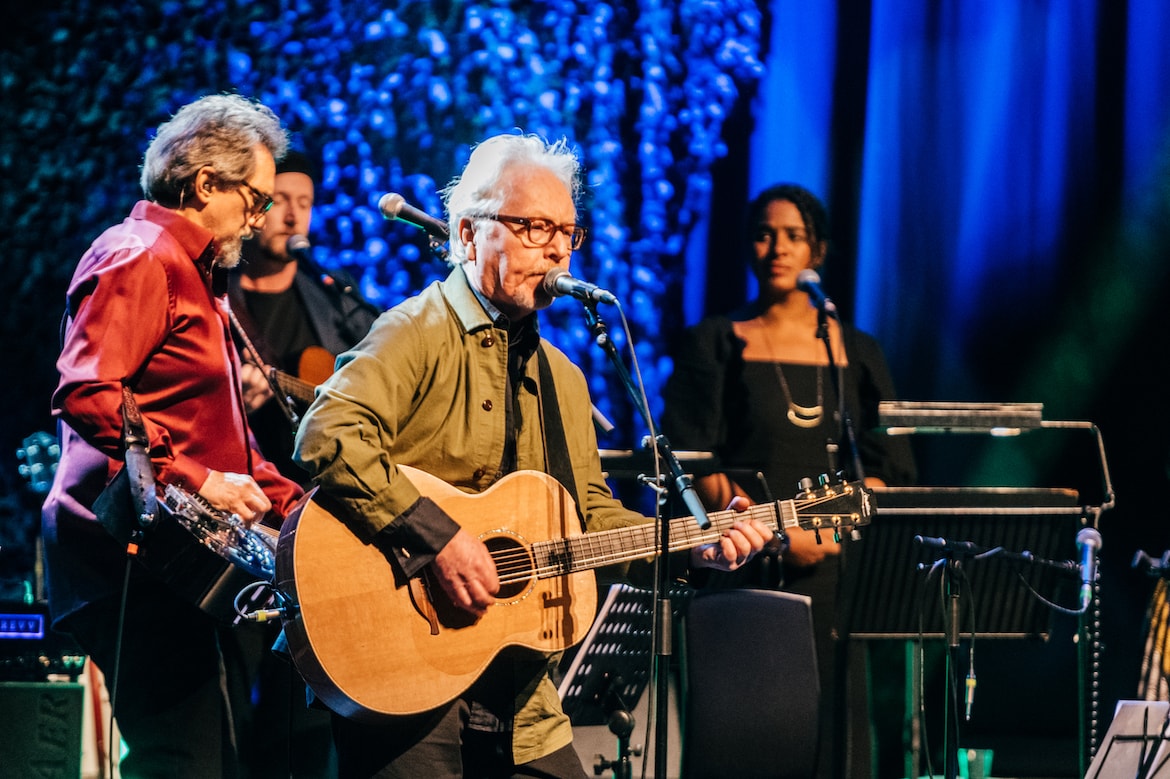
Paul Brady was the first guest to sing, including one of his songs Money To Burn, written about young rich people complaining about the 2008 financial crash, when the impact was far more significant for millions of others, with obvious contemporary resonances. The collective nature of Transatlantic was evident when Paul Brady’s high-class ‘backing singers’ were fellow guests Sarah Jarosz, Leyla McCalla (main image) and Scotland’s own Siobhan Miller. Paul’s most traditional performance came with a delightful duet with Siobhan on The Cocks Are Crowing, a song Paul first heard from County Derry singer Eddie Butcher.
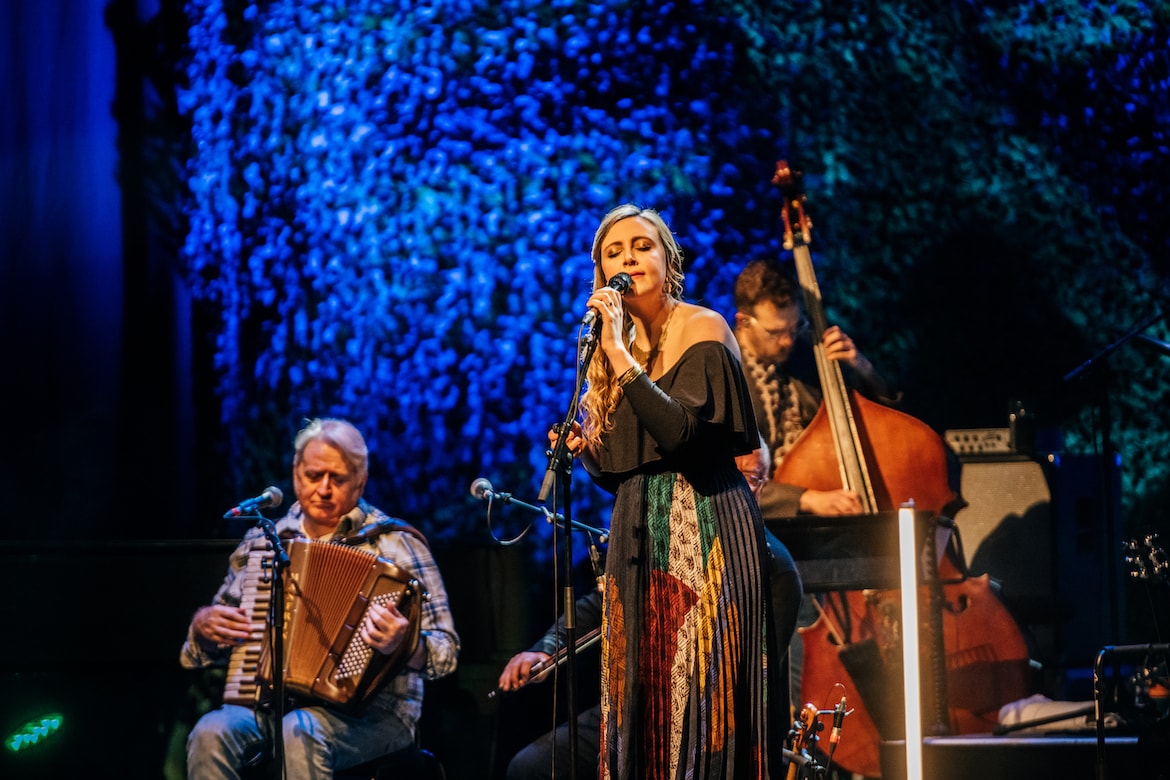
Accompanied by John Doyle on guitar, Siobhan Miller also sang an excellent solo version of a traditional song, May Morning Dew, that she first heard in Ireland (and featured on her last album, All Is Not Forgotten). One of the pleasures of returning year on year to Celtic Connections is seeing how it gives the newer generation of singers a platform to grow in stature. That is very much the case with Siobhan (and others such as Hannah Rarity and Iona Fyfe). While written before the pandemic, While The Whole World Sleeps, one of her compositions (also on her last album), had great relevance as it touched on the importance of staying connected; it also amply demonstrates both her singing and songwriting skills; the melodies are gorgeous.
Resting on a bubbly melody on her tenor banjo, Haitian-American, New Orleans resident Leyla McCalla (Carolina Chocolate Drops and Our Native Daughters) began with Mesi Bondye, a lovely song, sung in Haitian Kreyòl (from her 2013 Vari-Colored Songs: A Tribute to Langston Hughes album), that gives thanks for a good harvest. One of the evening’s stand out moments came with Leyla’s, A Day For The Hunter, A Day For The Prey (also the title track from her 2016 album). She explained that the title is a Haitian proverb, and although she had written the song thinking about Haitian refugees, it also felt very relevant with the pandemic exacerbating unresolved inequities. The song starts with Leyla on cello, creating a driving rhythm by striking the strings with the bow. During the song, the band played an Irish slip jig, Cucanandy. It’s one of those amalgamations that shouldn’t work, doubtless an off the cuff idea at rehearsal. Still, it was a magnificent triumph in practice, exemplifying the creativity these collaborations can engender and sounding for all the world like the two melodies were written just to be intertwined in that way.
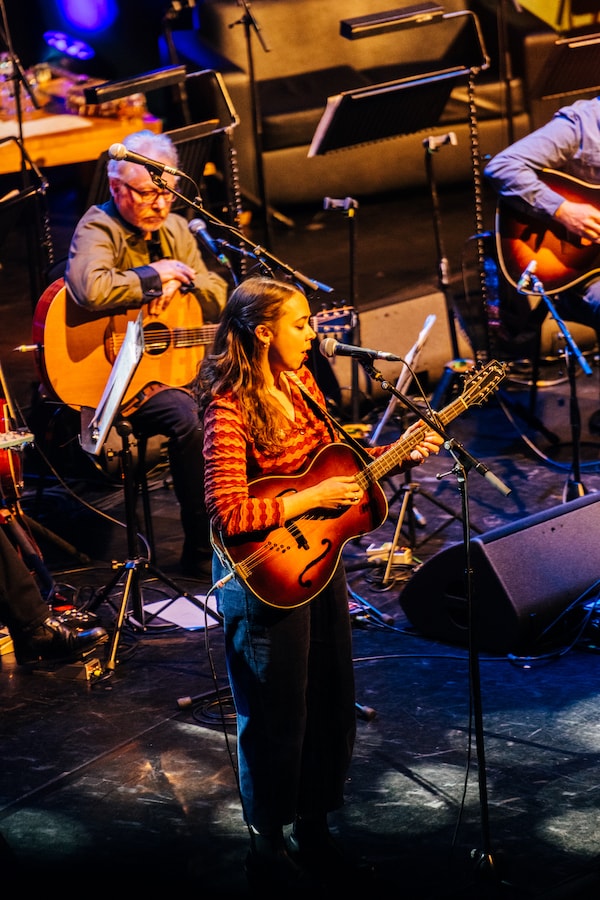
Sarah Jarosz showcased her outstanding writing and instrumental abilities on a trio of her songs: Orange and Blue and Hometown from her 2020 World On The Ground album, and Blue Heron from last year’s Blue Heron Suite – the latter, accompanied by some suitably atmospheric low whistle playing from John McCusker and Mike McGoldrick. Sarah is an exceptional singer, as highlighted at the start of the second half with What Might Have Been, during which she sang the (wordless) melody, alongside a lovely, restrained dobro from Jerry Douglas.
Sometime member of the house band Dirk Powell returned two years after launching his most recent album, When I Wait For You, at the Festival. Another of the evening’s highlights was Dirk’s Walking Through Clay, a song about his great-great-grandmother escaping from Confederate soldiers and walking 100 miles whilst pregnant before giving birth to his great grandfather. It again involved putting an Irish traditional tune into the midst of the existing song. This time it was a reel called Ragged Hank of Yarn, which was performed in 2009 by Dezi Donnelly and Mike McGoldrick on the Transatlantic Sessions television series, as part of a set called Paddy in the Smoke, after the seminal album of the same name on which fiddler Bobby Casey plays the tune. Not only another nigh on perfect fit but most likely a little familiar to many in the audience because it was for some time the theme music for the Transatlantic Session television series.
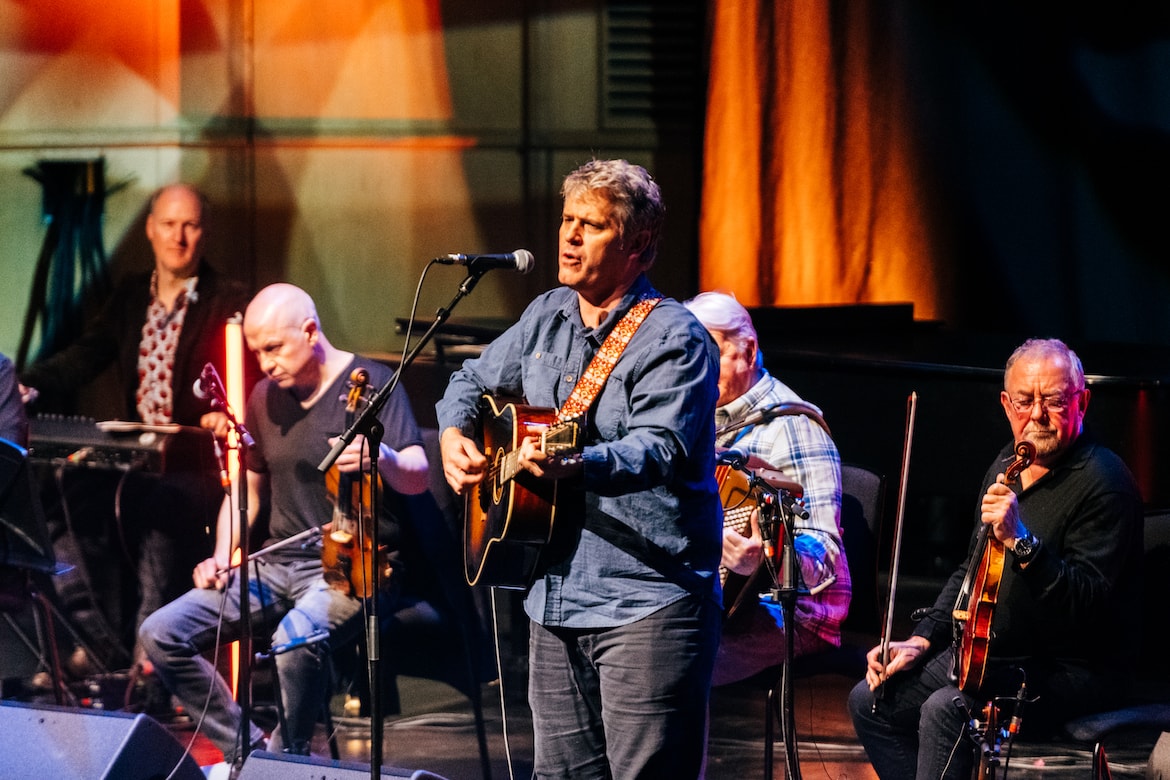
Dirk Powell couldn’t really come to Glasgow and not play his song Waterbound, a song about his grandfather, an accomplished fiddle player and Dirks’s hero as a teenager. The song got an enthusiastic audience response, and on this occasion enjoyed the variation that came from the addition of Leyla McCalla’s sweeping cello playing.
The Glasgow audience always enjoys the house band’s instrumental sets at least as much as the guest singers. A couple of sets came: the slower-paced Lightly Swims The Swan, from the Aly Bain and Phil Cunningham repertoire, and The Asturian Set, from McGoldrick, McCusker and Doyle’s last album, The Reed That Bends In The Storm. Following this, Aly Bain shared that he knew the tunes in that set were beautiful ‘because it took him a week to learn them’. For the encore and finale, there was a livelier collection of Christmas tunes (Phil explained the that the annual Christmas show he, John McCusker and others do have been wrecked by COVID, so why not a Christmas set in February), one by John, one by Phil and Maurice Lennon’s great tune Tribute To Larry Reynolds, sent everyone home very happy.
Transatlantic Sessions is both a fixture and, in many ways, the centrepiece of Celtic Connections. After all the uncertainties that preceded and impacted the Festival, an obvious joy was shared between the musicians and the audience. The performances were nothing short of exuberant, and the audience responded in a similar fashion. Welcome back, Celtic Connections.