
Towards the end of last year, NYC-based musician and folklorist Derek Piotr contacted us to share an extraordinary album release: Last Wisps of the Old Ways: North Carolina Mountain Singing, released via the UK-based independent record label Death Is Not The End. Featuring mountain songs from North Carolina the compilation, the songs cover Child ballads and local murder songs, alongside dulcimer & close harmony singing. Of particular note was the songs of Mrs Lena Bare Turbyfill of Elk Park, North Carolina – “she could have been another Texas Gladden in her own right.” Dozens of recordings of herself and her family made in 1939 remained on a shelf in The Library of Congress until they were unearthed by Derek and presented in this collection. Mrs Turbyfill’s daughter Nicky also makes a notable appearance; a number of the recordings were made by Derek during 2020/21.
Then, earlier this month, a further compilation was released Ever Since We’ve Known It: More North Carolina Mountain Singing with more compelling offerings, including the aforementioned overlooked star Mrs Lena Bare Turbyfill.
Details of both releases are below, available via Bandcamp in various formats, including CD and Cassette. I caught up with Derek recently to talk about these two releases and how they came about. Derek also visited these shores recently for a field recording trip in Yorkshire, which he does touch on below, something we may well return to in more detail at another time.
Interview with Derek Piotr
I am a folklorist and musician. Most of my time is spent thinking about the interplay between tenderness and brutality; I find music to be, generally, a curiously resilient and tender sprout in an oft-brutal environment. For example, so many old-time musicians lead incredibly hard, straining lives, and still managed to foster some of the most beautiful music on the planet. A lot of my recent focus has been spent studying singers from the early 20th century, particularly those from western North Carolina, and so many singers lived incredibly hardscrabble existences. Despite this, they kept their beautiful tradition quite vital. Many of the stories sung by these singers were quite brutal in their content but were often delivered with warmth, clarity, good humour and assuredness. I find this juxtaposition fascinating as well.
You describe yourself as a musician and folklorist. Did one inform the other, and when did you become interested in becoming a folklorist?
I have been making music since 2007. I founded my career as a musician in 2011; most of my work at that time was informed by classical and electronic music. Despite this, I have always had a love for folk music and some of my earliest projects intersected with ethnomusicology in a big way; one album revolved entirely around gamelan. I’d also had a close relationship with my grandmother and began documenting her via clandestine audio recordings around 2010 when she was 91. I compiled about ten years’ worth of recordings and incorporated them into one of my albums, Avia. In a way, this was my first brush with field-recording an informant and documenting their life. When I began to focus on Appalachian music in 2019, I already had a decade of recording experience behind me, and my interest in folk music took center stage. For a long time, because my work came from a more experimental context, I had a pretty staunch taboo against guitars, but I was kidding myself because more and more I was turning to things to listen to like Joni Mitchell, Jean Ritchie, Shirley Collins, Joanna Newsom, and, inevitably, unaccompanied Appalachian singing. My favourite singer right now is Lena Bare Turbyfill, of Elk Park, North Carolina. Lena was recorded in 1939 for the WPA by Dr Herbert Halpert, but only two recordings of her singing were published in the 20th century. When I discovered she had recorded roughly three dozen songs for Halpert, I set about making arrangements to meet her next of kin and to publish these recordings.
When did you undertake your first fieldwork? Can you share some of the highlights of that first experience and maybe some of the methods you used?
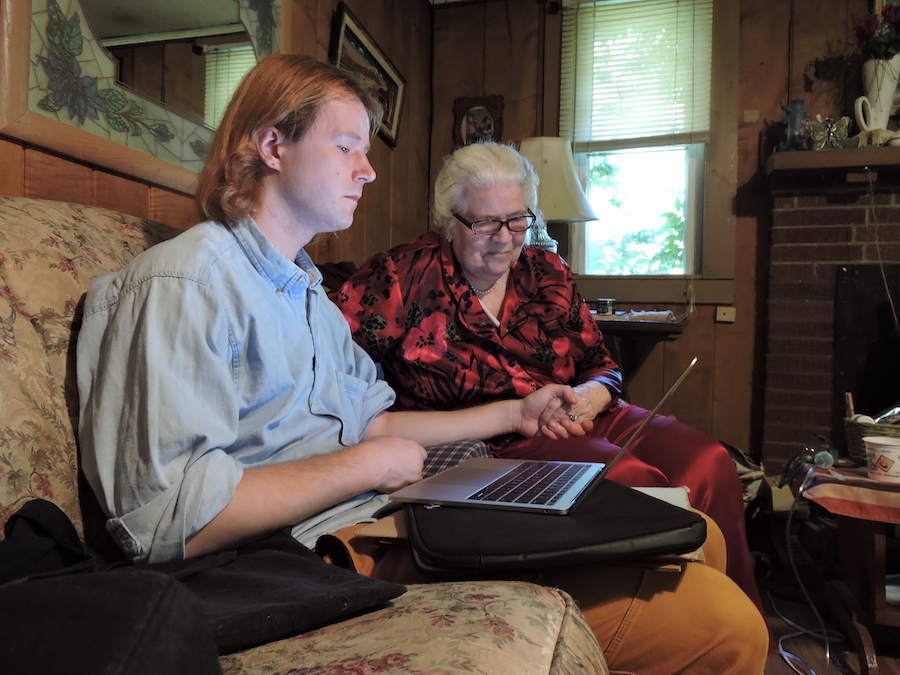
I first recorded Lena Turbyfill’s last living daughter, Nicola “Aunt Nicky” Pritchard, in Elk Park in July of 2020. Meeting Nicky in person was a magical experience, and being able to hear a version of an ancient Scottish ballad that had been remembered through pure oral tradition being sung in the 21st century, in a little living room, next to iPhones and laptops, was a wonderment. I have since gone on to make field recordings in much of North Carolina, in my home of New England, in New York City and the north of England. For my field recordings, I use a Zoom h4n and occasionally my iPhone if I’m in a sudden situation where I’ve not brought my gear. For the most part, I find it helpful to engage with singers on as personal a level as the situation will warrant. Some people are terribly self-conscious, and you only get so far. Others, like Nicky, open up instantly, and there’s a tremendous rapport. I find it best not to distract too much with unusual procedures and occasionally sit with the recorder on my knee or a far corner or shelf, away from the singer, so they don’t feel like there’s a vulture on their shoulder. And tenderness is key. In the words of Alan Lomax: “empathy is most important in fieldwork. It’s necessary to put your hand on the artist while he sings”.
You are especially interested in non-professional singers, is authenticity an important aspect of what you are seeking and is there also an aesthetic appeal behind what you record?
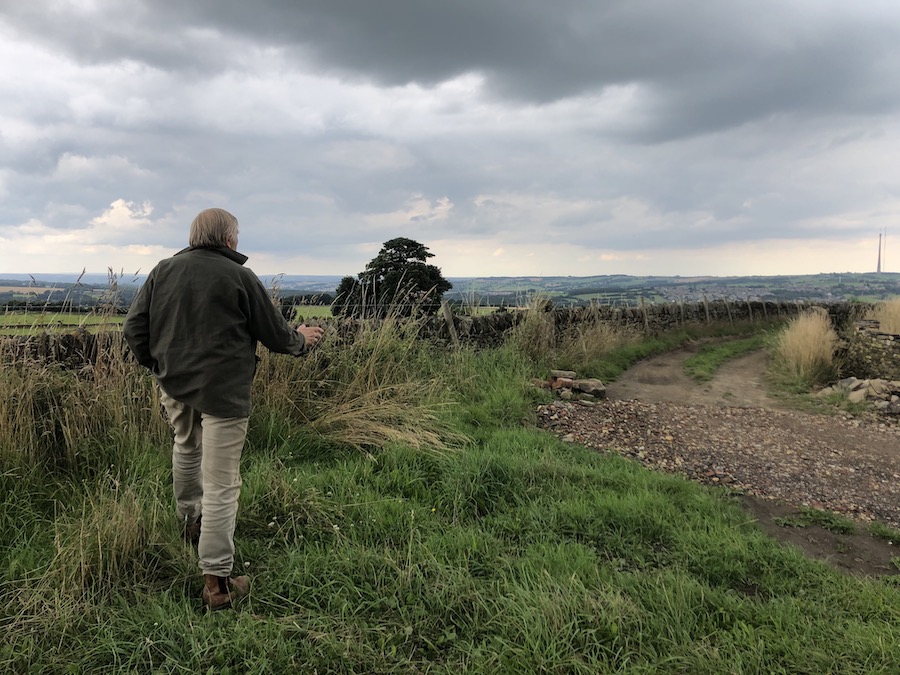
It might be 50/50. Certainly, it’s a real treat to find someone who has a musical memory untainted by the inroads of modern media; but I also think that a “non-singer” (in other words, someone with no background in musical performance) will recall a song with far more genuine enthusiasm and grit than someone who’s learnt a ballad off the web and practised it a hundred times. For instance, when I met Will Noble on his farm in Shepley (West Yorkshire), well, Will is a very fine and rehearsed singer with a lot of years of practice behind him, but when I asked him if he had sung anything before he began his career as a musician, he called up a fragment of The Prickly Bush (Hangman), and kind of half-hummed and la-la’d his way through the tune. That, to me, was worth more than the tricky harmonies and long poems he sang with his wife because it was something unguarded and directly remembered and not enhanced in any way.
You’ve had some support from the North Carolina Folklife Institute and the Library of Congress…

The Library of Congress have been in constant contact with me for two years, mainly assisting in the transfer of archival recordings. I have also connected with the descendants of informants recorded in the Library, so that the grandchildren of these singers could hear the recordings. I did some work for the North Carolina Folklife Institute and was supported in that work by a grant from them; I also wrote an article for the latest edition of The Old-Time Herald, and am happy to say Lena Turbyfill was featured as their cover story.
Last Wisps of the Old Ways features some of your recordings and archive recordings of North Carolina. Can you tell us more about your choices and why you chose some of those artists?
Obviously, so many singers were documented in the tremendous boon in the early part of the 20th century, just before WWII and just after the advent of accessible, reliable recording equipment. Lena, I feel, slipped through the cracks somehow, due perhaps to her reluctance to be in front of a crowd or perhaps to the hard life she endured. Either way, I felt like she seriously needed awarding her due, and I took it upon myself to platform her voice. She’s since been featured on radio stations like NTS and WFMU, the front cover of The Old-Time Herald, and the cover of my compilation Ever Since We’ve Known It: More North Carolina Mountain Singing. This is further than I thought I’d get in such a short amount of time (two years), and I’m very satisfied that I at least gave her a chance of being remembered alongside other great singers, like Almeda Riddle, Jean Ritchie or Bascom Lamar Lunsford.
Mrs Lena Bare Turbyfill is highlighted as a possible Texas Gladden; what was it about her that drew you in particular?
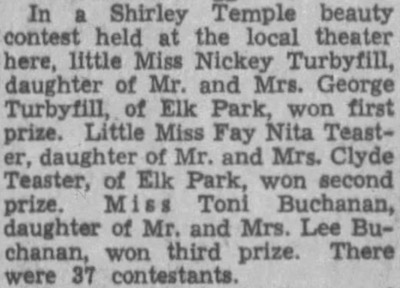
When I first heard Lena sing, I was struck by her clarity, character, precision, warmth, and assuredness. I have listened to vocal music all my life, but she was one of the finest singers I’ve ever heard. In learning about her through her many descendants, it’s clear she was a magical person who led an extraordinary life. She could sew a dress just from a Sears Roebuck picture without ever once touching a pattern. She could dance as well as she sang and was constantly helping those in need; cooking, sewing, doing laundry and other chores, and donating food. She also helped Nicky win a Little Miss Shirley Temple contest when Nicky was very small by sewing her dress for the pageant.
You’ve now released a second album, ‘Ever Since We’ve Known It: More North Carolina Mountain Singing’. This is all archival recordings. Can you tell us more about these recordings on which Lena is more prominent?
Last Wisps attempted to highlight Lena’s family as a whole and in particular her daughter, Nicky. I wanted to also make some kind of overarching statement that many of the families around Beech Mountain are, at least somewhat loosely, connected as kin; this is highlighted by Frank Proffitt appearing on the compilation as well. But I tried to keep a balance and flow between families and recordings made, respectively, in 1939, 1979 and 2020-21. Ever Since We’ve Known It was, to me, my project of finally giving Lena her full due and focused almost exclusively on her recordings made by Halpert in 1939. Lena is certainly a strong enough singer to fill an entire record just by herself during that single session in ‘39. There were rumours that she sang at a county fair and that this was issued in a small quantity on a cassette somewhere, but I have yet to find these recordings.
Why did you choose Death Is Not The End as a label?
Death is Not the End do terrifically exciting things with archival recordings; Luke is definitely, like me, on the hunt for the obscurer and dustier corners of field-recorded music from the 20th century. He also places a lot of emphasis on music from around the world, not just a Sublime Frequencies framework or a Mississippi Records flavour. He has managed to gracefully merge the two and places a lot of care and interest on some of these extremely raw, personal field recordings. Not airbrushed or de-noised in any way, just presented as they are, to tell the story with ragged context clues. To me, this is a breath of fresh air and so terribly needed in this kind of work.
Have these new recordings influenced your own work as a musician?
In a huge way. The next thing I’m recording is, for the first time in my career, an album comprised of only traditional tunes, and most of those versions were lifted from the Bare family repertoire. It’s also changed the way I think about sound; for better or for worse, those old ‘39 recordings sound best to me right now and have definitely influenced the quality of the recordings I’m making.
What else are you working on at the moment?
I am nearly done with a new solo record, The Devil Knows How, which tackles some of the same versions of traditional songs featured on Last Wisps and Ever Since, and I am also putting the finishing touches on a compilation concerning the ballad Lamkin.
Order: Last Wisps of the Old Ways: North Carolina Mountain Singing here
Order: Ever Since We’ve Known It: More North Carolina Mountain Singing here
Derek’s website: https://derekpiotr.com/
You may also like: