
In 2019, we were presented with an incredible album featuring music from the isolated African-American community of Gee’s Bend in the heartland of Alabama State. As David Kidman described in his review here, they were “Big voices, big-time inspiration.”
When I received the album, I was struck by the timeless quality of the recordings. It was also from a label I’d not come across before – Dolceola Recordings. It turned out the recording was made in 2015 using vintage analogue field recording equipment – namely an Ampex 601, which is a portable, analogue, reel-to-reel made between the 1950s-60s and a beautiful vintage ribbon microphone – the RCA-77DX, which has been described as one of the most iconic microphones ever to grace this earth.
Then, last month, another release turned up from Dolceola; this time, a gorgeous double-vinyl release featuring a whole series of recordings made using the same equipment at Kickin’ It On The Creek, a festival at Ross Creek, Kentucky, the most remote corner of Appalachia. In his review of the album, David Pratt opened:
At the risk of hyperbole, on occasions, it is a real privilege to feel that one is able to comment upon a release that potentially has importance in the musical sense and could stand the test of time as a document of value as a cultural record capturing, in microcosm, one genre of music, from one specific geographic location at one point in time. Just Behind The Creek: Field Recording at Kickin’ It On the Green 2019, from Dolceola Recordings, is one such record.
The founder of Dolceola Recordings is Dan Torigoe, a man clearly on a mission to make analogue field recordings of American traditional music. He draws inspiration from and has total admiration for pioneering field recorders such as Alan Lomax, Chris Strachwitz, George Mitchell, and Art Rosenbaum.
What intrigued me even further is that Dan is not based in the US, where all these recordings were made—he is from Japan. Travelling halfway around the globe to record these people on vintage equipment is nothing short of wondrous and inspiring, so I reached out—and thankfully, he answered.
A Modern Day Analog Field Recordist

Introduction to American Traditional Music
I was born and raised in Iwakuni, Japan. My parents run record stores and a Jazz club there, and when I was a kid, I saw a lot of Jazz legends at the club, such as Billy Higgins, Nat Adderley, Claude Williamson, Steve Kuhn and Cyrus Chestnut. When I was 13, my mom gave me a Muddy Waters CD saying, “Just listen to this, not Green Day”, which completely blew my mind. I started digging into the world of Blues, from Lightnin’ Hopkins to Charley Patton and Tommy Johnson. After that, I got Smithsonian Folkways’ “Anthology of American Folk Music” and explored further, taking in Gospel, Old Time, Cajun, and Conjunto music.
The Analog Path
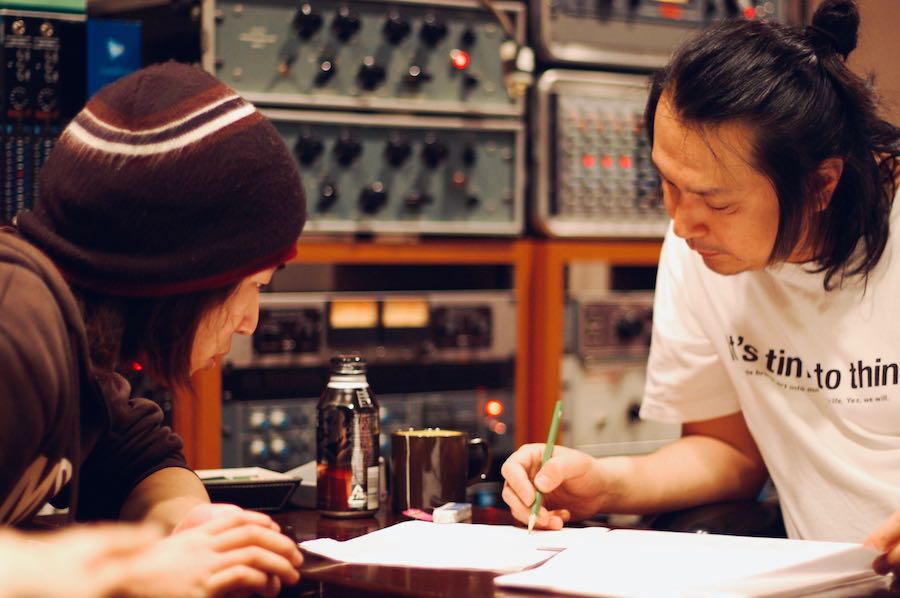
I recorded two albums of my band, The Danny Smith Project, with analogue equipment in 2012 & 2013, and it sounded so great. I also loved the recordings made by many of the great field recorders, like Alan Lomax, Chris Strachwitz, Art Rosenbaum and George Mitchell, and I was thinking that someday I would like to do similar things with similar equipment. The good thing is that we can compare our recordings and old ones that used the same gear to see what has and hasn’t changed in these 50 or 60 years.
The Ampex 601 and RCA 77DX

This is the same gear that Alan Lomax used for his field recordings back in the ‘50s & ’60s, and I was lucky enough to pick one up in good condition. There is a fun story about my Ampex – I bought it on Craigslist back in 2014 and drove all the way up to Berkeley from Los Angeles to pick it up. It turned out that the seller’s father used to work for Ampex as a designer in the ‘50s, and had designed the Apmex logo on the recorder! His son showed and gave me many Ampex-related gems, including the user’s manual, original photos used for ads, Ampex stationery, and even a receipt for his purchase of 601 from Ampex in 1956. The 601 had been owned by his father for a long time, and I felt like I had been given a mission to do something special with this machine.
I brought the gear to an audio repair shop in Burbank, and it took months to get it back home. When I first tried it with my banjo playing, the sound was absolutely mind-blowing.
Dolceola Recordings
I actually started the label in 2010, initially to release albums of my band The Danny Smith Project. The label was named after Washington Phillips. At that time, I thought the name of the instrument he was using was a Dolceola, but Dust to Digital has since taught us that it was called a Manzarene… so I think we might have to change our name to Manzarene Recordings!
It was when I moved to California in 2013 that I got the Ampex 601 & RCA 77DX the following year; I felt like it might be the time to try field recordings in the good ol’ way, which was my longtime dream. Since then, our major mission has always been to do field recordings in the States, and we also still do The Danny Smith Project here in Tokyo. We are planning some releases later this year or next year.
Field Recording Challenges
It is always challenging to work out how to proceed with the recording in the best way. Our mission is to record community-based music, so it’s important that we don’t hinder them and instead capture these recordings as ordinary moments taking place in the community, as they would normally happen. It’s a great pleasure when it does go well.
Gee’s Bend Quilters, Boykin, Alabama (2015)
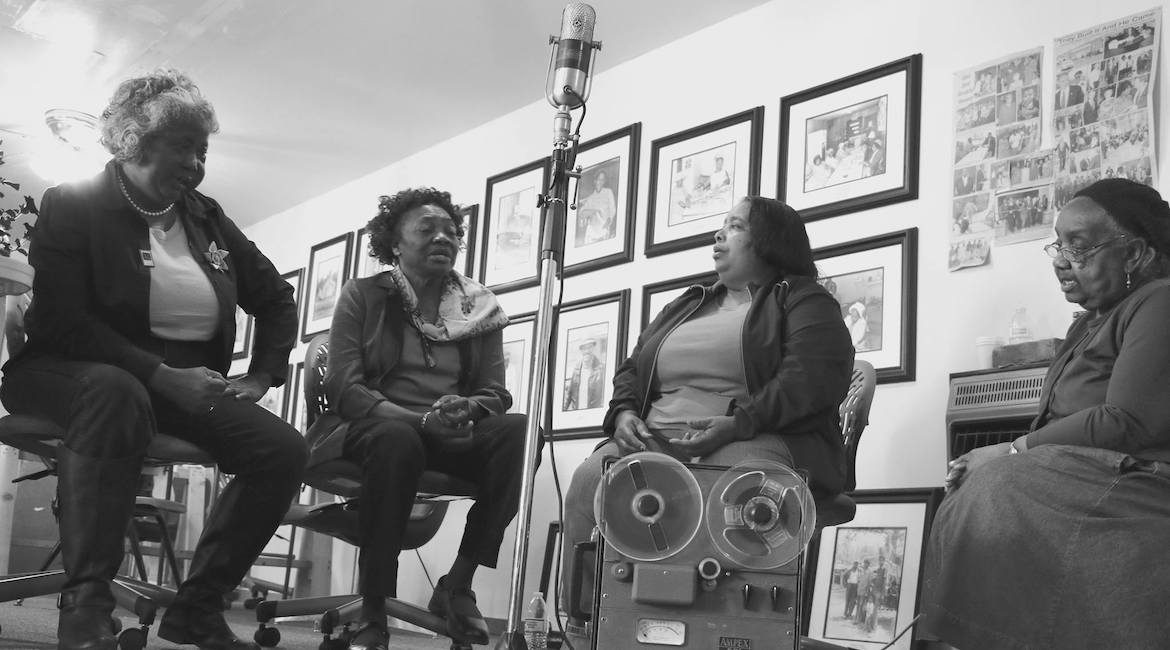
I first learned about the music of Gee’s Bend through Jason Moran’s project “Live: The Time On The Quilts Of Gee’s Bend” on NPR, and I was very impressed. The project sampled the recordings of Gee’s Bend made in the 1940s by Robert Sonkin. I thought that musical tradition had already faded out so I was surprised when I learned that there were many quilters still in Gee’s Bend singing hymns and spirituals while quilting.
I then made a call to Gee’s Bend Quilters Collective and talked with the manager & quilter, Mary Ann Pettway, to see if I could visit there and record a few songs. She laughed and said yes, and things started rolling. I visited Gee’s Bend in May 2015 – when I got there, Mary was making a new quilt at Quilter’s Collective. I was a bit nervous, but she gave me a warm welcome, showed me many of her works, and told me many stories about her quilts and life. She even gave me her recipe for butter and nut pound cake! We spent several hours at the collective and recorded three spirituals – Give Me My Flowers, Steal Away, and Said I Wouldn’t Gonna Tell Nobody. Her voice was warm, kind and strong, just like her quilt and herself, and when she sang Steal Away, I couldn’t keep from crying. It was a moment that I will never forget, and I came away feeling that I must keep on with this journey of exploring the world of American traditional music still further.
Impact of the First Album
That record meant tons to us – not only because it was our first fieldwork album but also because it got much more attention than expected. Bill Frisell played guitar on Jason Moran’s Gee’s Bend project and wrote us beautiful liner notes. We luckily got many great album reviews and airplay, and I found that there was more people than I expected who were interested in these recordings. But the best thing was that we became friends with the quilters, and I learned a lot about their history and beautiful culture. After the recording, I personally revisited them several times, and once things have settled (with COVID), I hope to return very soon. They are definitely the warmest and kindest people on earth, and their works are one of the most important traditions in the States.
Kickin’ It on the Creek
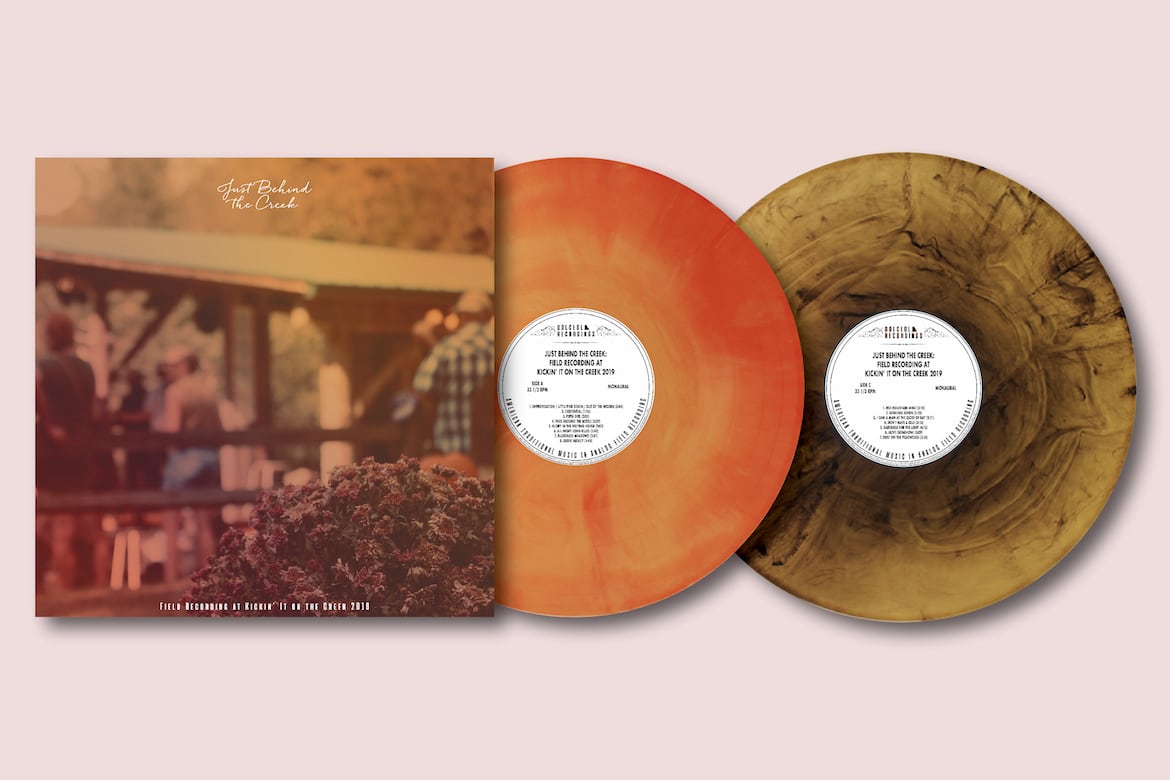
I first heard about Kickin’ It on the Creek from a friend while recording banjo/fiddle master Jack Bunch in London, Kentucky.
It wasn’t a major focus of ours to record modern country musicians. Still, I was personally very interested in the festival as it was showcasing current mountain music artists and people in the community, which we loved. Luckily, we got a press pass and got into the festival with all our gear. We didn’t have any specific appointments for the recording, and we didn’t know what would happen. We talked with the musicians and found some interested in being recorded. We also spoke with the festival organiser, Byron Roberts, and he allowed us to use his living room just behind the stage for the recording. We created a “recording studio” there and invited over 20 musicians for the session. We recorded over 3 hours of the music in 2 days with six reel tapes!
Other Recordings
While in America, we visited so many places: Alabama, Mississippi, Texas, and Pennsylvania, and we did over 40 recording sessions. We recorded Lee Sexton, Clyde Davenport, George Gibson, John Harrod, Betty Smith, Jimmy Duck Holmes, RL Boyce, Duwayne Burnside, Pat Thomas and many other great local musicians. We are also very interested in choral music in the States and have recorded Amish music, Lined-out Hymns, Shaker music, Ephrata Cloister Chorus and Sacred Harp.
Memories and Moments
There are so many great memories from that last trip! I remember the day in Holly Springs, Mississippi – after we recorded Duwayne Burnside, we talked and jammed all day with many people in front of the café Bottomless Cup. Everybody smiled & played classics such as Poor Black Mattie and All Night Long, and that was a very beautiful moment. I also remember the night with Jack Bunch in London, Kentucky – we recorded his banjo on the front porch, and he played with lantern light in the still of the night accompanied by a crickets’ chorus. Everything was so perfect, and I felt like I was in a scene from a movie.
Your Dream Recording- Dead or Alive?
There are so many who I would like to see and record – Washington Phillips, Crying Sam Collins, Lane Hardin, Henry Thomas, Walter Williams, Andy Palmer, and many many others. Henry Bunch and Big Andy Whitaker were also great banjo players in London / Keavy area of Kentucky, but they had none, or very few, recordings. Henry Bunch was Jack Bunch’s uncle; he was acquainted with Big Andy Whitaker, whom Pete Steele cited as the banjo player that inspired him, so I think it would be fantastic if we could see them and record their banjo playing.
My personal dream is to record with current legends and great artists who are all my heroes, from Tom Waits and Rodrigo Amarante to Mary Hampton, Frank Fairfield, and many others!
Most inspiring Field Recordist
Absolutely Alan Lomax. He knew and collected every kind of music from around the world over a period of 6 decades – his works are numerous, and the sound quality is incredible. He brought many musical movements to the world, and we wouldn’t have Lead Belly, Muddy Waters & many of their followers without him. Those are real “field works” and our goal is to follow his path as much as possible.
Next Steps
We are now working on a Blues album that will come out this summer. We are also planning to release some records focused on Kentucky music next year. And if things get better, we want to take another field recording trip in the South! There are so many great local musicians who we haven’t met yet, and we want to continue documenting the American traditional music of today as much as possible.
Follow and Find out More:
https://www.dolceolarecordings.com/
Dolceola Recordings on Youtube
Facebook | Instagram | YouTube
https://www.dannysmithproject.com/