
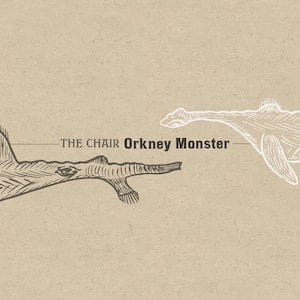
The Chair – Orkney Monster
Folky Gibbon Records (FGCD0025) – 4 December 2020
Quietly dropping, and with little fanfare, has come one of the years delights and surprises. I confess, give or take the occasional festival show, I had thought Orkney’s The Chair to have quietly faded back into the Kirkwall scenery, or to the other myriad projects the band members are involved with. Granted they were never that prolific, with a full five years between debut, Huinka, and follow-up, The Road to Hammer Junkie, that back in 2013, so it was with both surprise and interest I spotted this one snucking out, just at the beginning of the month. Self-proclaimed masters of the “Orkney Stomp”, they had the reputation for riotous live sets, never quite successfully translating so well to disc. Rousing party music, sure, but a tad overwrought on record, just a little too much reliance on folk-rock tropes. So it is gratifying that this outing exorcises any such fears, the eight-piece now demonstrating a far greater control on proceedings, a discipline honed on years of playing together. And worry not, this is not to say this music is necessarily any the tamer, the ensemble playing, the mesh of dual fiddles with accordion and banjo/mandolin, still capable of cutting a rug, but now tempering that perfect storm with quieter moments of calm and for reflection. The rhythm section, guitar, bass and drums, feel now more integral and less bolted on, and truly complement the music with a confident backbeat.
It is fiddle music that defines Orcadian music, and it is the propulsive bowing of Douglas Montgomery and Kenny Ritch that drive this band, whether playing in unison, or weaving around each other in harmony and counterpoint, the tune to the fore, always the tune. This is well demonstrated on the opener, Beachcombers, a trio of tunes, two originals bookending a Donal Lunny tune, the soft sand becoming grittier as the set extends, a neat little shindig ushering in the last section. This then leads into a pair of Scandi-sounding tunes, the first based on a traditional island tune that has an expectation of sleigh bells, ahead of some (nordic) Appalachia, some understated screeching guitar a nice added touch.
It is with this same transatlantic feel that the first vocal track arrives, Walk Beside Me, written by Tim O’Brien, bluegrass stalwart of the Transatlantic Sessions and much more. It bombs along and, especially the singing, and the bass guitar, has a memory of Horslips swilling through it.
Two more slow airs, together entitled Wee Davie, from guitarist and arguably the pivot of the band, Gavin Firth, now demonstrate the restraint and maturity of the band, and could fit seamlessly into any of Duncan Chisholm’s works. Beautiful, and just the palate cleanser for some jigs, the two fiddles jousting over an energetic backline of mandolin and banjo. The third of the three jigs has a wondrous title: The Broon Note, familiar, no doubt, to any session player, as in no taught key or scale and never played on purpose. Then, with nary a pause, it is straight into the rhythm section led Blue Lamp, the Gavin Marwick tune, the closest in style to the wilder hooley’s of old, the better production again adding gravitas.
An almost Afro-Celt hue imbues the next tune, The Rose in the Gap, from the pen of Irish piper John McSherry, another showcase for the solid engine room of the band, fiddle and mandolin flying above the backing. With perfect timing, the mood then dampens down for Firth’s moving rendition of the Tom Waits deep cut Shiver Me Timbers, a lilting sway of accordion-driven country and, well, Orcadian.
It is the banjo of Brian Cromarty that introduces the next cycle of tunes, Turn the Handle, written by him also, and underlining the integral links between Saltfishforty and this band, both members simultaneously in both bands, Douglas Montgomery being the other. The showcasing then continues, with a pair of tunes, Margaret Davidson, from accordionist Bob Gibbon, each maintaining the sense of controlled calm.
Closer, Festival Reels, has to end on a high, to act as a reminder of barnstorming performances at Cambridge and elsewhere, and it does, hitting that height without falter, three tunes, one traditional and one apiece from Alasdair White and Ross Ainslie, neither strangers to these pages. A fitting and rousing end to a recording that puts the band firmly back in, um, the chair of Scottish music to celebrate. Hopefully, they can and will deliver this live next year at more than just their planned headliner at 2021’s Orkney Folk Festival, I for one am willing to travel some distance to experience the Orkney Monster.